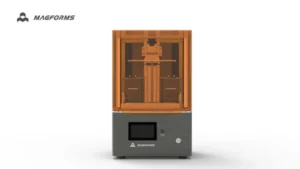
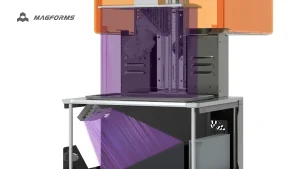
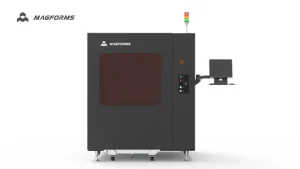
In transparent product development, 3D printing is no longer limited to visual prototypes. For transparent housings, structural parts, and functional test samples, surface consistency, dimensional accuracy, and repeatability directly influence downstream validation and decision-making.
Many R&D teams face a difficult choice. Desktop systems are easy to use but struggle with size limits and long-term consistency, while traditional industrial machines offer stability at the cost of size, complexity, and high replacement barriers.
The Magforms Lab300 was developed to bridge this gap. As an industrial SLA 3D printer, it delivers industrial-grade stability and precision in a form factor suitable for laboratory and R&D environments. For teams working with transparent parts, it provides a reliable solution for 3D print workflows and supports efficient product validation.
Stable Printing Performance for Transparent Parts

Transparent parts place strict demands on printing stability. Even minor variations in curing or layer thickness can become visible defects during post-processing or optical testing.
The Lab300 uses galvanometer scanning with a fixed laser spot, enabling consistent energy distribution across its 300×300×300 mm build volume. This level of control is essential for maintaining uniform surface quality and dimensional accuracy when printing large transparent components.
Compared with desktop systems or entry-level SLA printer platforms that often experience warping or resin shrinkage, the Lab300 is better suited for functional validation and structural testing. It serves as a dependable 3D printer for rapid prototyping in transparent applications.
Compact Industrial Design for Laboratory Environments
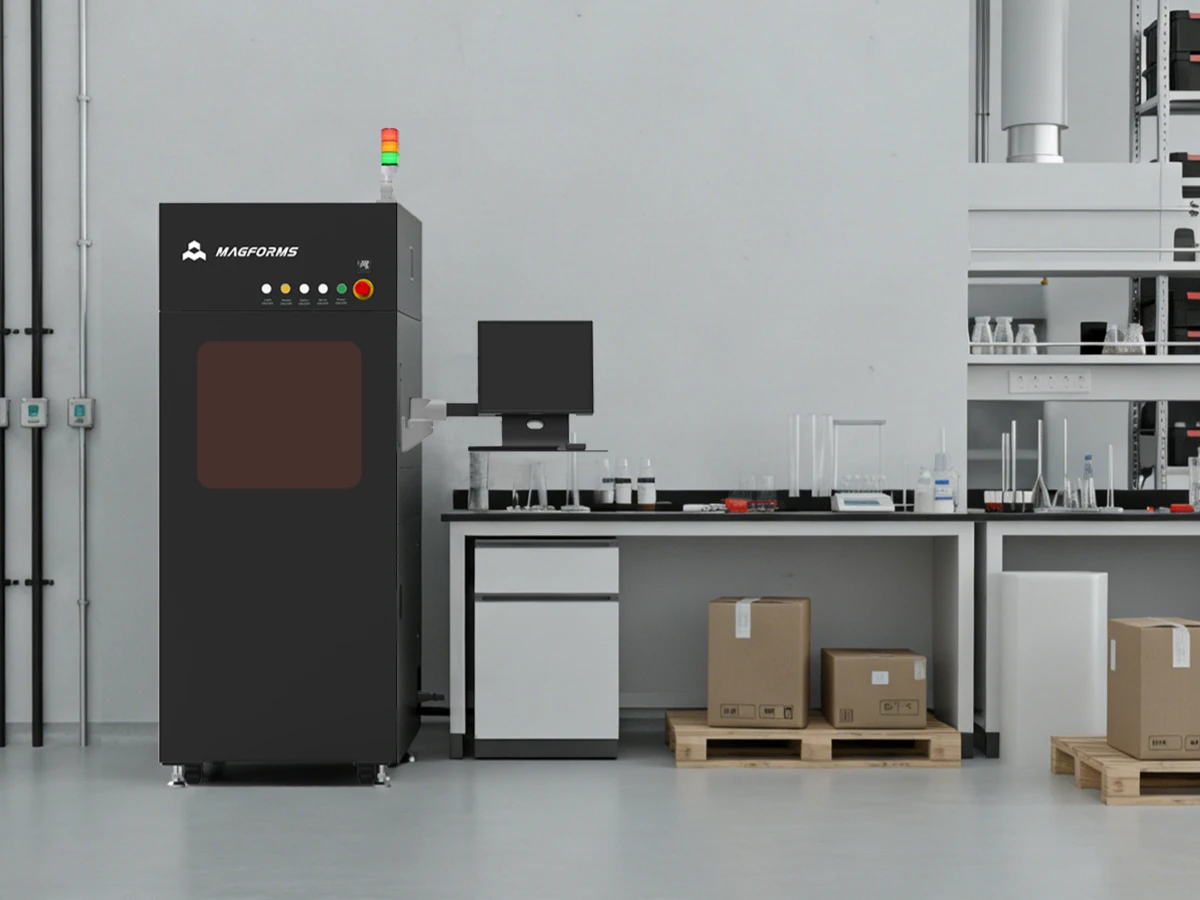
Industrial performance does not have to come with excessive size. With a machine length of only 77.4 cm, the Lab300 fits into most office elevators and laboratory spaces, allowing easy deployment without major layout changes.
Despite its compact footprint, the Lab300 maintains a robust mechanical structure. A granite recoater base and high-quality core components provide the rigidity required for consistent and repeatable printing. This mechanical stability is critical when using an industrial SLA 3D printer to produce transparent parts with tight tolerances.
For users upgrading from desktop systems while avoiding large industrial installations, the Lab300 offers a practical and balanced solution.
Detachable Resin Tank and Fast Level Response
Transparent applications often require frequent material testing. On conventional fixed-tank systems, switching resins can be time-consuming and inefficient.
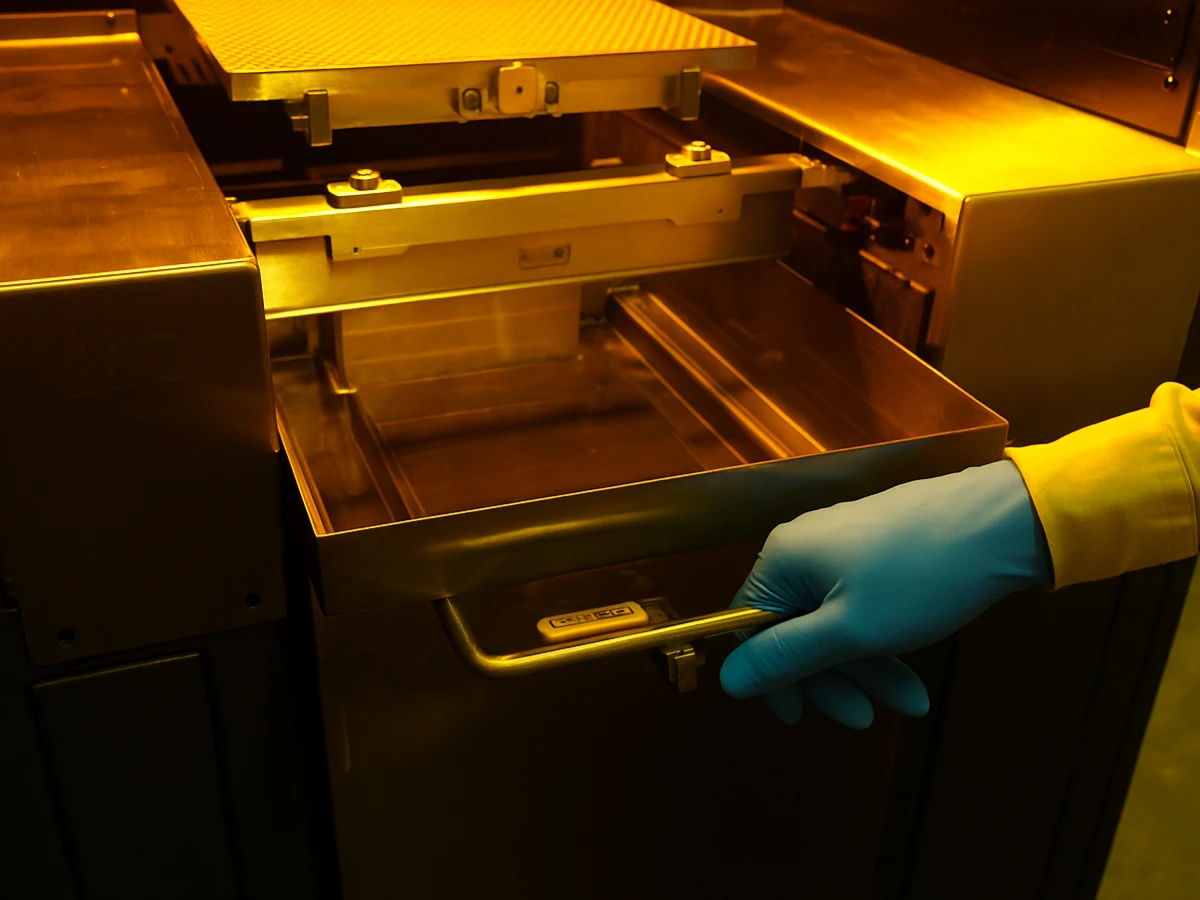
The Lab300 features a detachable resin tank design, allowing multiple tanks to be prepared for different materials. This significantly improves 3D print workflow efficiency during material changes. In addition, the integrated lifting mechanism enables faster resin level response, helping maintain consistent layer thickness throughout long print jobs.
Stable resin control directly contributes to improved surface quality and reduced print failures when producing transparent components.
A Reliable Long-Term Solution for Transparent Applications
In transparent manufacturing, long-term reliability is as important as single-print performance. Many users are seeking to replace aging systems or move beyond the limitations of desktop equipment.
The Lab300 delivers industrial-grade SLA performance in a compact and accessible format. With predictable accuracy, stable material behavior, and consistent results, it is a trustworthy 3D printer for transparent application development and a reliable 3D printer for rapid prototyping in laboratory environments.