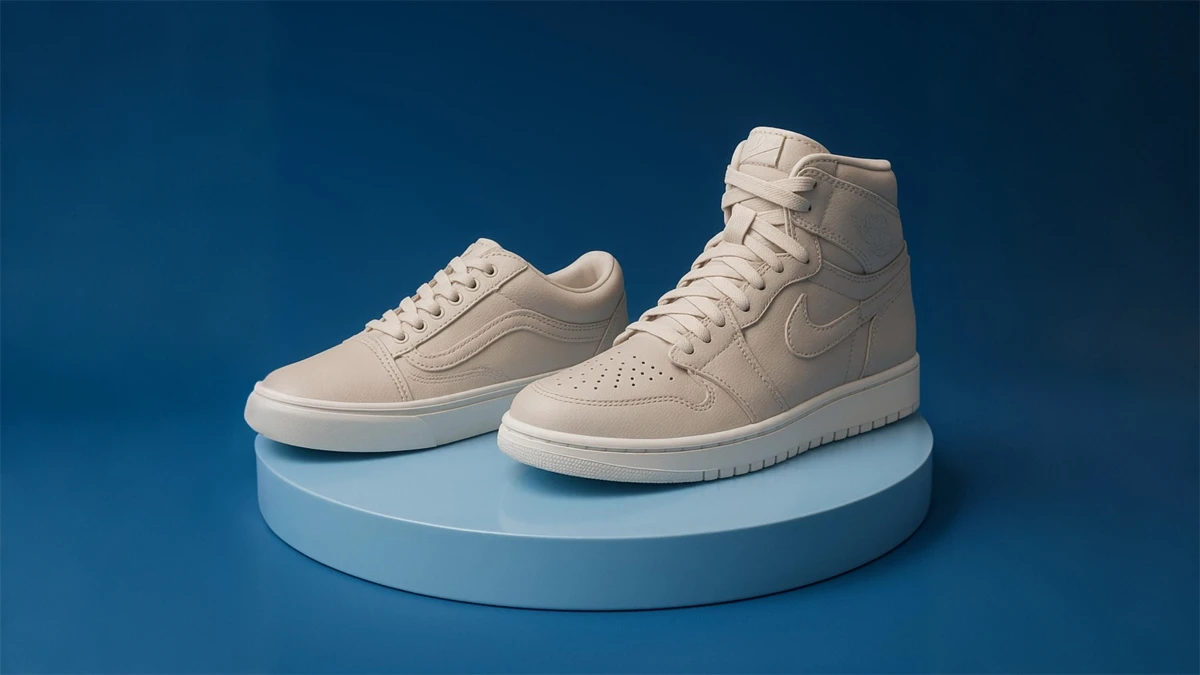
In today’s highly competitive footwear market, speed of iteration and distinctive design have become critical factors for brands seeking to stand out. For years, the development and production of shoe molds have been major bottlenecks, limiting the pace of new product launches. Traditional manufacturing involves more than ten complex steps—resulting in long lead times, high costs, and challenges in achieving the intricate surface details designers envision.
With the rapid advancement of 3D printing technology in manufacturing, a key question emerges:
Can 3D printing be used to directly produce shoe molds with high precision, fine textures, and dramatically shorter turnaround times?The answer is yes. LCD-based 3D printing has proven capable of delivering shoe molds that are not only efficient and accurate but also redefine traditional manufacturing workflows across the footwear industry.
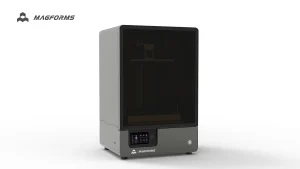
Magforms’ large-format, high-speed 3D printer — the P13 Pro — is at the forefront of this transformation, offering exceptional performance and providing innovative, cost-effective solutions for an increasing number of shoe mold manufacturers.
3D Printed Shoe Molds: Challenges and Solutions
Traditional shoe mold manufacturing methods pose a series of severe challenges for manufacturers. This not only directly drives up R&D costs but can also lead to missed market opportunities due to project delays.
Some problems with current traditional shoe mold manufacturing methods include:
- Lengthy processes involving CNC wood pattern milling, wood pattern modification, silicone mold casting, plaster sintering, and over ten other steps.
- Difficulty in achieving fine and complex texturing, limiting design freedom.
- Long development cycles, unable to respond quickly to market demands.
- High costs, with potential material waste at every stage.
- Shortage of skilled technicians proficient in the entire process.
Traditional manufacturing methods not only take several weeks but also heavily rely on highly skilled operators. In today’s era of “fast fashion” and personalized customization, this traditional process puts pressure on footwear companies in terms of both time and cost.
The solution to these problems lies in adopting LCD 3D printing technology for in-house rapid manufacturing. “Our goal is to accurately and quickly replicate any complex digital texture,” stated a Magforms engineer. While this has always been the manufacturer’s ideal, it was nearly impossible to achieve before the advent of high-performance desktop-grade 3D printers.
By using equipment like the Magforms P13 Pro to manufacture shoe molds, companies can gain the following benefits:
- Realize design intent, accurately replicate complex textures, and eliminate the cumbersome “texturing” and “wood pattern milling” steps.
- Improve mold surface quality through extremely high printing accuracy.
- Reduce development cycles from days or even weeks to hours.
- Broaden the range of employees capable of operating the equipment, reducing heavy reliance on specific skilled labor.
- Drastically reduce the time required for design, manufacturing, and verification.
Significantly lower overall costs due to substantial savings in materials, time, and outsourcing fees.
LCD 3D Printing Technology and the Magforms P13 Pro
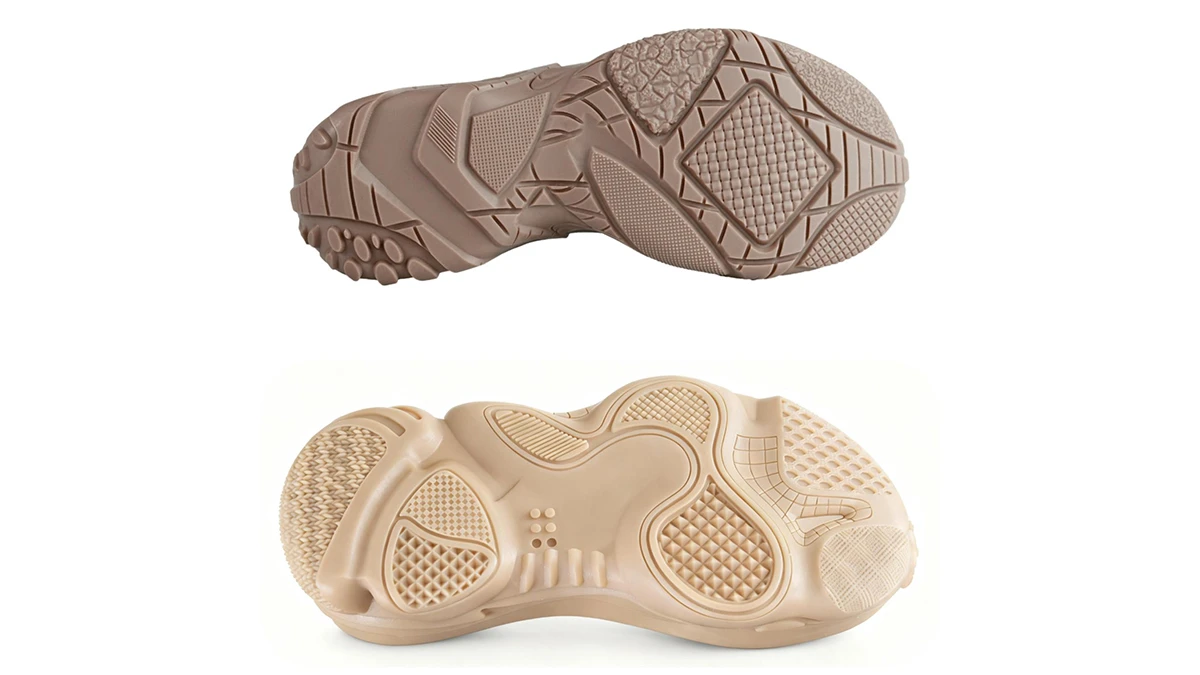
LCD 3D printing technology is a type of vat polymerization technology. It uses a high-resolution LCD screen as a mask to cure an entire layer at once, achieving fast printing while ensuring high precision.
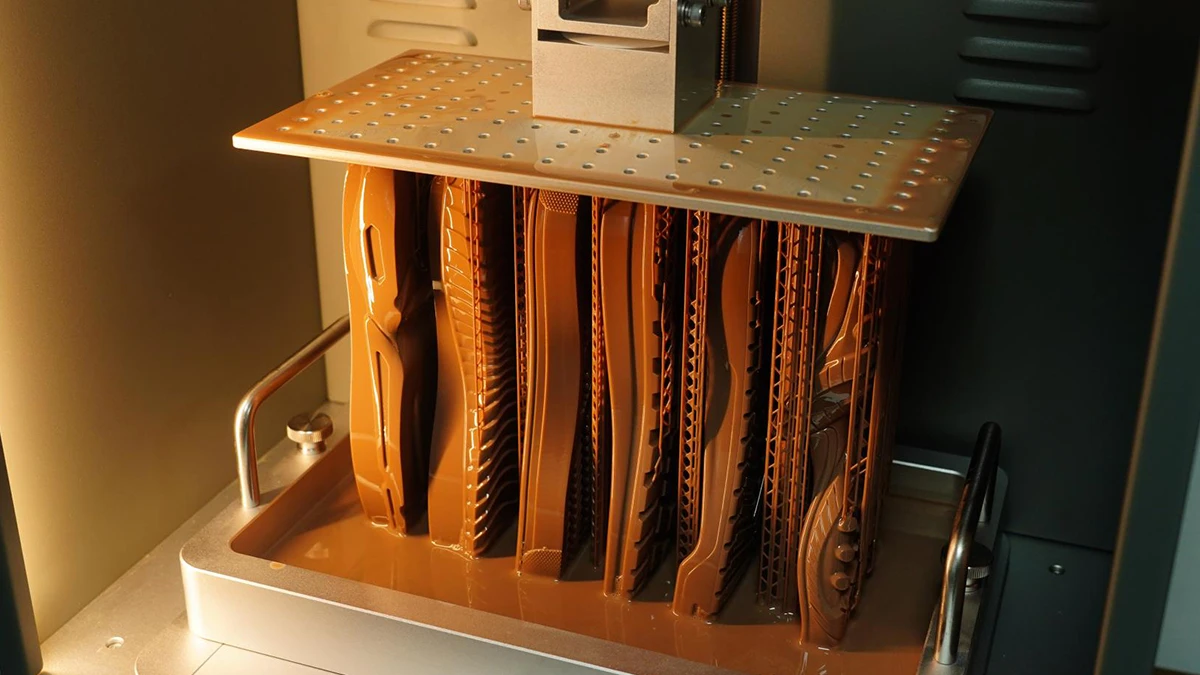
Compared to traditional manufacturing, which requires expensive specialized equipment and complex processes, the Magforms P13 Pro LCD 3D printer simplifies the entire workflow into three core steps: “Design – Print – Post-processing.” It boasts a generous build volume of 302×162×380mm, capable of accommodating up to 6 standard-sized shoe molds in one batch, enabling small-batch parallel production.
Precision is the soul of 3D printed shoe molds. The P13 Pro has an XY physical precision of 26μm and, through grayscale management pixel technology, enhances the effective resolution to 13μm, resulting in sample surfaces without visible pixelation and a smooth texture. It is equipped with industrial P-grade dual linear guides, achieving a travel parallel accuracy of up to 7μm, ensuring that the error for a 100mm sample is strictly controlled within 0.05mm, guaranteeing stable and precise printing. The machine also features an industrial high-collimation light source, enabling uniform curing, which further enhances printing accuracy and reduces striations. The final result is a shoe mold that perfectly adheres to design standards, with sharp and clear texturing.
In terms of efficiency, the P13 Pro is equally outstanding. Printing a model with a layer height of 0.2mm and a height of 300mm can be completed in as little as 3 hours and 15 minutes, allowing manufacturers to easily meet tight deadlines.
Looking Ahead
For footwear company management seeking to justify the investment in 3D printing, the Magforms P13 Pro presents a compelling case: it is not just a printer, but a tool to enhance core competitiveness and accelerate time-to-market. By adopting the 3D printing workflow, companies can break free from the constraints of traditional manufacturing and run faster and farther on the track of innovation.