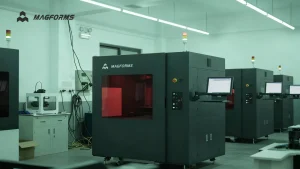
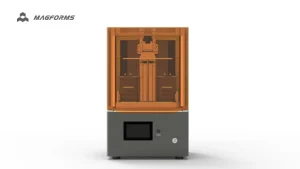
“Every large transparent model felt unpredictable. We could invest an entire night into a print and still wake up to bubbles, clouding, or internal cracking.”
When a production manager at a Middle Eastern architectural model studio heard the same frustration repeated across the workshop, the issue became impossible to ignore. The company had already integrated several Resin 3D Printer systems into its workflow, but as projects became larger and presentation standards increased, failed prints started affecting delivery schedules and client confidence.
Producing large transparent architectural pieces was becoming especially difficult. Thick solid models often developed discoloration or subtle defects during long print cycles, while visible layer lines created additional polishing work that consumed valuable production time.
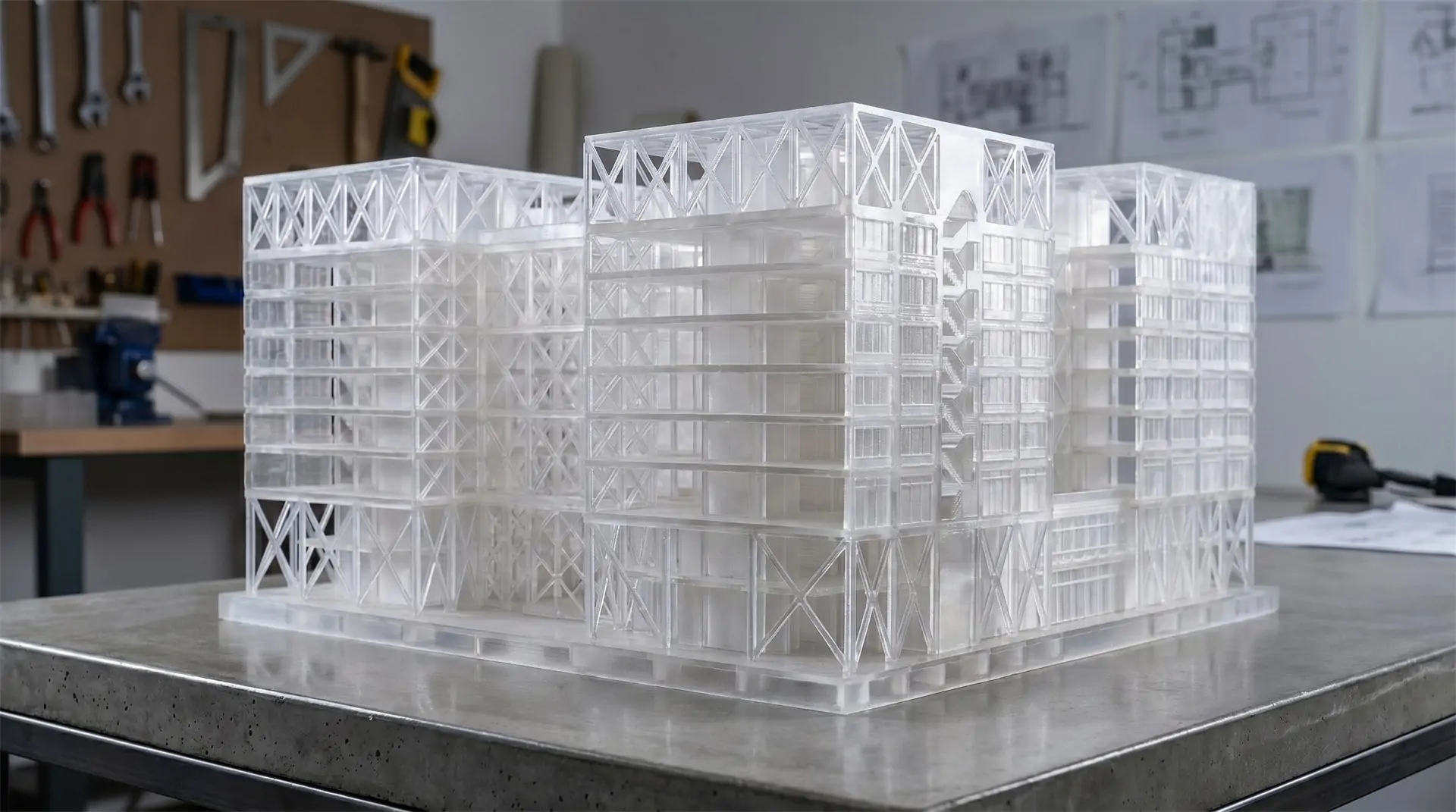
The studio eventually turned to Magforms large-format Stereolithography 3D Printer systems after seeing sample parts produced through a regional partner. What initially drew attention was not simply the size capability, but the consistency of the transparent output. Fully solid components weighing over 10 kilograms were printed in a single build with minimal post-processing and no visible bubbles or color distortion.
Read on to hear how the studio transformed its production workflow using Magforms Industrial 3d printer technology.
Industrial 3D Printing for Transparent Architectural Models
Architectural presentation models rely heavily on surface quality and optical clarity. Unfortunately, large transparent prints often expose the limitations of conventional equipment. The studio had previously relied on smaller-format systems and outsourced production, but scaling up consistently introduced instability during long print runs.
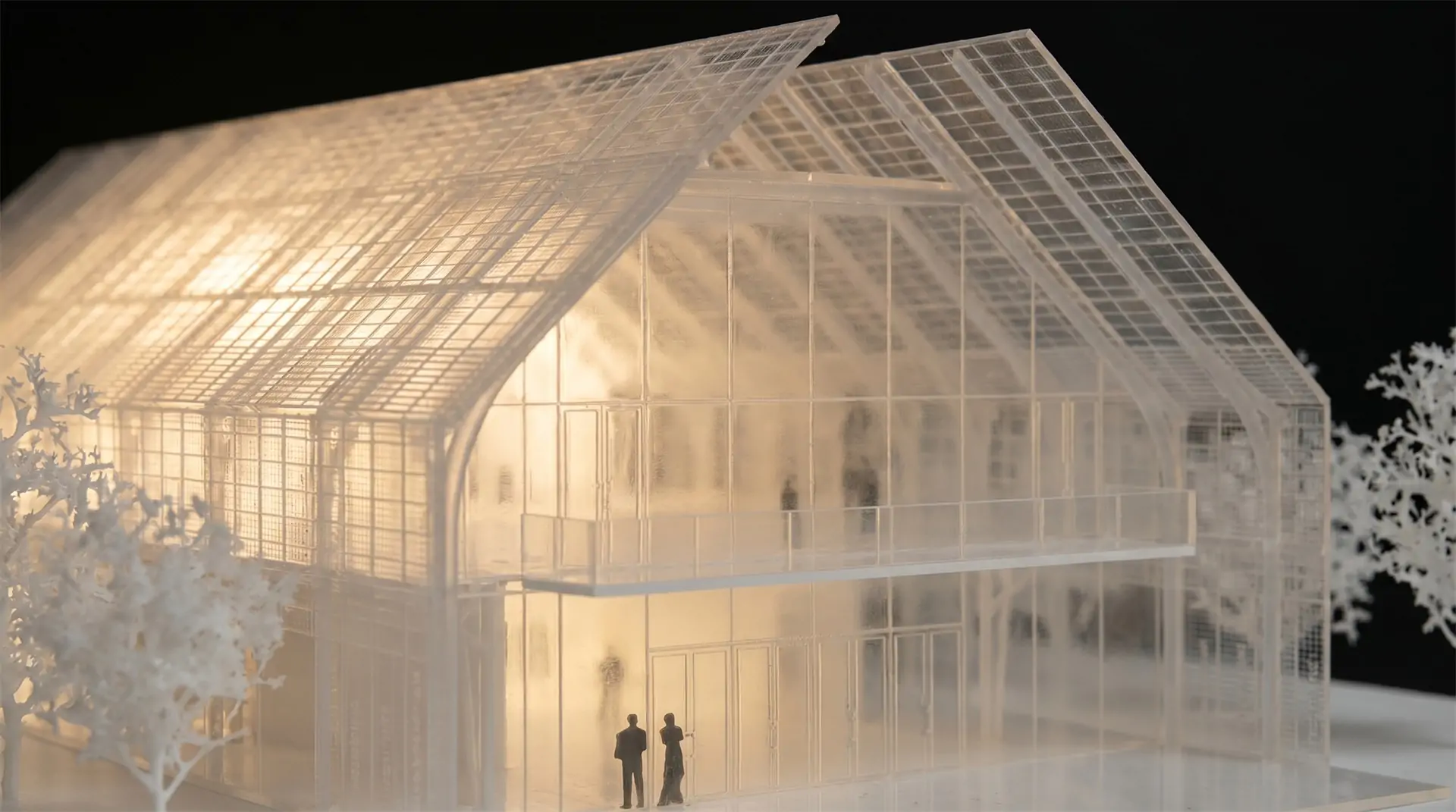
A print could begin normally and fail near completion due to vibration, resin shrinkage, or uneven curing. Even successful parts often required extensive sanding and polishing before they were suitable for client presentations.
The company decided to move large-format production fully in-house, but reliability became the deciding factor. Traditional outsourced printing created scheduling delays, while older systems demanded constant monitoring throughout the night.
“If you want to know whether a design truly works, you need to print it at full scale and evaluate it directly.”
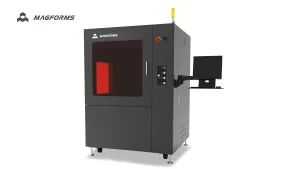
The Magforms Helios-P600 Industrial SLA 3D printer introduced a different level of production stability. The machine combines an AOC laser system with German Scanlab galvanometers, allowing stable scanning performance during continuous operation. Panasonic servo motors control the recoating system, liquid leveling, and positioning modules, improving repeatability across large-format builds.
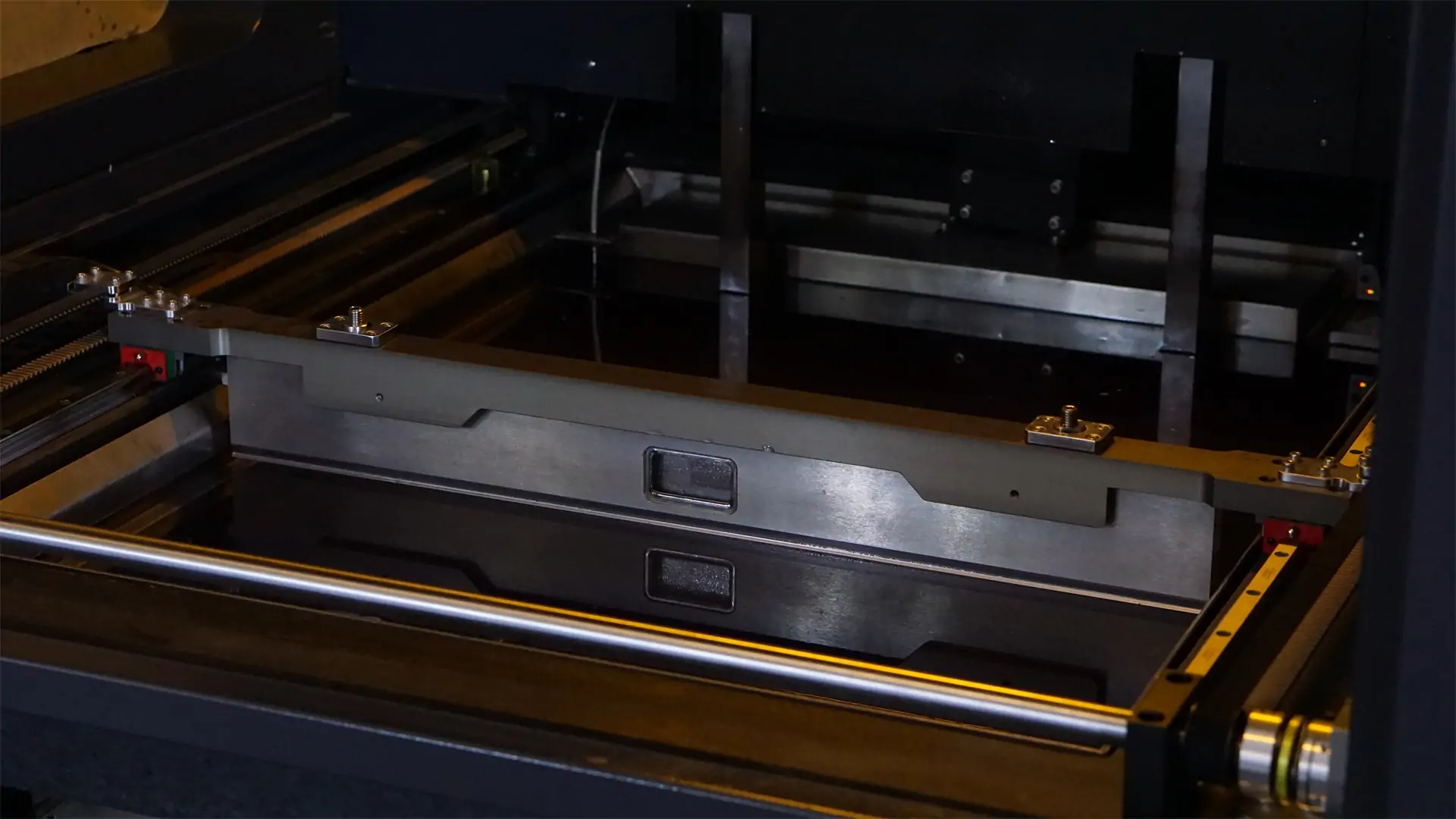
To reduce vibration during long print cycles, the system uses a reinforced 2 mm steel body together with a granite-based platform structure. For the architectural studio, this translated directly into fewer failed prints and improved consistency when producing oversized transparent components.
The introduction of a professional-grade SLA 3D printer also changed how the team approached prototype verification. Large transparent sections that previously required outsourcing could now be tested internally with assembly-level accuracy. Print precision remained within ±0.1 mm for smaller components and ±0.1% for larger dimensions, making the parts suitable for presentation assemblies and engineering verification simultaneously.
“We now print far more design variations than before because failed builds are no longer part of the daily expectation. That changes both scheduling and confidence across the team.”— Production Manager
Material flexibility also became an important advantage. Unlike closed systems limited to proprietary consumables, the Helios-P600 supports most 355 nm materials through an open resin architecture. Existing transparent materials already stocked by the studio could continue to be used immediately without compatibility restrictions or supplier lock-in.
The team also benefited from the machine’s variable beam technology. Large internal areas are scanned with a broader 0.5–0.6 mm beam to improve speed, while fine contours and supports are processed with a smaller 0.15–0.2 mm beam to preserve detail quality. Compared with traditional workflows, the studio reduced print times significantly while maintaining sharp edges and smooth transparent surfaces.
“Beyond accuracy, the machine runs with remarkable stability. Overnight builds have become routine instead of stressful.” — Production Manager
Producing large transparent models also became easier after printing. The integrated support mesh structure allows residual resin to drain back into the vat more efficiently, reducing cleanup time and lowering material waste. Combined with grayscale processing algorithms that soften visible layer transitions, post-processing requirements dropped noticeably across most projects.
Building Predictable In-House Production Capacity
As print reliability improved, the studio gradually shifted more projects away from outsourced manufacturing. Large transparent structures, interlocking architectural bases, and complex façade sections were now produced internally with greater scheduling control.
The transition also improved communication between design teams and production operators. Instead of simplifying concepts to accommodate manufacturing limitations, architects became more confident specifying transparent volumes and intricate geometries directly within client proposals.
“If material cost and production risk disappear from the conversation, designers become much more ambitious with what they create.”
The Helios-P600 features a large 600 × 600 × 500 mm build volume. The studio could now produce seamless architectural sections that previously required assembly from multiple smaller prints. At the same time, the removable vat system made switching between transparent and detail-oriented materials far more efficient, enabling a single Industrial 3D Printing system to support multiple applications throughout the same production cycle.
Safety and operational consistency also played an important role in daily use. The printer integrates optical shielding and a four-point safety interlock system that immediately stops laser activity when access panels are opened. SGS CE-certified safety protections provided additional reassurance for operators working around the equipment during extended production shifts.
Today, the workshop operates multiple Magforms systems simultaneously, scheduling overnight builds with significantly greater confidence than before. What once felt like a high-risk process has become a predictable part of daily production.
For architectural firms and model studios producing large transparent components, stability often matters more than raw speed. A professional resin 3D printer capable of maintaining precision during long print cycles can dramatically reduce failed builds, shorten delivery timelines, and improve the final presentation quality clients expect.
Magforms industrial 3d printer and stereolithography 3D printer systems continue helping manufacturers, design studios, and engineering teams bring large-scale transparent production in-house with greater consistency, flexibility, and control.
In-House Large-Format Production with Magforms
The architectural studio is one of many companies improving production efficiency and model quality through in-house rapid manufacturing with Magforms Industrial SLA 3D printer systems. By bringing large transparent model production inside the workshop, the team reduced outsourcing delays, improved project consistency, and gained greater control over delivery timelines and prototype quality.
Explore how Magforms 3d printer solutions are helping architectural firms, engineering teams, and industrial manufacturers streamline large-scale Industrial 3D Printing workflows with high-precision resin 3D printer technology and open-material flexibility.