Late last week, we received a straightforward purchase order from a long-standing client in Central Europe. No troubleshooting requests, no parameter questions—just a clean repeat order for two more Magforms P13 Pro units. The production director, whom we’ll refer to as Marek, mentioned that the first machine we shipped six months ago had been running almost continuously, and it was time to increase capacity. For anyone in the additive manufacturing equipment space, that kind of silent, steady reorder is the loudest endorsement you can get.
Six months earlier, the conversation had been entirely different. Marek’s facility specializes in rapid prototyping for high-end footwear—specifically printing master patterns for mold-making. Their workflow depends on being able to print a full-size men’s shoe last, which often requires a Z-height clearance of at least 300mm. While they had been using a variety of desktop Stereolithography 3D Printers for smaller components, their existing large-format solution was causing significant production bottlenecks. The issue wasn’t speed in the lower build volume; it was geometric degradation. Once the print exceeded 250mm, quality would drop sharply. The surface texture intended to mimic leather grain became muddy, and sharp heel points or toe spring details would warp or delaminate entirely.
“We were wasting resin and, more importantly, missing courier deadlines,” Marek explained during our initial consultation call. “My technicians would start a 10-hour build overnight, only to find a failed part hanging from the plate in the morning. We needed a machine that could reliably print the full 380mm height without losing fidelity at the top.”
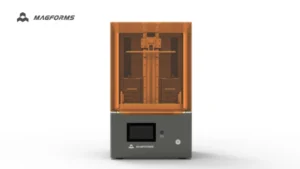
This is precisely the engineering gap the Magforms P13 Pro Resin 3D Printer was designed to bridge. While many resin 3D printers boast a large build volume on paper, they often fail to account for the mechanical stresses introduced at extreme Z-heights. The P13 Pro addresses this through a combination of mass and precision guidance that is uncommon in the desktop Resin Printer category.
To address Marek’s specific concerns, we focused on three core characteristics of the P13 Pro architecture:
- 1.Z-Axis Guidance and Stability: The device utilizes industrial P-class dual linear guides with a walking parallelism accuracy of 7μm. This is paired with a high-precision industrial-grade screw, ensuring that even as the build plate travels the full 380mm stroke, lateral vibration is minimized. The chassis itself is a fully metallic structure weighing 58kg, which dampens the micro-oscillations that typically cause waterline ringing or layer shifting in lighter frames.
- 2.Thermal and Optical Consistency: Many print failures at high altitudes occur due to temperature gradients inside the build chamber. The P13 Pro incorporates a dual heating system with left and right vents to maintain a uniform thermal environment, which is critical for consistent layer adhesion without pre-heating the resin vat. Furthermore, the light source is not a simple LED array; it consists of 91 industrial-grade imported lamp beads with high collimation. This ensures that the UV light strikes the resin surface perpendicularly, curing fine details accurately rather than scattering and blurring edges.
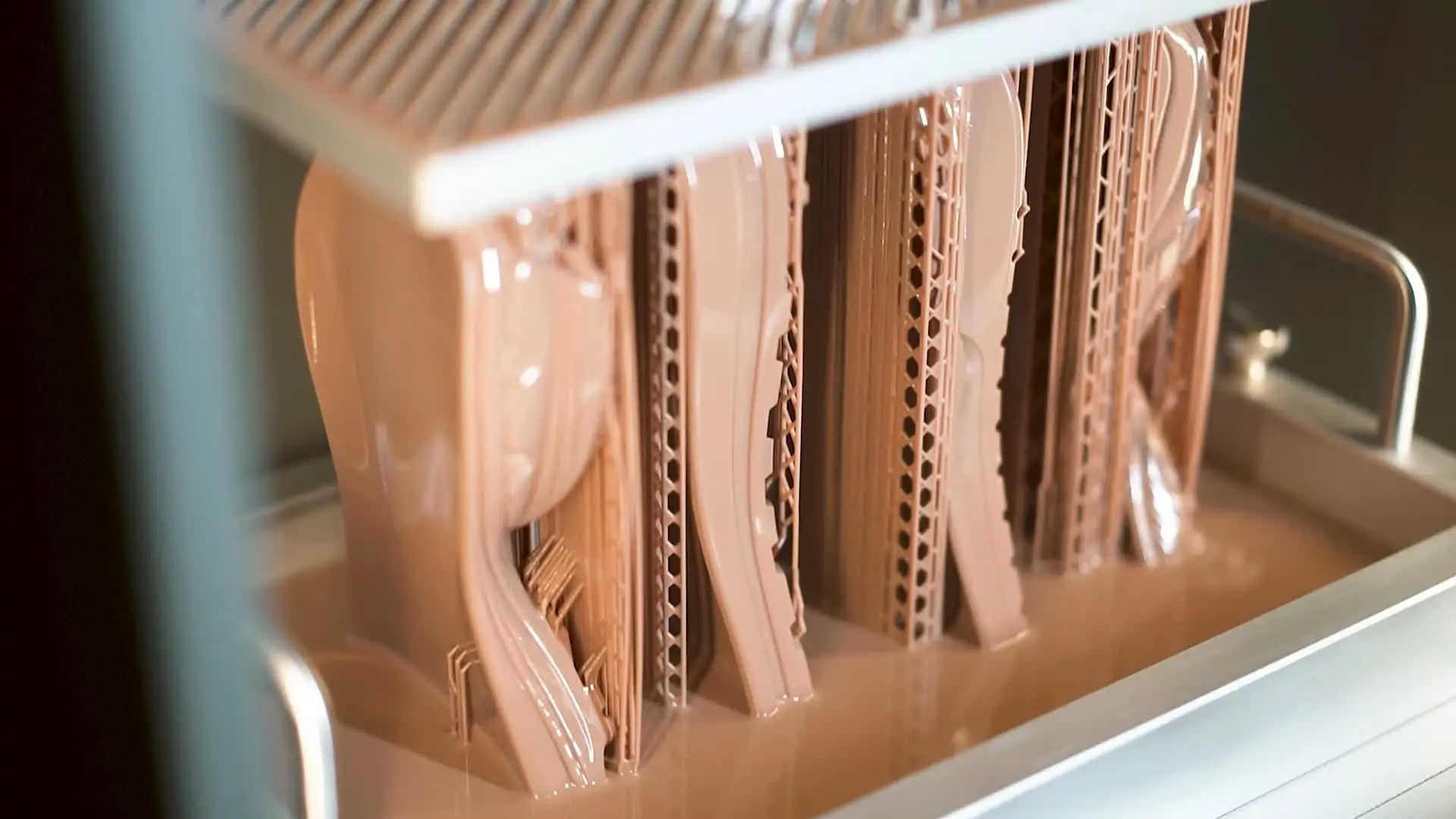
- 3.Volumetric Throughput: The build envelope of 302 × 162 × 380mm makes this resin printer particularly suitable for footwear mold production. While a single large model fits comfortably, the real efficiency gain is in batch production. Marek’s standard shoe mold dimension (approx. 98 x 36 x 268mm) can be arrayed to print up to 12 units in a single run. Critically, with a layer height of 0.2mm, the P13 Pro can complete a 300mm tall model in just 3 hours and 15 minutes.
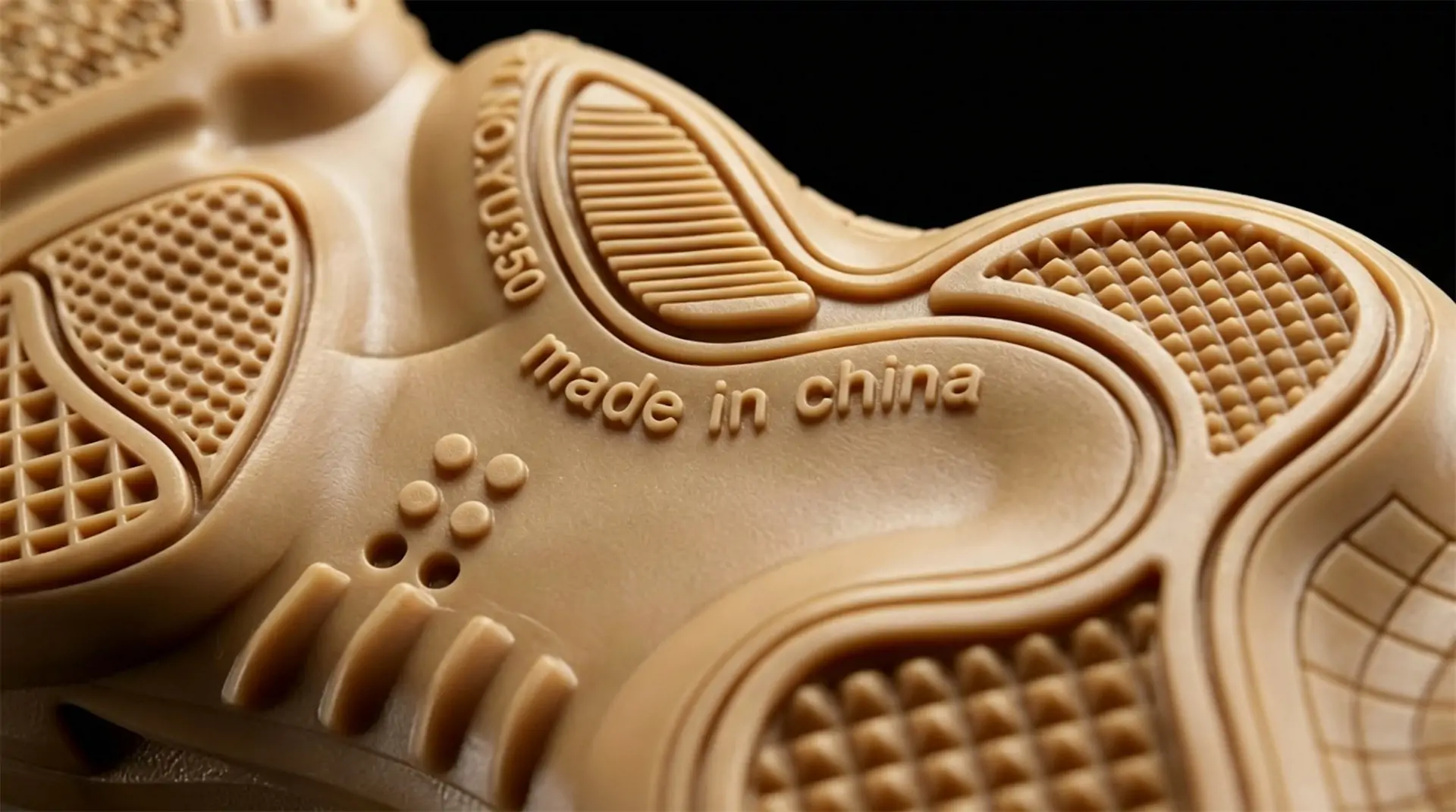
After reviewing the specifications, Marek was understandably cautious given his experience. To bridge the gap between data and reality, we shipped a sample print—a full 380mm test shoe mold with intricate stitching details and fine perforations. The difference was immediately apparent upon inspection. Using grayscale management of XY pixels, the P13 Pro achieves an effective resolution of 10μm, effectively erasing the visible pixel texture that plagues lower-resolution LCD screens. More importantly, the dimensional accuracy held from bottom to top; a 100mm calibration feature measured within five filaments (0.05mm) of the CAD model.
“When I saw the sample under the scope light, I was looking for the layer lines, but the surface was almost waxy smooth,” Marek noted. “The sharp corners at the toe are where we usually see problems. Here, they are crisp. I haven’t seen a part this tall look this clean straight off the printer.”
Beyond the print quality, the operational workflow of the P13 Pro turned out to be a significant factor in the lab’s adoption of the machine. The device is designed with the professional user in mind, offering a 5.0-inch color touchscreen and flexible on-board parameter adjustments. The resin vat includes a 2kg capacity with a dedicated pour spout and positioning pins, allowing for quick material changes without the mess often associated with deep-tank printers. Additionally, the integrated air filtration system and the smooth, vertical sliding door mechanism meant the machine could operate in the main lab space without overwhelming the team with resin odor or requiring heavy lifting to access the build chamber.
One unexpected advantage Marek discovered was the P13 Pro’s role as a supplement to their larger industrial stereolithography 3D printer fleet. Because the P13 Pro excels at printing delicate features down to 0.3mm wall thickness, the team began using it exclusively for small, intricate strap buckles and eyelet pieces that were prone to loss or damage during the cleaning and post-curing stages of the SLA workflow. This not only safeguarded those tiny components but also freed up significant real estate on the large-format SLA trays, effectively increasing overall shop throughput.
Details determine success or failure in additive manufacturing. While many desktop stereolithography 3D printers claim tall build heights, the Magforms P13 Pro delivers that height with the mechanical and optical integrity required for industrial applications. Marek’s transition from a frustrated user to a repeat buyer underscores a simple truth in this industry: reliability at the extreme ends of the envelope is non-negotiable.
If you are currently experiencing the limitations of your current resin 3D printer—whether it’s Z-axis banding above 250mm, poor surface texture, or simply too many failed builds—we invite you to examine the Magforms P13 Pro. Contact us to discuss your specific application or request a sample print to see the difference that industrial-grade stability can make in your workflow.