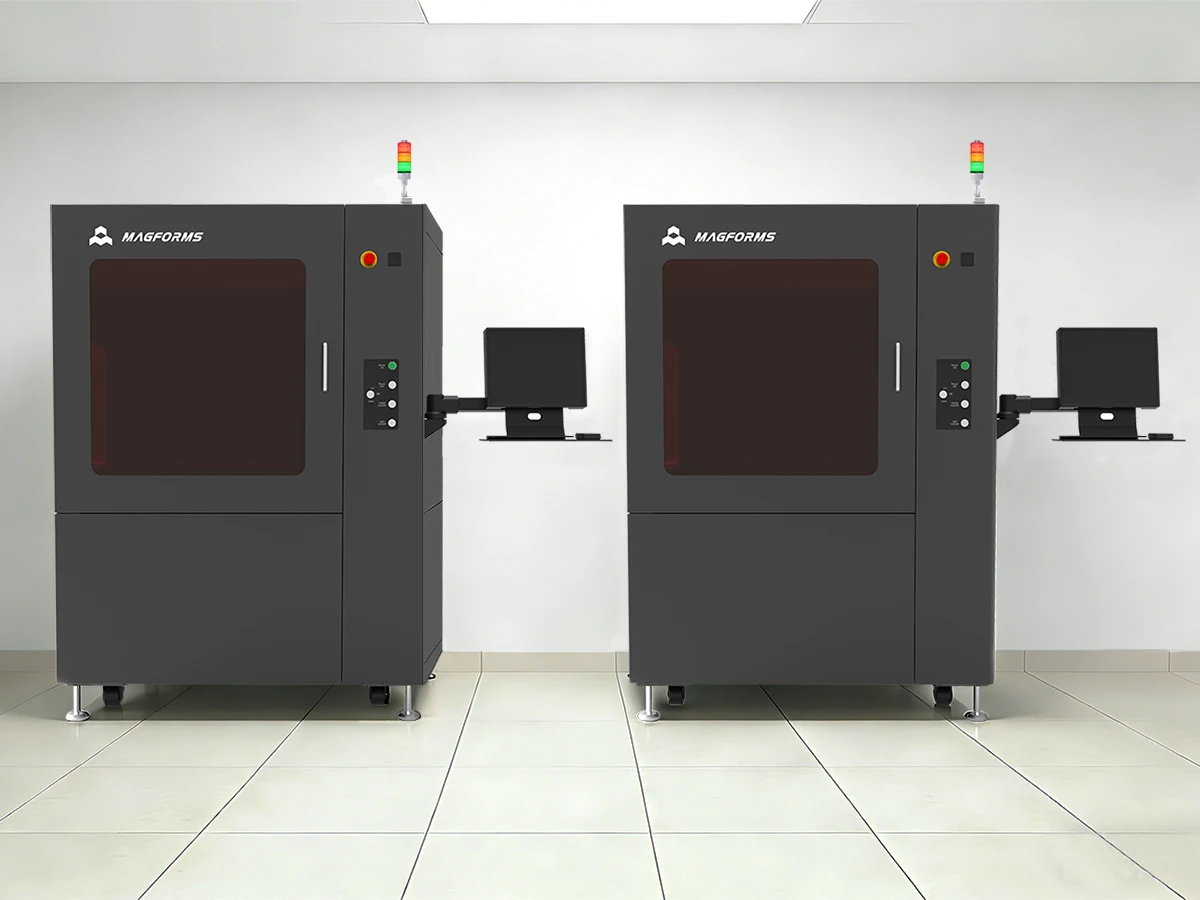
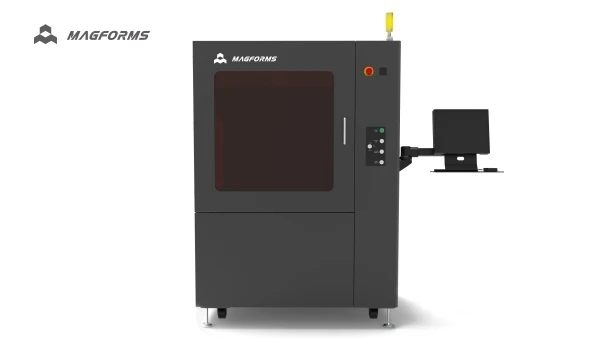
In an era that demands rapid iteration and direct production, equipment capable of only prototyping no longer meets industrial needs. The Magforms SL600 industrial-grade Stereolithography (SLA) 3D printer rises to this challenge with its massive 600×600×400mm build volume. By integrating top-tier hardware, intelligent algorithms, and an open ecosystem, it serves as a reliable cornerstone for everything from R&D validation to batch production.
Intelligent Efficiency, Redefining Production Cadence
The core breakthrough of the SL600 lies in its successful unification of two critical metrics for industrial production: high efficiency and high precision.
- Intelligent Printing: Combining Speed and Accuracy: Equipped with exclusive Variable Spot Size Technology, it intelligently switches between laser spots—a large spot rapidly fills internal volumes, while a small spot (0.15-0.2mm) precisely defines contours and fine details. This enables print speeds 30%-50% faster than traditional SLA while perfectly rendering sharp edges and complex textures. Combined with continuous path optimization from its self-developed deep learning algorithm, overall efficiency gains are further enhanced.
- Precision Mechanics: Laying the Foundation for Quality: The device utilizes Taiwan HIWIN high-precision linear guides. The recoater system operates on an ultra-flat granite platform (flatness: 0.02mm), driven precisely by Panasonic servo motors. This ensures uniform resin coating and accurate layer stacking at the hardware level, providing a solid foundation for achieving consistent micron-level dimensional accuracy.
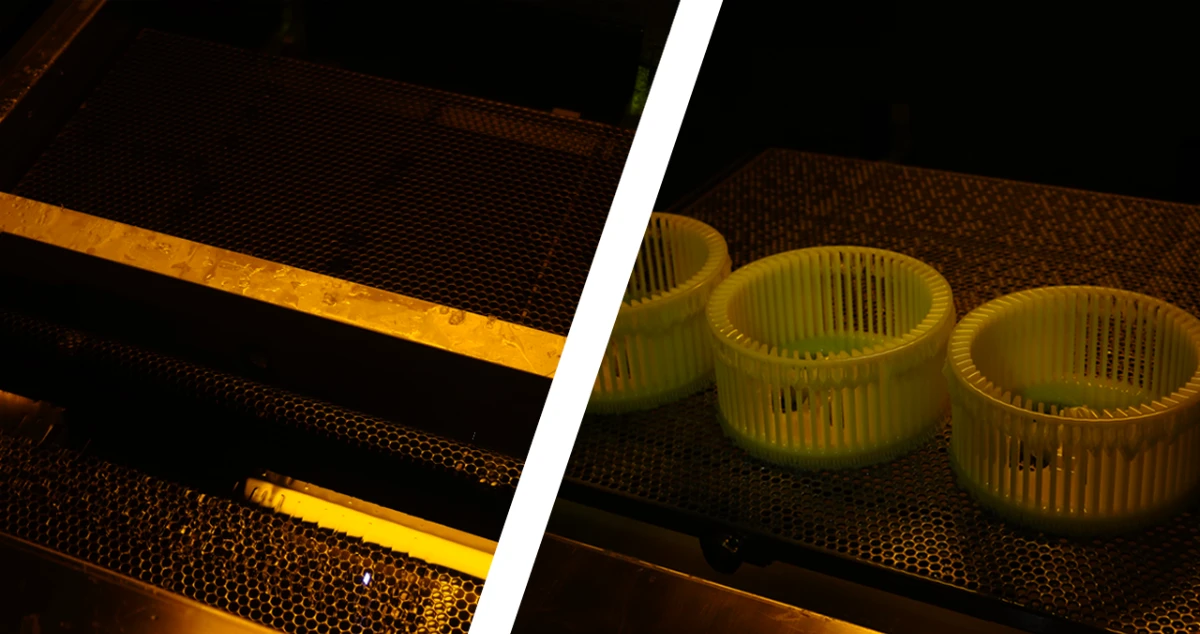
The SL600 produces precision components—directly suitable for assembly verification, functional testing, or even end-use—in a significantly shorter cycle than traditional methods, greatly accelerating the entire product development timeline.
Stable and Reliable: Ensuring Continuous Output
For equipment integrated into production lines, stability and predictable output are paramount.
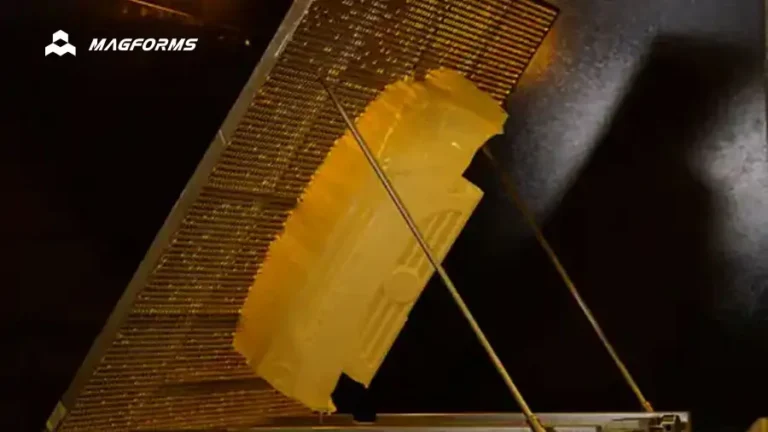
- Top-Tier Core Components: It integrates an AOC laser and German Scanlab galvanometers, ensuring long-term stable laser output and precise scanning. Schneider Electric components form a safe and reliable operational foundation. This configuration is specifically designed to meet the demands of 24/7 continuous industrial operation.
- Robust Design and Intelligent Management: The machine features a solid structure that effectively minimizes operational vibrations. Equipped with an intelligent temperature control system, it maintains a stable environment within the build chamber, ensuring highly consistent print quality across different batches and seasons for reliable, repeatable production.
The SL600’s exceptionally high print success rate and long-term operational stability directly reduce the risks and hidden costs associated with equipment failures and print failures.
Open Ecosystem, Empowering Innovation Freedom
The SL600 is designed to break down barriers, giving users full control over material choice and innovative applications.
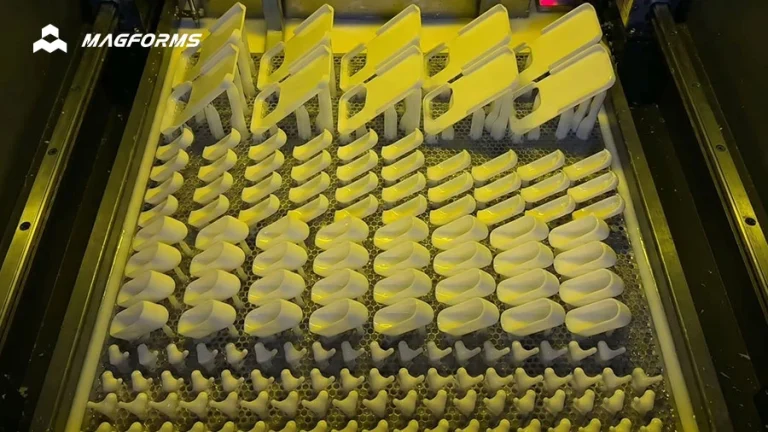
- Open Material Strategy: The device is compatible with the vast majority of commercially available 355nm photopolymer resins. Users can freely select cost-effective or specialized materials, seamlessly connect with existing supply chains, and boldly explore new applications—significantly expanding the machine’s application potential and long-term value.
- Comprehensive Support System: It comes equipped with the intuitive Magforms iBuild2.0 operating software, which simplifies workflows. More importantly, it is backed by a professional after-sales team that provides 24-hour rapid response support, ensuring your production continuity is reliably safeguarded.
Conclusion
The Magforms SL600 is more than a large-format 3D printer. It is a comprehensive production solution that integrates intelligent efficiency, industrial reliability, and operational freedom. It serves as a dependable partner for engineers and manufacturing experts, transforming innovative concepts into high-quality products—quickly, precisely, and reliably—to drive the continuous advancement of manufacturing competitiveness.