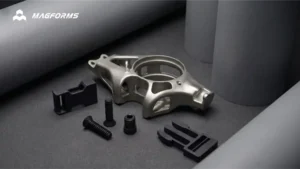
Prototypes: From Production Delays to Stable Daily Output
A prototype manufacturing service provider specializing in industrial product development was facing increasing pressure from customers who expected shorter lead times, stable delivery schedules, and highly accurate prototype parts.
The company handled a large number of functional prototypes, assembly verification models, and appearance samples every month. Many projects required complex structures, detailed surface textures, and dimensional precision suitable for engineering validation.
However, their previous 3D printer workflow created constant production uncertainty. Several existing SLA 3D printer systems frequently developed hardware issues after extended operation. Linear guide failures, positioning instability, and recurring maintenance problems often interrupted production during critical customer projects.
Remote-only technical support
made the situation even more difficult. Operators had to spend valuable production time troubleshooting machine issues themselves, while unresolved problems caused unexpected downtime and delayed deliveries.
As order volumes increased, the company realized that unreliable equipment was becoming a larger financial risk than the original machine investment.
From Outsourcing and Frequent Failures to In-House SLA Printing
Before adopting Magforms equipment, the company relied partially on outsourced prototype production and several older Stereolithography 3D Printer systems to manage customer demand.
Although outsourcing helped during peak production periods, long lead times and communication delays reduced flexibility whenever customer modifications were required. At the same time, internal equipment instability continued to affect production efficiency.
During the evaluation process for a new industrial SLA 3D printer, the engineering team visited Magforms to inspect the equipment and review printed sample quality firsthand.
The machine structure immediately stood out. The system used a rigid layout with a 2 mm thick sheet metal housing and a granite platform designed to reduce vibration and maintain stable operation during long production cycles.
More importantly, the printer integrated internationally recognized industrial components, including AOC lasers, German Scanlab galvanometer systems, and Panasonic servo motors.
“We were looking for more than just another machine,” one production manager explained. “We needed an Industrial 3D Printing system that could run continuously without disrupting customer delivery schedules.”
Within the first several months of operation, the Magforms printer maintained highly stable production performance even under continuous 24-hour printing conditions.
Stable Hardware Reduced Production Interruptions
“We previously lost too much time dealing with machine problems,” one production manager explained. “After switching to Magforms, production became far more predictable, which helped us manage delivery schedules much more confidently.”
The company also reported faster technical support response whenever assistance was required, reducing downtime during maintenance situations.
Using an Industrial SLA 3D Printer for Faster Production
Once the engineering team completed a 3D design, the new in-house SLA workflow allowed prototypes to move directly into production without depending on external suppliers.
The Scanlab galvanometer system supports scanning speeds up to 12 m/s, while normal production speeds typically remain between 6 and 10 m/s. In addition, Magforms uses variable spot technology that automatically adjusts beam size during printing.
Larger spot sizes are used for filling areas to improve efficiency, while smaller spot sizes maintain contour precision and detailed surface quality.
Faster Prototype Iteration
“We can now complete customer prototype adjustments much faster than before,” the engineering team explained. “Instead of waiting for external suppliers, we can print updated parts immediately and continue testing the next day.”
“Before upgrading our SLA 3D printer setup, design revisions often delayed production for days,” another engineer said. “Now we can finish multiple validation rounds within the same week.”
“The speed improvement has helped us respond to customers much faster,” the team added. “That flexibility gives us an advantage when handling urgent prototype projects.”
Compared with conventional Resin 3D Printer workflows, production speed improved by approximately 30% to 50%.
At the same time, the printer maintained high dimensional accuracy suitable for assembly verification and mold validation applications.
High Precision for Functional Testing
The Magforms system uses Panasonic servo motors with highly accurate positioning control:
· Build platform positioning accuracy of ±8 μm
· Liquid level positioning accuracy of ±0.03 mm
· Granite platform precision below 0.02 mm
Combined with the coordination between the AOC laser and Scanlab galvanometer, the printer achieved stable spot geometry and highly consistent dimensional performance.
The company could now produce functional prototypes with fewer print failures and less manual correction after printing.
Reducing Costs and Improving Material Flexibility
The new SLA workflow also helped reduce post-processing time and material waste.
Fine spot sizes between 0.15 mm and 0.2 mm allowed the printer to reproduce detailed textures, sharp corners, and small structural features more clearly. In addition, the built-in grayscale processing algorithm reduced visible layer stepping on printed surfaces.
As a result, operators spent less time sanding and cleaning finished parts.
Open Material Compatibility
Unlike closed resin ecosystems that restrict material selection, Magforms uses an open material platform compatible with most 355 nm resins.
This allowed the company to continue using existing resin inventories while also testing new materials for future applications.
The removable resin tank design further improved workflow flexibility by allowing operators to switch materials more efficiently.
More Efficient Post-Processing
“The material switching process became much easier for daily production,” the team explained. “That flexibility helped us reduce downtime between projects.”
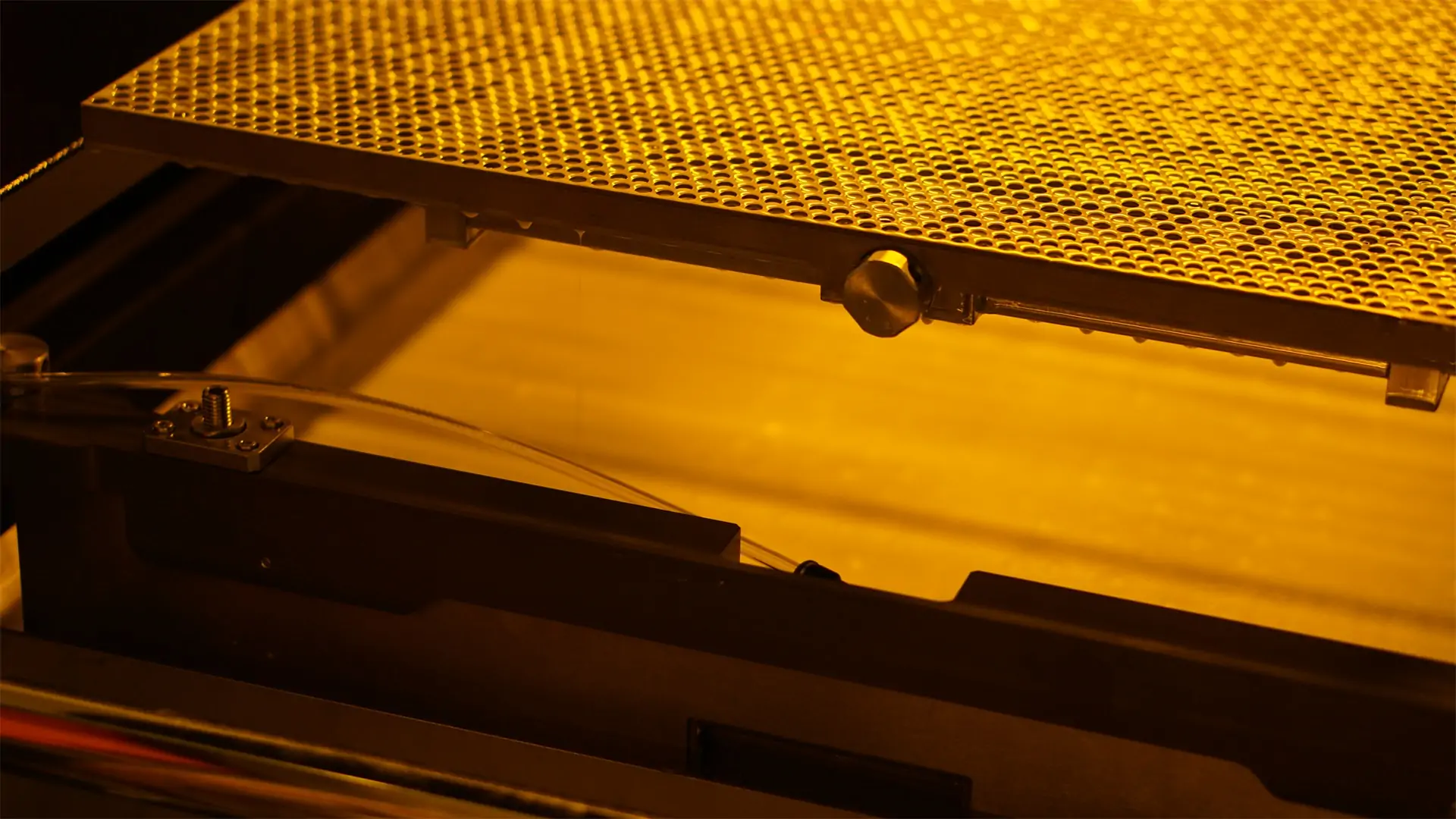
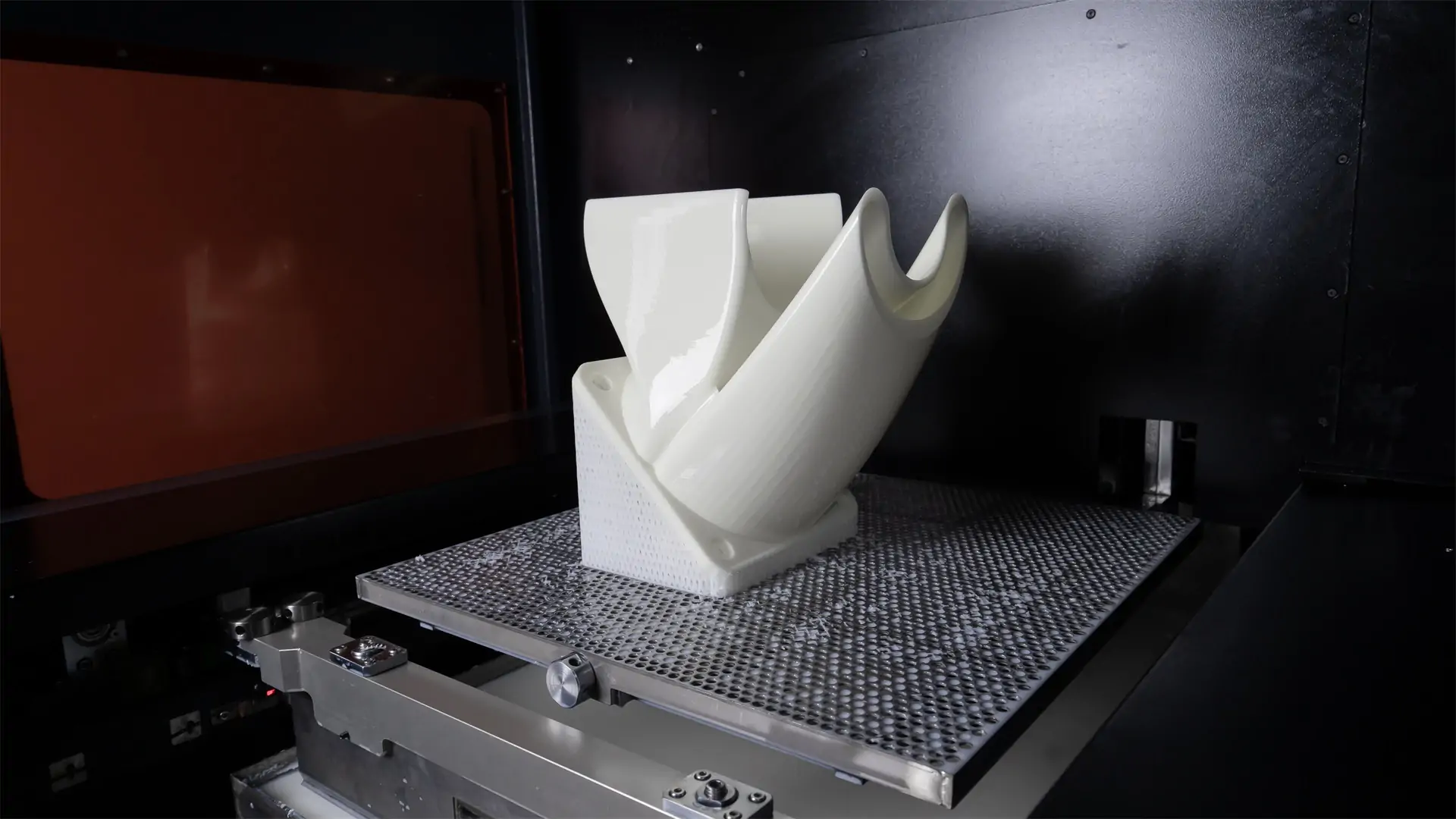
The support mesh structure also allowed excess resin to flow back into the tank after printing, reducing resin waste and shortening cleaning time during post-processing.
Conclusion
For this prototype manufacturing company, adopting Magforms industrial SLA 3D printing systems improved far more than printing speed alone.
The new in-house workflow reduced downtime, improved production stability, accelerated prototype iteration, and lowered operational costs. Stable industrial components, high-speed scanning performance, accurate positioning systems, and open material compatibility helped the company create a more reliable production environment for demanding customer projects.
Today, the company continues expanding its use of Magforms equipment for daily prototype manufacturing while improving delivery confidence and customer responsiveness across a wide range of Industrial 3D Printing applications.