In advanced engineering and product development environments, precision, stability, and repeatability are critical. For an overseas technology-driven organization working with highly detailed functional components, traditional manufacturing methods—and aging additive systems—were increasingly unable to meet evolving design requirements.
To improve development efficiency and design flexibility, the team began evaluating professional 3D printer solutions capable of delivering modern, industrial-grade accuracy while supporting rapid iteration.
The Limits of Legacy SLA Systems and Desktop Alternatives
For many years, the organization had relied on an industrial SLA printer that had been in continuous operation for over two decades. While the system had once represented the state of the art, time had taken its toll. Print speeds were slow, maintenance requirements increased, and the system struggled to keep pace with modern development cycles that demanded faster iteration and higher reliability.
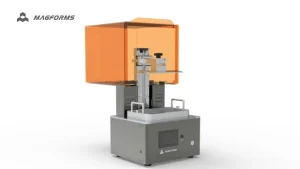
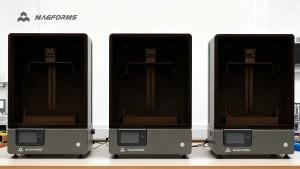
In parallel, desktop 3D printer systems were introduced for early-stage prototyping. Although convenient and accessible, these machines revealed clear limitations when applied to more demanding tasks. Larger components, wide flat surfaces, and functional prototypes often suffered from inconsistent surface quality and dimensional instability. Resin shrinkage, particularly in large-area prints, frequently led to warping and rework.
As product designs grew more complex, it became clear that neither legacy industrial equipment nor desktop machines could fully support the team’s needs. What they required was a professional 3D printer SLA solution that could bridge the gap—combining industrial precision with modern efficiency and stability.
“We weren’t just replacing an old machine. We needed a reliable SLA system that could support larger parts, deliver consistent accuracy, and remain stable over long production cycles.”
——The engineering team at a leading overseas technology organization
Transitioning to Modern Precision with Magforms Lab300
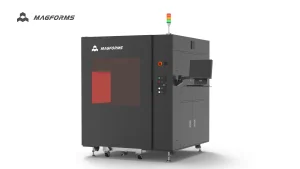
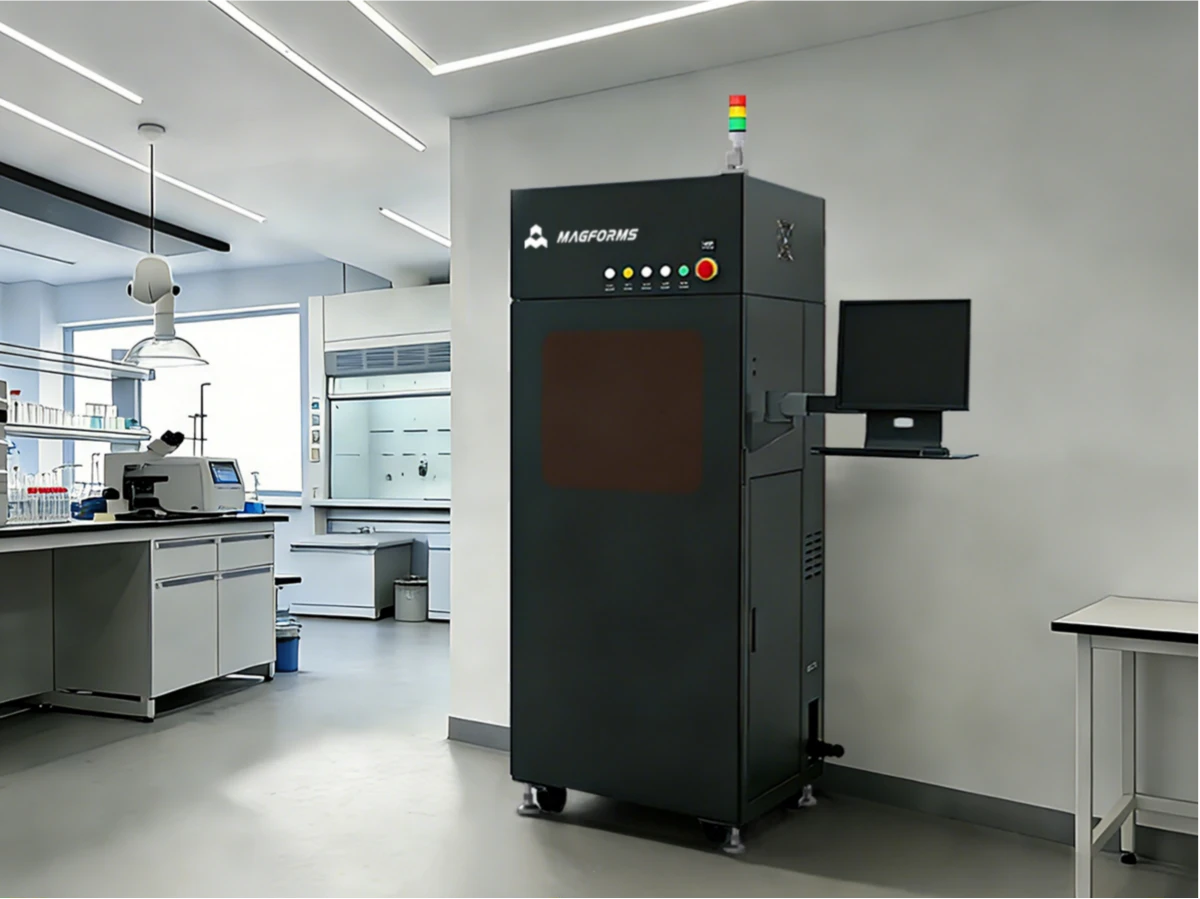
After evaluating multiple options, the organization selected the Magforms Lab300 as its next-generation SLA printing platform.
The Lab300 proved to be a direct and effective replacement for legacy SLA systems, offering high-precision output with significantly improved productivity. At the same time, it addressed the shortcomings of desktop 3D printer solutions by providing a larger build volume, higher optical accuracy, and a more stable resin printing process.
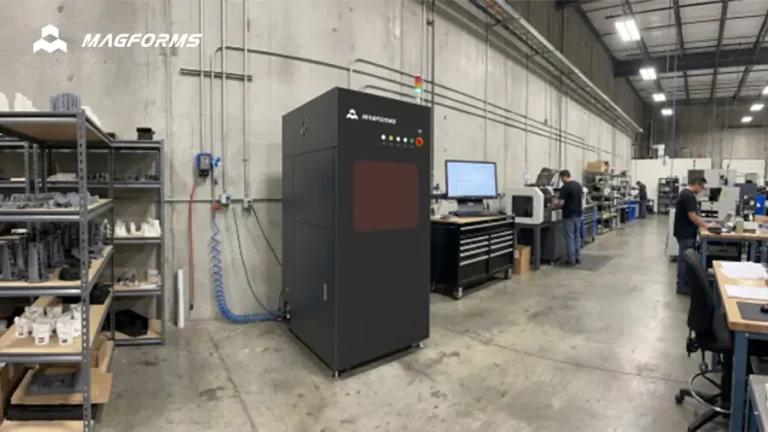
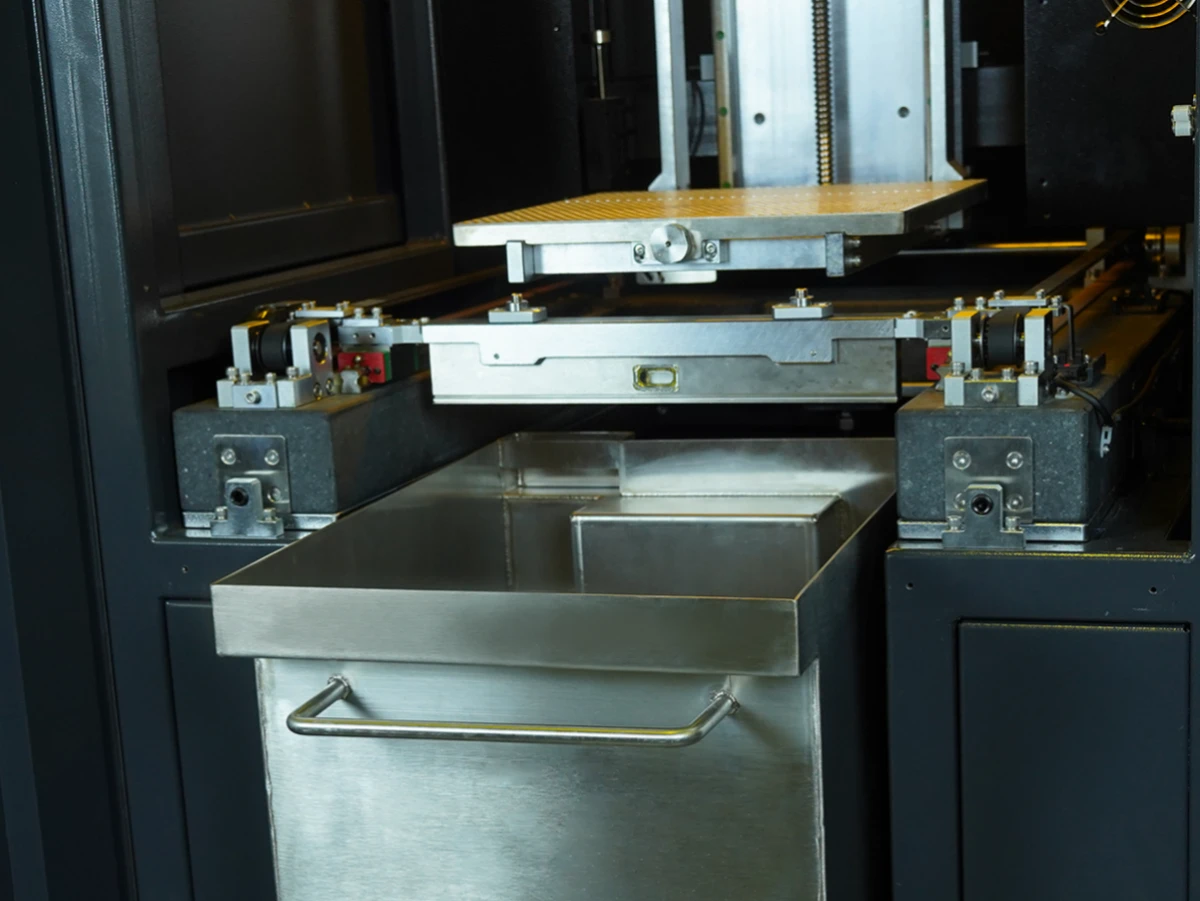
Despite being an industrial-grade SLA printer, the Lab300 boasts a compact footprint, enabling easy integration into laboratory and engineering environments without requiring major infrastructure changes. Its intelligent variable laser spot technology dynamically balances fine detail resolution with efficient print speeds, ensuring consistent results across a wide range of part geometries. In addition, the removable resin tank and vertically adjustable material system improve process control while reducing material waste.
Most importantly, the optimized 355 nm resin process significantly reduces deformation and warping—an issue the team had consistently encountered with other resin-based printing systems, especially when producing large or flat components.
With Magforms, the Lab300 has evolved beyond a standalone 3D printer. It has become a core manufacturing tool, enabling faster iteration, greater confidence in printed parts, and a smoother transition from legacy systems to modern, precision-driven development workflows.