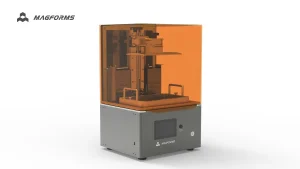
Additive manufacturing has fundamentally reshaped how engineering teams validate designs, particularly in the automotive sector, where visualizing fluid dynamics inside complex housings is critical. Yet, not every 3D printer workflow delivers the clarity required for high-end validation. For one European automotive supplier specializing in lighting and climate control components, the journey from bottleneck to efficiency came through upgrading to an advanced Industrial 3D Printer powered by precision SLA 3D printer technology.
A Prototyping Bottleneck in Automotive Lighting
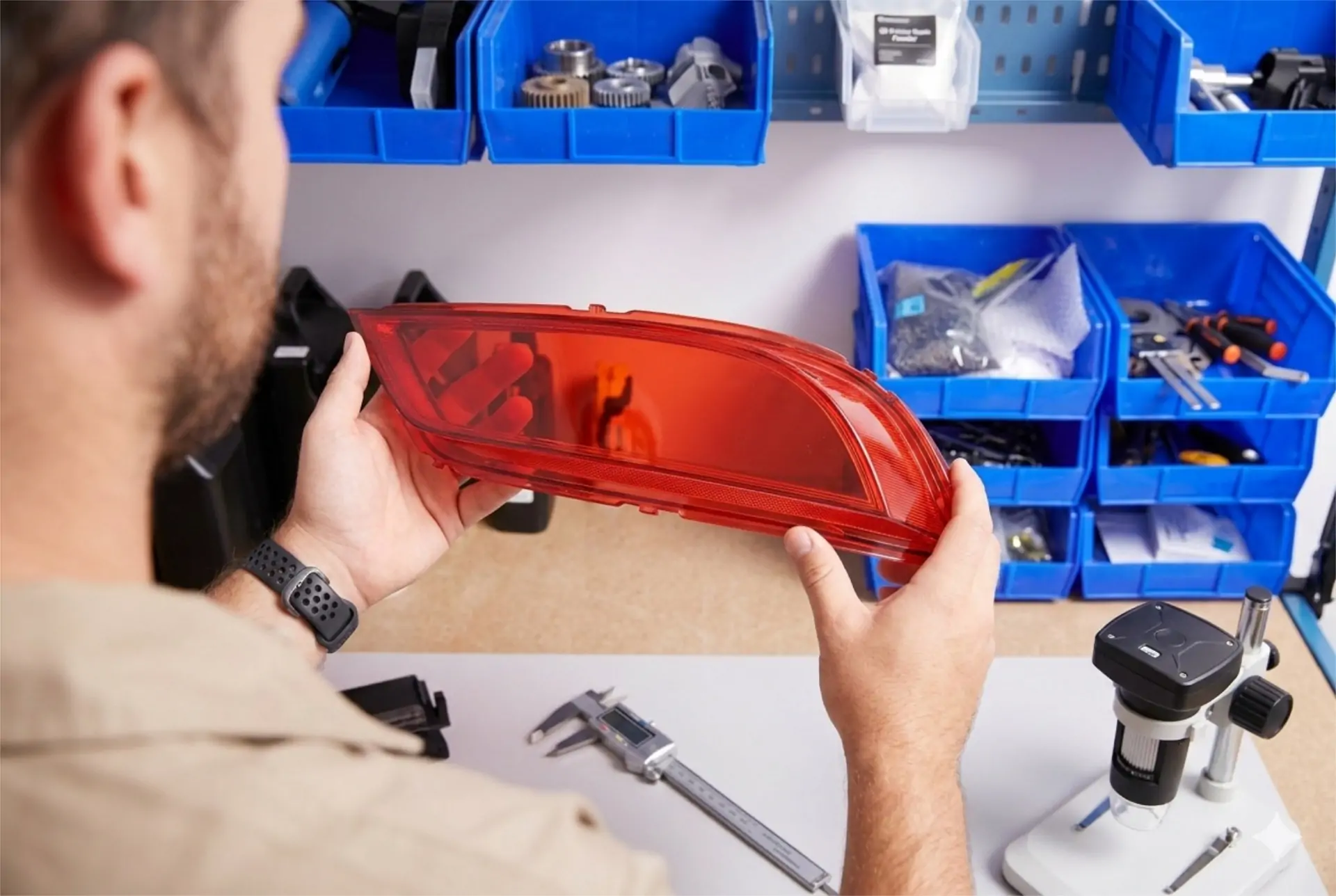
For an engineering service provider based in Central Europe, transparent Resin 3D Printer output is not occasional—it is essential. The team regularly produces clear lens prototypes, HVAC ducting models, and complex headlamp housings. These parts must go beyond geometric accuracy; they require near-optical clarity, a benchmark only achievable with a high-performance SLA printer.
However, their legacy SLA 3D printer systems created more problems than solutions. The post-processing team reported severe internal layer striations in transparent parts. “We’re essentially trading machine time for bench time,” noted a senior engineer.
The internal stair-step effect—common in lower-precision 3D printer systems—made polishing nearly impossible for enclosed geometries. This became a hard limitation on delivering usable validation models.
Integrating Magforms Precision SLA into the Workflow
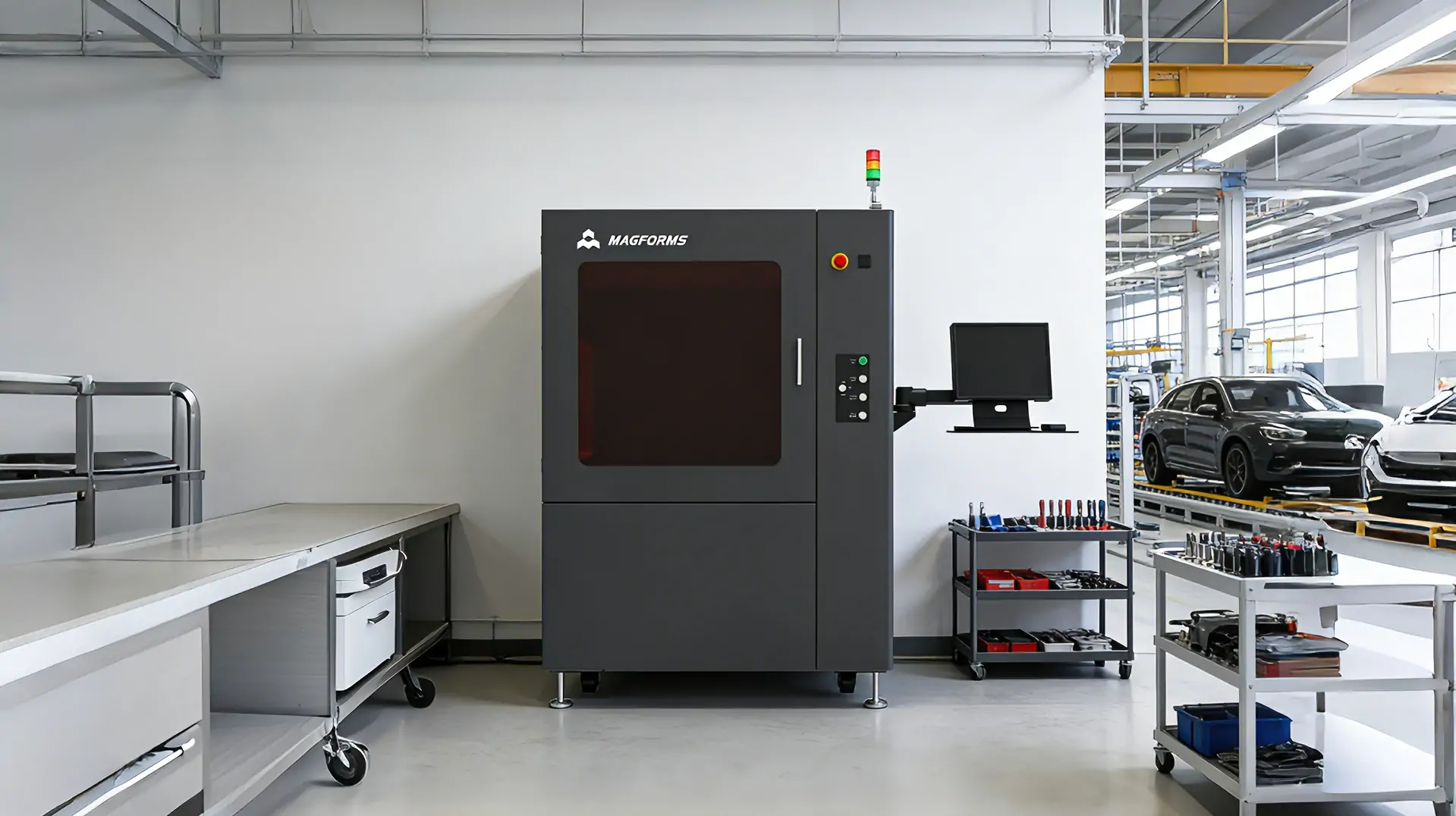
The turning point came when benchmark files were tested on the Magforms SL600, an advanced Industrial 3D Printer designed specifically for high-clarity applications.
Unlike conventional SLA printer setups, the SL600 integrates a Scanlab galvanometer with an AOC laser source, producing a stable and circular laser spot. This precision directly improves output quality from the resin 3D printer, reducing internal haze and optical distortion.
Additionally, grayscale algorithms and variable spot scanning enhance surface smoothness. The system can switch between wide-beam exposure for speed and a fine 0.15 mm spot for detail—something many traditional 3D printer platforms cannot achieve.
“After the first test print, we could read a calibration chart inside the part.”
That level of transparency marked a breakthrough for the team using this SLA 3D printer.
Material Freedom and Workflow Efficiency Gains
Beyond print quality, the open-material ecosystem of this Industrial 3D Printer proved highly valuable. Unlike locked-down resin 3D printer systems, the Magforms platform supports third-party 355 nm photopolymers.
This flexibility eliminates the need for costly material requalification—a major advantage for industrial users of SLA printer technology.
Structurally, the machine’s granite base and steel frame ensure stability during large-format builds. For parts up to 600 mm, the consistency of this 3D printer prevents layer shifting and surface banding.
The tilting build platform further improves efficiency by reducing resin residue, cutting post-processing time significantly—an often overlooked advantage in resin 3D printer workflows.
The Road Ahead for In-House Transparent Prototyping
With the new SLA 3D printer workflow, the lab transitioned from reactive troubleshooting to proactive innovation.
Same-day delivery of clear components is now achievable—something rarely possible with older 3D printer systems.
“We are no longer sanding layer lines—we are validating designs.”
For automotive manufacturers and engineering firms, upgrading to a high-performance Industrial 3D Printer is no longer optional. It is the gateway to achieving true design fidelity with modern SLA printer technology.