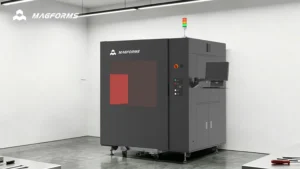
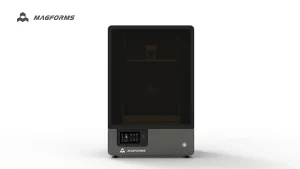
A European manufacturing team reached out after struggling for months with their production workflow on a large-format industrial 3d printer used for prototype and functional component manufacturing.
On paper, their setup seemed adequate: a high-volume SLA 3d printer, standard resin workflow, and experienced operators. In reality, the situation was far less stable. Large components printed on their Resin 3D Printer frequently failed during long overnight cycles. Some parts were completed but showed subtle dimensional drift, while others required extensive rework due to surface inconsistencies.
The core issue was not capability. It was stability and repeatability across long production runs on a Resin Printer system that could not fully maintain consistent performance.
For teams relying on additive manufacturing for assembly validation and prototype verification, an unstable 3d printer quickly turns into a production bottleneck. Resin waste increases, machine downtime becomes unpredictable, and delivery schedules start to slip under pressure.
When we first reviewed their workflow, the engineering team described a recurring pattern. Long print jobs running on their sla 3d printer overnight would sometimes fail without clear warning signals. Operators often arrived in the morning to either restart production or troubleshoot unexpected defects.
One engineer summarized the issue in a simple but telling way:
“We don’t just need a faster industrial 3d printer. We need a system that works when no one is watching.”
That statement reflected a deeper requirement: predictable performance from a large-format resin 3D printer, not just theoretical speed or resolution.
Their existing resin printer struggled most during extended production cycles. Small scanning deviations, mechanical vibration, and environmental temperature shifts gradually accumulated into visible print defects.
At this stage, we introduced the Magforms SL600 large-format sla 3d printer.
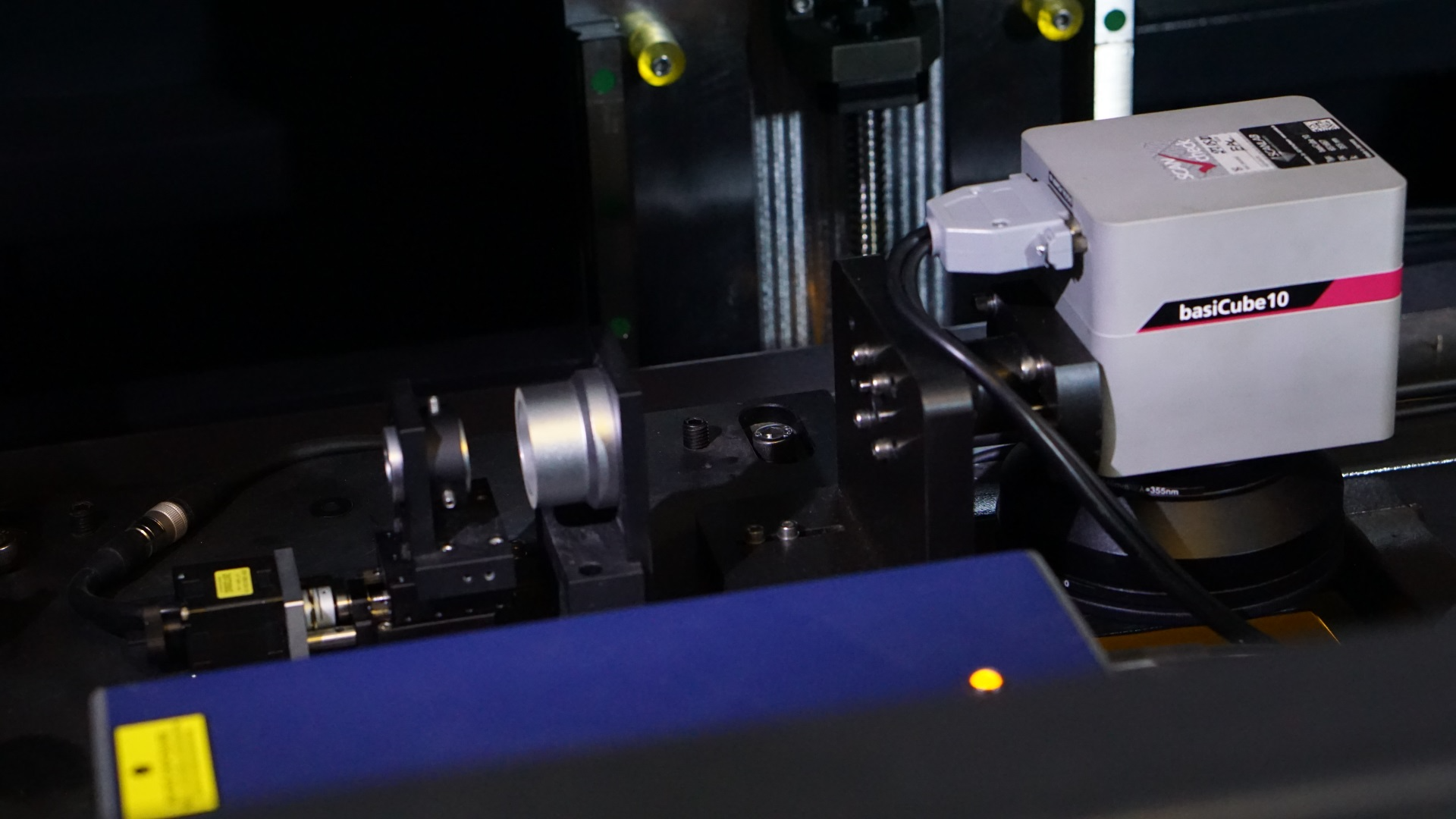
The SL600 is designed specifically for industrial environments where a 3d printer must operate continuously with minimal variation across long production cycles.
Its architecture integrates globally recognized industrial components to ensure stable performance in demanding conditions. The laser system is based on AOC technology, delivering consistent energy output throughout continuous operation. The scanning system uses German Scanlab galvanometers, known for high-precision and repeatable motion control in advanced resin printer applications.
Motion control is handled by Panasonic servo systems, ensuring that platform movement, resin leveling, and recoating actions remain highly stable during extended use. Electrical stability is reinforced by Schneider industrial-grade components, reducing the risk of unexpected downtime in industrial 3D printer environments. Linear motion is supported by HIWIN guide rails, ensuring long-term smooth and precise mechanical operation.
Structurally, the SL600 adopts a reinforced chassis with thick industrial sheet metal combined with a granite-based platform. This reduces vibration and deformation during long-duration sla 3d printer operation, which is critical for maintaining accuracy in large-format printing.
After reviewing the system architecture, the discussion shifted toward dimensional accuracy requirements.
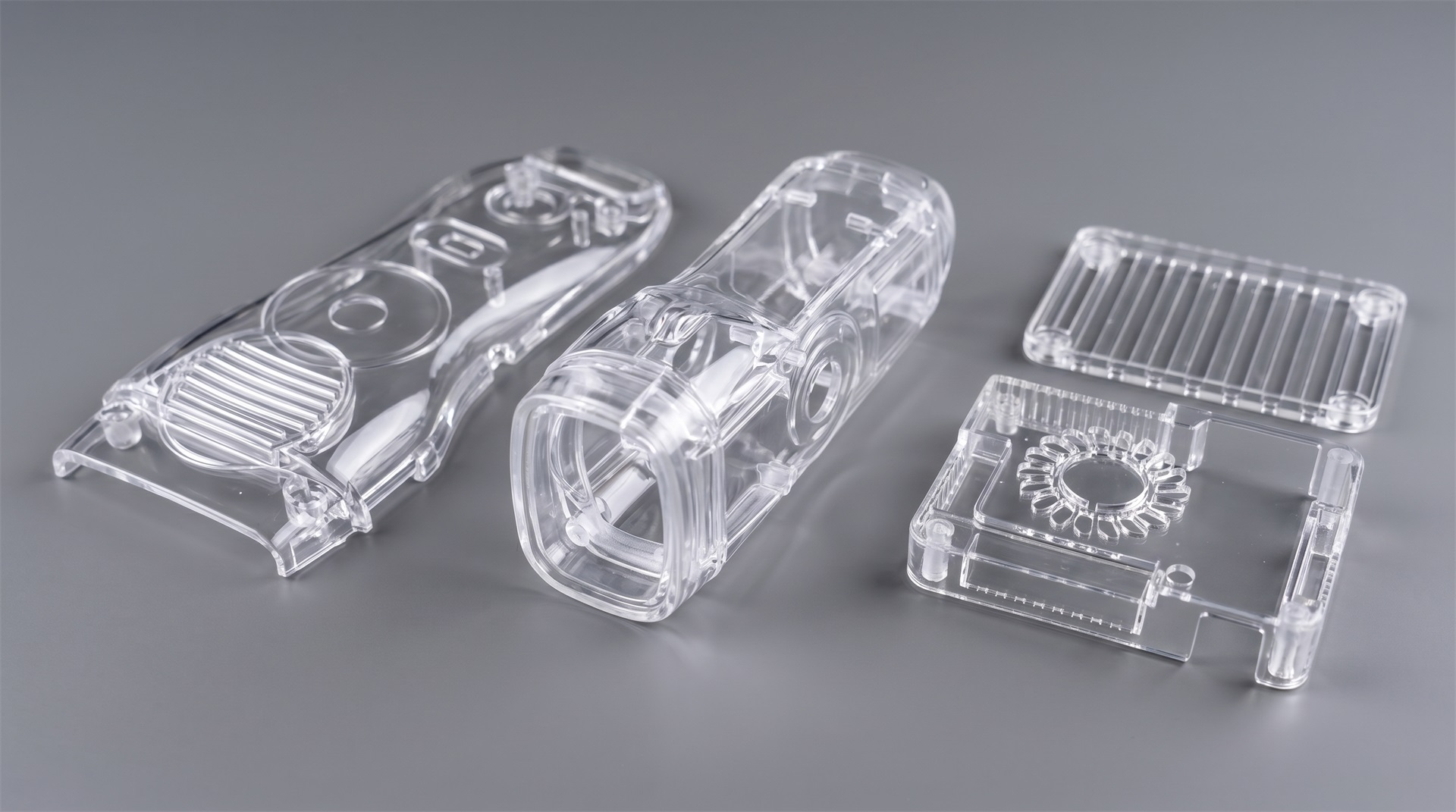
Many of the customer’s parts were used for assembly verification and early-stage tooling validation, where even minor deviations from a resin 3D printer can lead to assembly mismatch or redesign delays.
The SL600 achieves higher consistency through tightly synchronized motion systems and optical precision control. Platform positioning reaches micron-level accuracy, while resin layer control ensures stable and repeatable thickness during printing.
The laser system, combined with Scanlab scanning behavior, produces a highly uniform spot profile, improving edge definition and reducing distortion in fine features. This is particularly important when producing transparent or complex structural parts on a resin printer.
One project engineer later commented:
“We can accept longer printing time, but we cannot accept unpredictable results from any sla 3d printer.”
As production demand increased, efficiency optimization became a priority.
Unlike conventional industrial 3d printer systems that rely on fixed scanning strategies, the SL600 uses adaptive scanning logic. Large infill areas are processed with a broader laser spot to speed up curing, while fine edges and support structures are handled with a smaller, more precise beam.
Over time, the system also learns from previous jobs. Through accumulated print data, it gradually optimizes scan paths, improving efficiency without sacrificing surface quality. This allows manufacturers using a 3d printer in production environments to reduce cycle time while maintaining repeatability.
In real manufacturing conditions, this creates a balance between speed and accuracy that traditional resin printer systems often struggle to achieve.
After installation and onboarding, the customer gradually transitioned their production to the Magforms SL600 sla 3d printer.
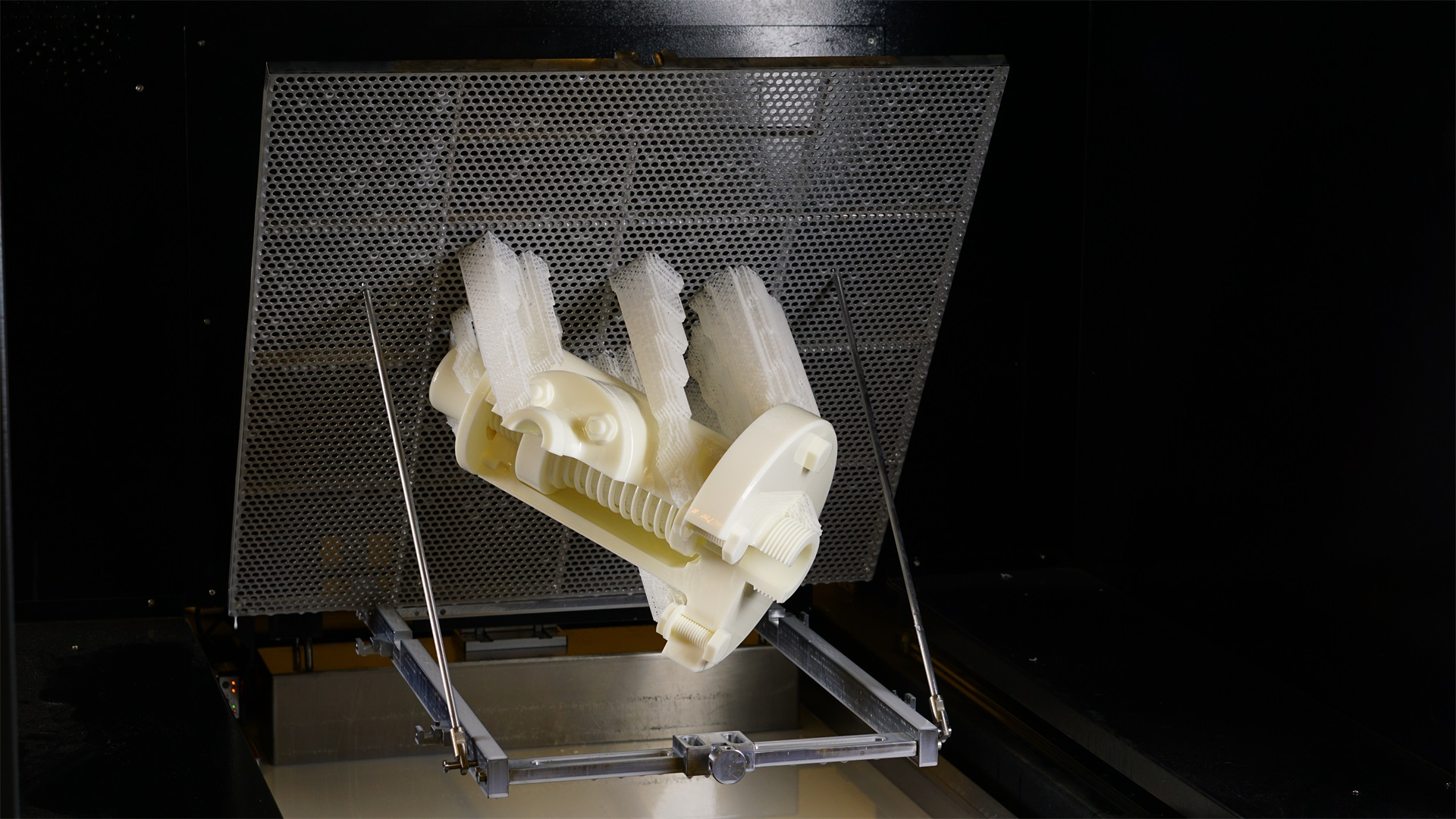
The improvement was visible within the first few cycles. Failed prints dropped significantly. Operators no longer needed to constantly supervise overnight jobs. Resin drainage and post-processing time were also reduced due to the platform’s structural design, which allows excess material to return more efficiently to the tank after printing.
Material flexibility also played a key role. Since the system supports open 355 nm resin compatibility, the company could continue using existing materials instead of switching to a locked ecosystem resin 3D printer, reducing qualification time and cost.
At the same time, when early operational questions appeared, the Magforms technical team responded quickly, helping stabilize production and avoid downtime typically associated with complex industrial 3d printer workflows.
Several weeks later, the customer returned with a request to expand capacity further.
What changed was not only machine output, but operational confidence in their sla 3d printer workflow.
Their team no longer treated SLA printing as a high-risk process requiring constant supervision. Instead, it became a predictable, integrated part of their manufacturing pipeline powered by a stable 3d printer platform.
The Magforms SL600 is designed exactly for this kind of environment: large-format resin printer production where uptime, dimensional consistency, and repeatability matter more than isolated peak performance.
It combines industrial-grade components, precision motion control, adaptive scanning intelligence, thermal stability, open-material compatibility, and responsive technical support into one production-focused industrial 3d printer solution.
If your current sla 3d printer workflow is affected by instability, failed prints, or inconsistent dimensional results, the limitation may not be your material—it may be the stability of your machine.
Magforms SL600 is designed to remove that uncertainty.
Stable output is not a feature. It is the foundation.