Choosing the right Industrial SLA 3D Printer Manufacturer is a critical decision for companies adopting additive manufacturing for professional production. As industries increasingly use stereolithography technology for prototyping, tooling, customized manufacturing, and low-volume production, selecting a reliable supplier has become more important than simply comparing machine specifications.
Many manufacturers evaluate suppliers based on visible factors such as build volume, printing accuracy, laser technology, and equipment price. However, the long-term value of an Industrial SLA 3D Printer depends on a much broader range of capabilities, including technology development, material flexibility, manufacturing quality, application experience, and technical support.
For companies producing automotive prototypes, medical models, transparent components, industrial models, consumer products, and large customized structures, an industrial SLA system becomes part of the overall production workflow. Manufacturers can explore different Industrial SLA 3D Printer Series based on their production requirements. A suitable supplier should not only provide reliable equipment but also help customers optimize printing processes, improve production efficiency, and expand future applications.
Unlike desktop Resin Printers, industrial stereolithography systems are designed for continuous manufacturing environments. Equipment stability, production consistency, and workflow efficiency directly influence operational costs and business performance.
This guide explains the key factors manufacturers should evaluate when selecting an Industrial SLA 3D Printer Manufacturer, helping companies identify suppliers that can provide long-term manufacturing value rather than only a machine purchase.
Key Factors to Compare When Choosing an Industrial SLA 3D Printer Manufacturer
Before investing in an industrial stereolithography system, manufacturers should evaluate suppliers from multiple perspectives. The right supplier should provide not only advanced equipment but also reliable technology, production experience, and long-term support.
A professional Industrial SLA 3D Printer Manufacturer should be evaluated based on the following factors:
| Evaluation Factor | Why It Matters | What Buyers Should Evaluate |
| Technology Capability | Determines printing stability and production consistency | Laser system, scanning technology, motion control, process optimization |
| Manufacturing Quality | Influences long-term equipment reliability | Component selection, assembly standards, calibration process |
| Material Compatibility | Expands application possibilities and improves production flexibility | Resin options, material strategy, open material compatibility |
| Industry Experience | Helps match equipment with real production requirements | Automotive, medical, consumer, film and industrial applications |
| Technical Support | Reduces downtime and improves production efficiency | Training, maintenance, troubleshooting, application assistance |
| Future Scalability | Supports long-term manufacturing development | Equipment expansion, software updates, application growth |
A supplier with strong overall capability can provide value throughout the entire equipment lifecycle, from initial installation and application testing to long-term production operation.
When comparing industrial SLA printers, companies should look beyond individual specifications and evaluate whether the manufacturer has the technical foundation and service capability required for continuous industrial use.
Why Industrial SLA 3D Printer Manufacturer Selection Matters
Selecting an Industrial SLA 3D Printer Manufacturer is not simply a purchasing decision. It is a strategic choice that can influence product development speed, production flexibility, and manufacturing efficiency for years.
Many companies initially focus on equipment specifications because they are easy to compare. However, specifications alone cannot fully represent real production performance.
For example, two industrial SLA systems may offer similar build volumes and accuracy ratings, but differences in engineering experience, manufacturing standards, and application support can significantly affect actual results.
A reliable supplier should understand how customers use stereolithography technology in real production environments. This includes helping manufacturers choose suitable workflows, optimize printing parameters, and select appropriate materials for different applications.
This is especially important because industrial applications often have different requirements.
Automotive manufacturers may prioritize dimensional accuracy and design verification.
Medical companies may require consistent detail reproduction and stable production quality.
Film and creative industries may need large-format production, smooth surfaces, and flexible customization.
A supplier with broader application knowledge can provide more effective solutions because it understands the challenges behind each manufacturing process.
For this reason, choosing an Industrial SLA 3D Printer Manufacturer should focus on evaluating the complete manufacturing ecosystem rather than selecting equipment based only on initial cost or technical specifications.
How to Evaluate Industrial SLA Printing Technology Capability
The technology foundation behind an Industrial SLA 3D Printer directly affects printing accuracy, production stability, and application range. Understanding the fundamentals of How Industrial SLA 3D Printing Works can help buyers better evaluate supplier technology capability.
When evaluating suppliers, manufacturers should consider whether the company has experience developing and optimizing core stereolithography technologies.
A professional stereolithography printer manufacturer should have strong control over key technical areas, including laser performance, scanning accuracy, motion systems, and printing process optimization.

The laser system is one of the most important components affecting part quality. Stable laser output and precise energy control help ensure consistent curing performance during long production cycles.
Industrial SLA systems also rely on high-precision galvanometer scanning and stable mechanical movement. Advanced scanning systems, servo-driven motion control, and rigid machine structures help maintain positioning accuracy when producing detailed parts or large-format components.
However, hardware performance alone does not guarantee successful production. Experienced manufacturers also develop optimized printing processes, including:
· Resin processing parameters
· Support strategies
· Scanning optimization
· Production workflow improvements
For companies adopting stereolithography 3D printing, supplier engineering capability is an important factor because technology development directly influences repeatability, efficiency, and long-term equipment performance.
A manufacturer with strong technical experience can help customers achieve stable results across different applications instead of providing only a standard machine configuration.
Material Flexibility and Application Compatibility of Industrial SLA Printers
Material compatibility has become an increasingly important consideration when selecting industrial SLA printers.
Different industries require different resin characteristics depending on their production goals. Applications may require materials with:
· High transparency
· Mechanical strength
· Heat resistance
· Casting performance
· Flexible properties

Some suppliers operate closed material ecosystems, which means customers can only use specific materials from the same manufacturer. Although this approach may simplify initial operation, it can create limitations during long-term production.
Potential challenges include:
· Limited material choices
· Higher dependence on a single supplier
· Reduced flexibility for new applications
· Less control over material costs
A manufacturer that supports broader material compatibility provides customers with greater production freedom.
This allows companies to:
· Select suitable materials for different projects
· Test new application possibilities
· Optimize production costs
· Adapt workflows as requirements change
Material flexibility is particularly valuable for industries requiring customized production, such as film props, industrial models, consumer products, and large-scale prototypes.
For manufacturers searching for a large SLA printer or an SLA 3D printer large build volume solution, material capability should be considered together with equipment size and production requirements.
An experienced Industrial SLA 3D Printer Manufacturer understands that resin selection is not only a consumable decision but also an important part of the overall manufacturing strategy.
Manufacturing Quality Control Behind Reliable Industrial SLA Systems

The performance of an Industrial SLA 3D Printer depends not only on technical design but also on how the equipment is manufactured, assembled, and tested.
For industrial users, printing reliability directly affects production efficiency. A system that performs well during demonstrations but lacks long-term stability may increase operational costs through failed prints, material waste, and production delays.
When evaluating an Industrial SLA 3D Printer Manufacturer, buyers should examine the manufacturer’s quality control process and production standards.
A reliable supplier should pay attention to key areas including:
· Optical system quality
· Motion system precision
· Mechanical structure stability
· Electrical component reliability
· Resin management performance
High-quality components provide the foundation for stable industrial SLA printing. However, component selection alone is not enough. Professional manufacturers should also establish strict calibration and testing procedures before equipment delivery.
Important testing processes may include:
· Laser calibration verification
· Platform movement accuracy testing
· Printing consistency evaluation
· System stability testing
These processes help ensure that equipment can achieve predictable performance after installation.
Manufacturing quality becomes especially important for companies using industrial SLA printing for continuous prototyping, low-volume production, customized manufacturing, and large-format models.
When comparing suppliers, buyers should evaluate not only what the machine can achieve under ideal conditions, but also whether the manufacturer has the production capability to deliver consistent performance over time.
A strong manufacturing foundation helps reduce unexpected downtime and improves the overall return on investment of an industrial stereolithography system.
Technical Support and Application Service From Industrial SLA Suppliers
Purchasing an industrial additive manufacturing system is only the beginning of the production process.
A reliable Industrial SLA 3D Printer Manufacturer should provide continuous technical support throughout the equipment lifecycle, helping customers maintain stable operation and improve production efficiency.
Industrial SLA systems involve multiple technical factors, including equipment operation, resin handling, printing preparation, and process adjustment. Without proper training and support, even advanced equipment may not achieve its expected performance.
Professional suppliers should provide support in several areas:
· Equipment installation and operator training
· Printing parameter optimization
· Application guidance
· Maintenance assistance
· Troubleshooting support
Different industries also require different optimization strategies.
For example, automotive manufacturers may focus on dimensional accuracy, surface quality, and functional validation.
Companies producing film props or large customized models may prioritize:
· Large model production
· Surface finish
· Fast project adjustment
· Flexible material selection
A supplier with application knowledge can provide more targeted recommendations instead of offering only general equipment instructions.
Technical support is particularly important for manufacturers adopting SLA 3D printer large build volume solutions because larger systems often involve more complex production workflows and application requirements.
For industrial users, service capability is not simply an additional benefit. It is a key factor affecting production continuity, equipment utilization, and long-term manufacturing success.
Why Industry Experience Matters When Selecting an SLA Manufacturer
Technical specifications alone cannot determine whether an Industrial SLA 3D Printer Manufacturer can successfully support real production requirements.
Industry experience allows suppliers to better understand how different customers apply stereolithography technology in practical manufacturing environments.
Different industries have different priorities when selecting an industrial SLA solution.
| Industry | Typical Applications | Key Requirements |
| Automotive | Concept models, design verification parts, functional prototypes | Dimensional accuracy, surface quality, production stability |
| Medical | Anatomical models, medical device prototypes, surgical planning models | Fine details, consistency, reliable material performance |
| Consumer Products | Appearance models, product validation, customized designs | Fast iteration, smooth surfaces, design flexibility |
| Film & Entertainment | Large customized models, props, creative structures | Large build volume, material flexibility, efficient production |

For example, automotive manufacturers often require accurate prototypes for design evaluation and engineering validation.
Medical applications usually focus on detail reproduction and dimensional consistency.
Consumer product companies may need rapid design iteration and high-quality appearance models.
Film and entertainment companies often require a large SLA printer capable of producing large customized structures while maintaining surface quality.
A supplier with experience across multiple industries can provide better equipment recommendations, material suggestions, and workflow optimization.
Therefore, selecting an Industrial SLA 3D Printer Manufacturer should include evaluating real application experience, not only comparing machine specifications.
A manufacturer that understands different production challenges can help customers achieve better results and maximize the value of their investment.
How to Validate an Industrial SLA 3D Printer Manufacturer Through Real Applications
Technical specifications are important when evaluating an Industrial SLA 3D Printer Manufacturer, but real application experience provides stronger evidence of whether a supplier can support industrial production requirements.
Before investing in an industrial stereolithography system, manufacturers should examine how suppliers solve practical challenges, including large-format production, material selection, workflow optimization, and application customization.
A reliable manufacturer should be able to demonstrate not only equipment performance but also the ability to provide suitable solutions for different industries.
For example, a film prop manufacturer needed to improve its workflow for producing large customized models. The company faced several challenges, including increasing resin costs, limited material flexibility, and complex production processes caused by oversized components that often required multiple sections and additional assembly.
When evaluating an Industrial SLA 3D Printer Manufacturer, the company focused on several factors, including large-format printing capability, stable industrial SLA printing performance, flexible material compatibility, and long-term technical support.
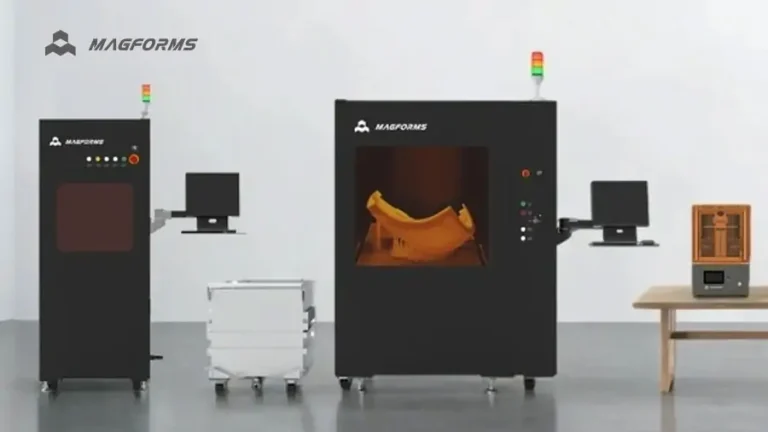
The SL800 Industrial SLA 3D Printer provided a suitable solution with an 800×800×550 mm build volume, industrial laser SLA technology, and open material compatibility. As a large SLA printer solution, SL800 enabled the manufacturer to produce larger models with fewer separated components, reducing assembly requirements and improving production efficiency.
The flexible material approach also allowed the manufacturer to select suitable resins based on different project requirements, improving production adaptability.
After implementing the SL800 workflow, the manufacturer achieved better production flexibility, improved material management, and greater control over project scheduling.
This application demonstrates why selecting an Industrial SLA 3D Printer Manufacturer requires evaluating the complete manufacturing capability behind the equipment rather than focusing only on specifications. More details can be found in this Industrial SLA 3D Printer for Large-Scale Film Prop Production application case.
A strong supplier should combine advanced stereolithography 3D printing technology, reliable equipment manufacturing, flexible material solutions, industry experience, and long-term technical support to help customers build sustainable production capabilities.