Industrial SLA 3D printing is one of the most precise additive manufacturing technologies used in modern engineering and product development.
It uses a high-energy ultraviolet laser combined with a galvanometer scanning system to enable laser-based SLA technology, selectively curing liquid resin layer by layer.
Compared with LCD-based systems, it uses laser-driven vector scanning rather than pixel masking, enabling higher dimensional accuracy and smoother surface quality.
What Is Industrial SLA 3D Printing?

Industrial SLA 3D Printing (Stereolithography) is a laser-based additive manufacturing process that uses ultraviolet light to selectively cure liquid resin into solid parts.
The system relies on three core elements:
· UV laser energy source
· galvanometer scanning system
· photopolymer resin
This process forms the foundation of photopolymer resin 3D printing, enabling high-precision part fabrication.
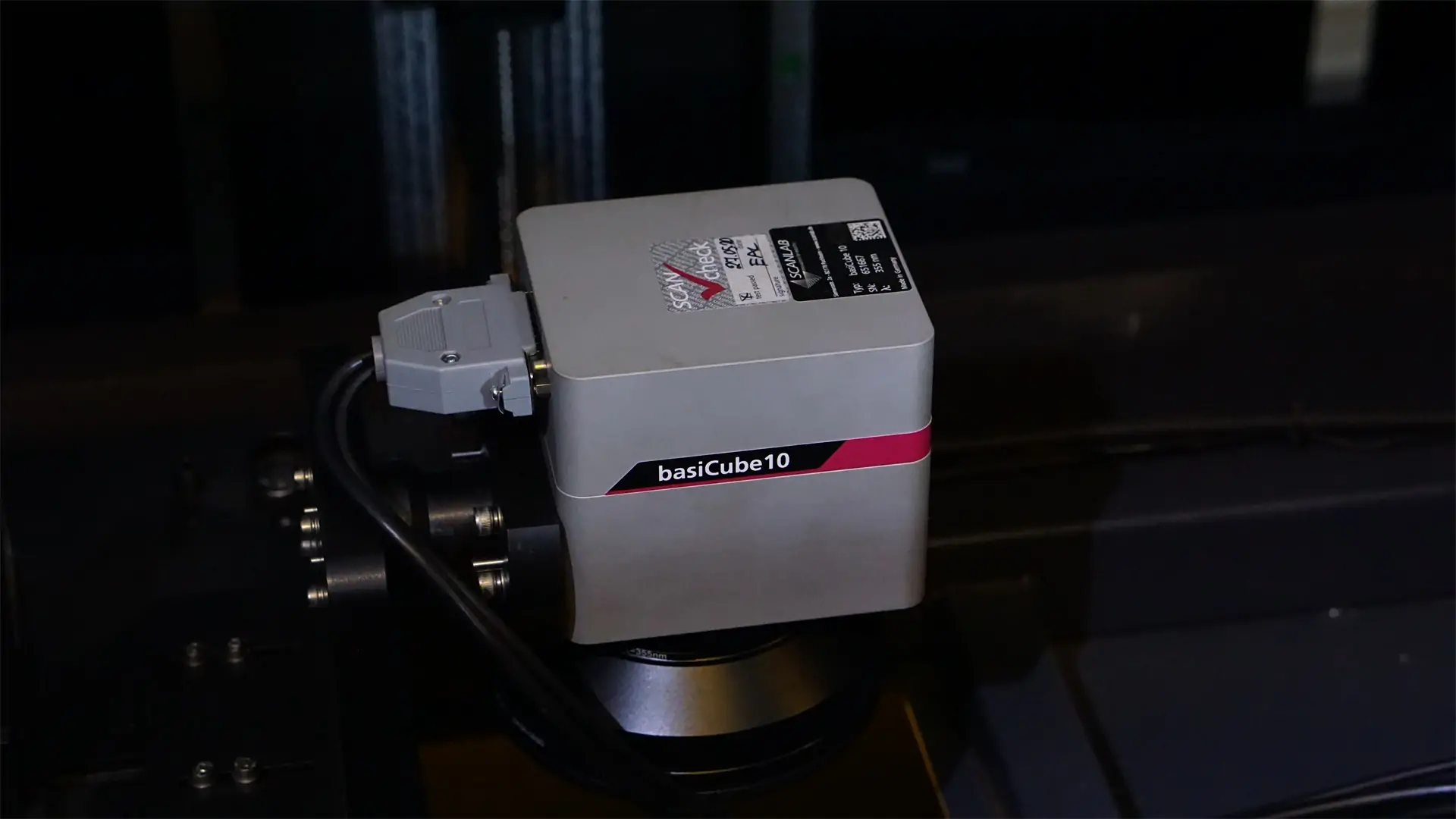
Unlike mask-based LCD printing technologies, industrial SLA 3d printer systems use vector-based laser scanning, enabling continuous and highly precise curing paths.
This makes SLA particularly suitable for engineering applications that require high dimensional accuracy, smooth surface quality, and repeatability.
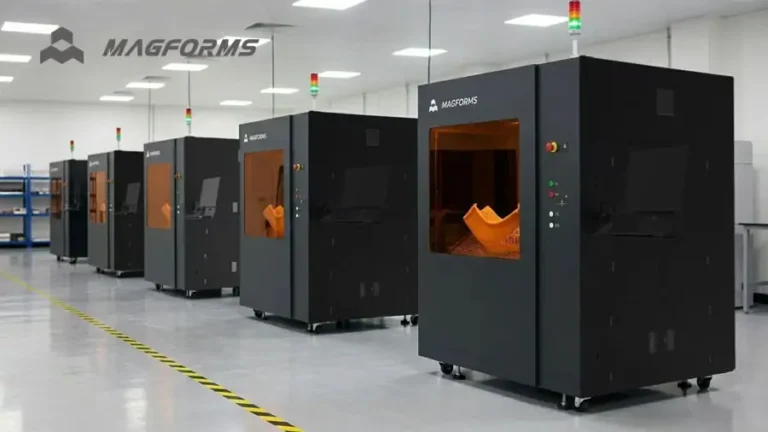
How Does an Industrial SLA 3D Printer Work?
Industrial SLA systems operate through a controlled laser photopolymerization process that converts liquid resin into solid geometry with micron-level precision.
Each layer is formed through a tightly synchronized optical and mechanical system, ensuring accurate energy delivery and geometric fidelity.
Core Workflow
The printing process follows a continuous layer-by-layer cycle:
· A UV laser emits a focused ultraviolet beam from a stable laser source
· A galvanometer scanning system directs the beam across the resin surface following sliced CAD vector paths
· The photopolymer resin solidifies selectively where exposed to the laser
· The build platform moves vertically after each completed layer with precise Z-axis control
· A recoating system refreshes and levels the resin surface for the next exposure
· The cycle repeats until the full 3D part is completed
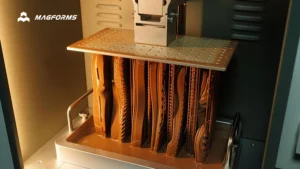
This process enables smooth surface quality, fine feature reproduction, and high dimensional stability even for complex geometries such as internal channels, lattice structures, and thin walls.
Industrial SLA Printing Process Overview
| Step | System Component | Function | Result |
| 1 | UV Laser Source | Generates focused UV energy | Initiates resin curing |
| 2 | Galvanometer System | Directs laser beam via mirrors | Enables vector scanning |
| 3 | Resin Vat | Holds photopolymer resin | Material environment |
| 4 | Exposure Phase | Selective laser curing | Forms cross-section |
| 5 | Build Platform | Z-axis vertical movement | Maintains layer accuracy |
| 6 | Recoating System | Levels resin surface | Ensures uniform next layer |
| 7 | Repetition Cycle | Repeats layer process | Builds full geometry |
Materials Used in Industrial SLA 3D Printing
Industrial SLA 3D Printer systems support a wide range of photopolymer resin 3D printing materials engineered for mechanical, thermal, and optical performance.
| Material Type | Key Property | Typical Applications |
| Standard Resin | Balanced performance | Prototyping models |
| Tough Resin | Impact resistance | Functional components |
| High-Temperature Resin | Thermal stability | Automotive, tooling |
| Transparent Resin | Optical clarity | Covers, light guides |
| Engineering Resin | Mechanical strength | Fixtures, testing parts |
| Castable Resin | Clean burnout behavior | Jewelry and casting |
Each material is engineered for specific mechanical, thermal, or optical requirements, enabling both prototyping and end-use functional applications.
Industrial SLA 3D Printing vs LCD Resin Printing Technologies
Industrial SLA differs fundamentally from LCD systems in a detailed SLA vs LCD 3D Printing comparison across optical structure and process control.
Unlike LCD systems that use masked layer exposure, SLA uses a focused UV laser with galvanometer-driven vector scanning.
| Feature | Industrial SLA 3D Printer | LCD |
| Light Source | UV laser scanning | Screen masking |
| Exposure Method | Vector-based curing | Pixel-based exposure |
| Accuracy | Micron-level precision | Pixel-dependent |
| Surface Quality | Smooth, near-mold finish | Visible pixel stepping |
| Process Control | Point energy control | Uniform layer exposure |
| Scalability | Stable large-format accuracy | Accuracy decreases with size |
| Application Level | Industrial engineering | Entry-level prototyping |
Industrial SLA is preferred when dimensional accuracy, repeatability, and surface integrity must remain consistent across complex or large-scale parts.
Key Components of an Industrial SLA 3D Printer
An Industrial SLA system is composed of tightly integrated subsystems that collectively determine print precision and stability.
UV Laser System
Provides stable ultraviolet energy for resin photopolymerization and ensures consistent curing depth.
Galvanometer Scanning Unit
High-speed optical system that directs the laser beam with micron-level accuracy using mirror-based control.
Resin Tank System
Holds liquid photopolymer resin and maintains stable optical and chemical conditions during printing.
Recoating Mechanism
Ensures each layer of resin is evenly distributed, preventing surface defects and ensuring uniform curing.
Z-Axis Motion Platform
Controls vertical layer stacking with high precision to maintain dimensional accuracy.
Industrial Control Software
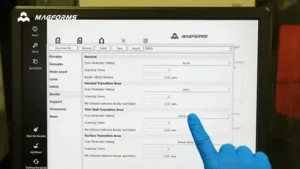
Manages slicing parameters, scanning strategy, laser modulation, and build optimization.
Together, these subsystems form a closed-loop precision manufacturing platform designed for engineering-grade reliability.
Large-Format Industrial SLA 3D Printers and System Classification
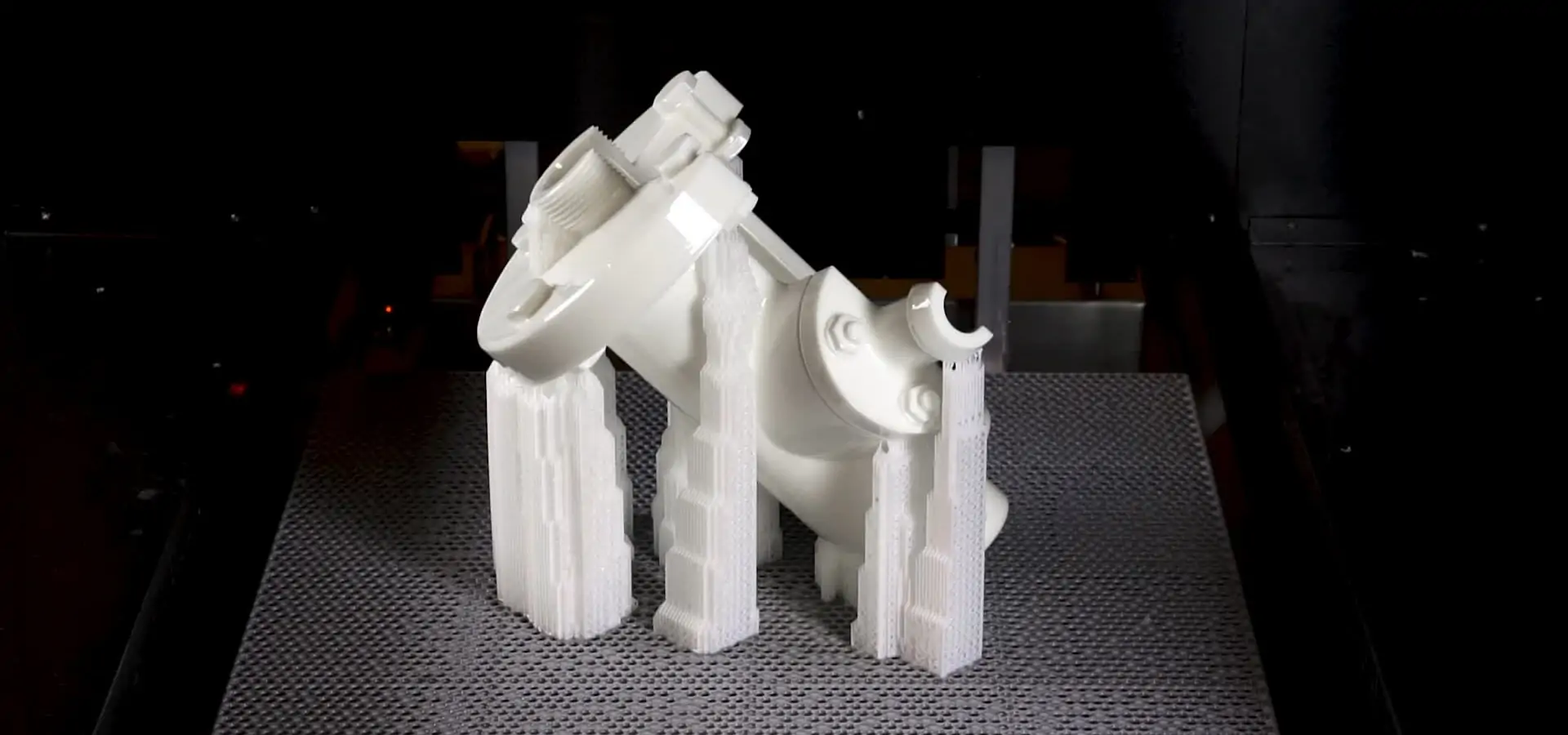
Industrial SLA systems are classified based on build volume and application scale.
· Compact systems: R&D and early prototyping
· Mid-size systems: Frequent engineering iteration
· Large-format systems: Full-scale industrial production
Large-format SLA enables engineers to print integrated geometries in a single build, eliminating assembly errors and improving structural consistency.
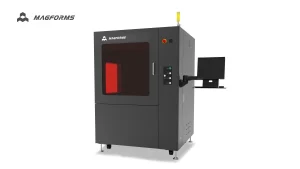
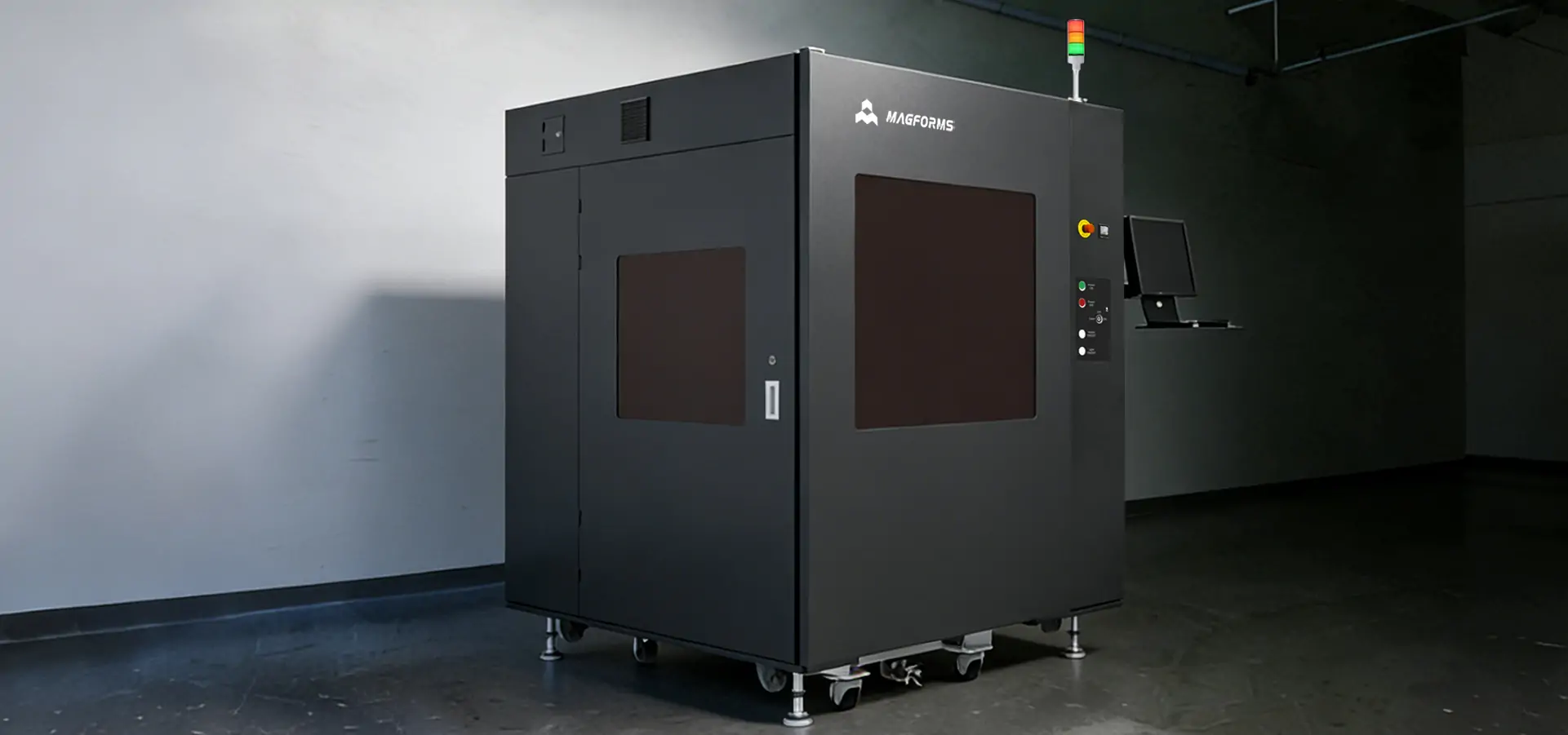
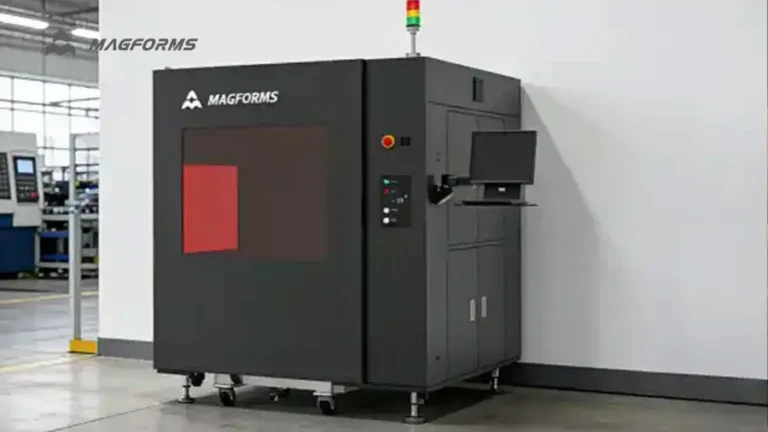
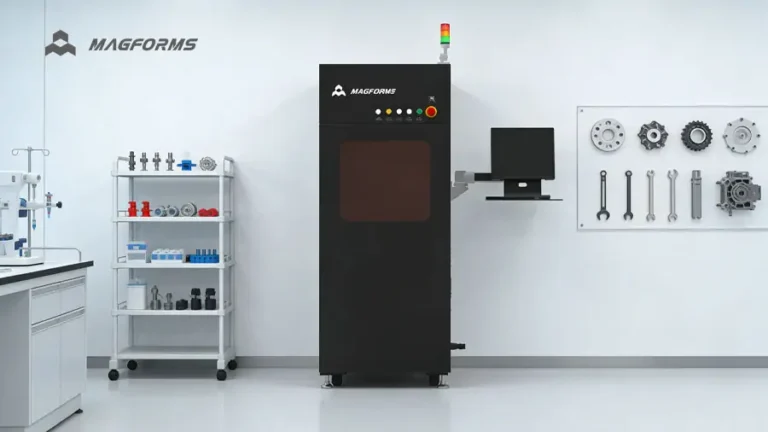
A representative example is the Magforms SL800, a large-format SLA printer designed for high-precision industrial applications.
With an 800 × 800 × 550 mm build volume and laser galvanometer scanning system, it supports large-scale prototyping, tooling, and structural validation with high dimensional stability.
Applications of Industrial SLA 3D Printing
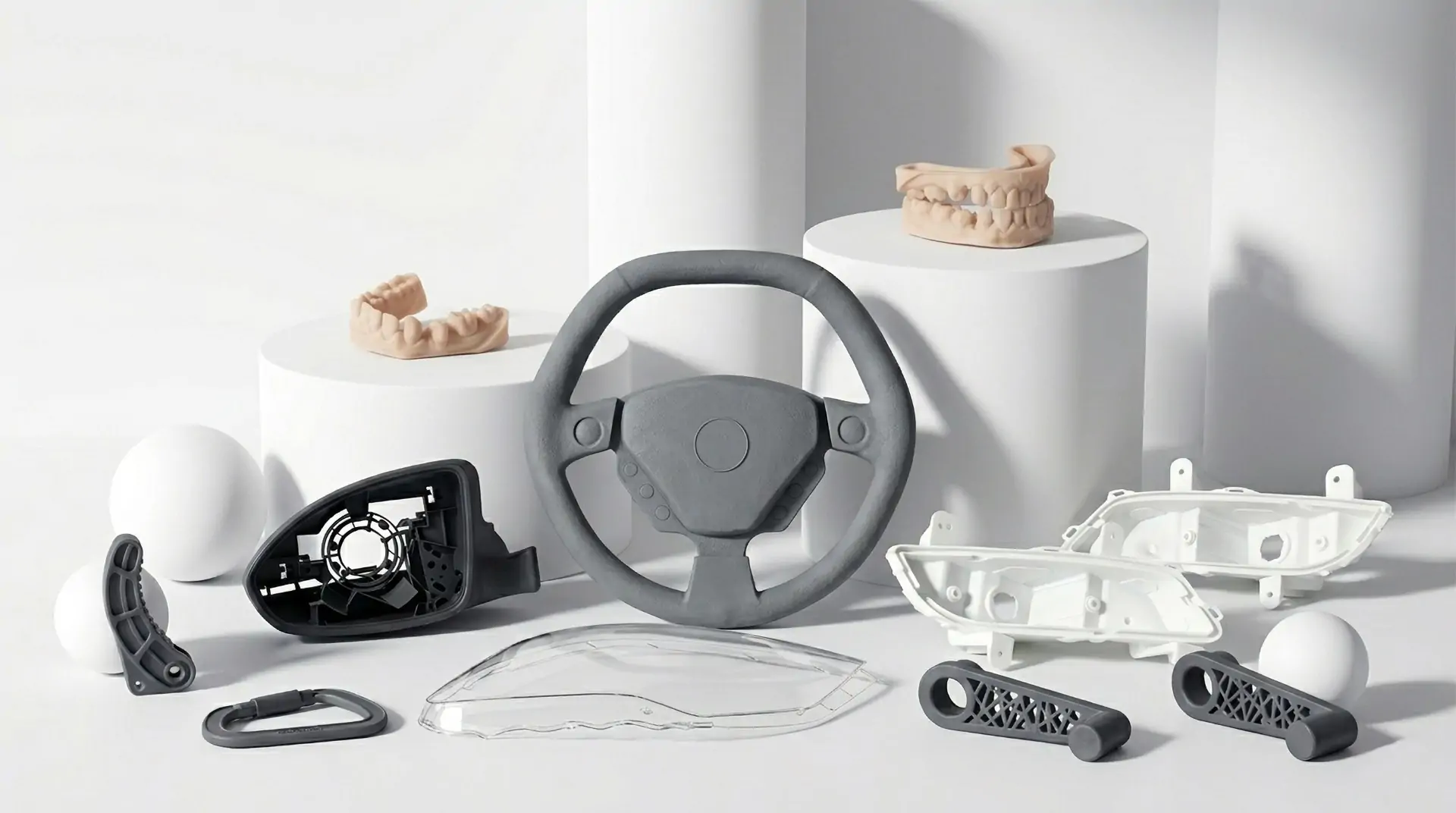
Industrial SLA 3D Printer technology is widely used in rapid prototyping SLA workflows requiring high precision and smooth surface quality.
Key applications include:
· Automotive prototyping and interior validation
· Aerospace structural and aerodynamic testing models
· Medical modeling and surgical guides
· Consumer electronics housing design and verification
· Industrial tooling such as jigs and fixtures
· High-end appearance models for pre-production review
One key advantage of SLA is its ability to reproduce fine surface textures and complex geometries without secondary machining, making it ideal for early-stage product development.
How Industrial SLA 3D Printing Improves Manufacturing Efficiency
Industrial SLA 3D Printer technology significantly improves manufacturing efficiency by eliminating the need for traditional tooling.
Key advantages include:
- Faster design iteration cycles by enabling same-day prototype validation
- Reduced reliance on CNC machining and injection mold prototyping
- High geometric freedom allowing complex internal structures
- Superior surface finish that reduces downstream polishing and finishing
- Efficient low-volume production without tooling investment
These advantages collectively shorten the product development lifecycle and allow engineering teams to transition from concept to validation in a much shorter time window.
Additional efficiency insight:
In many industrial workflows, SLA printing acts as a bridge technology between digital CAD design and mass manufacturing, reducing risk before committing to expensive tooling or production molds.
Instead of stopping at the conceptual level, these efficiency gains become most visible when SLA is applied in real industrial environments.
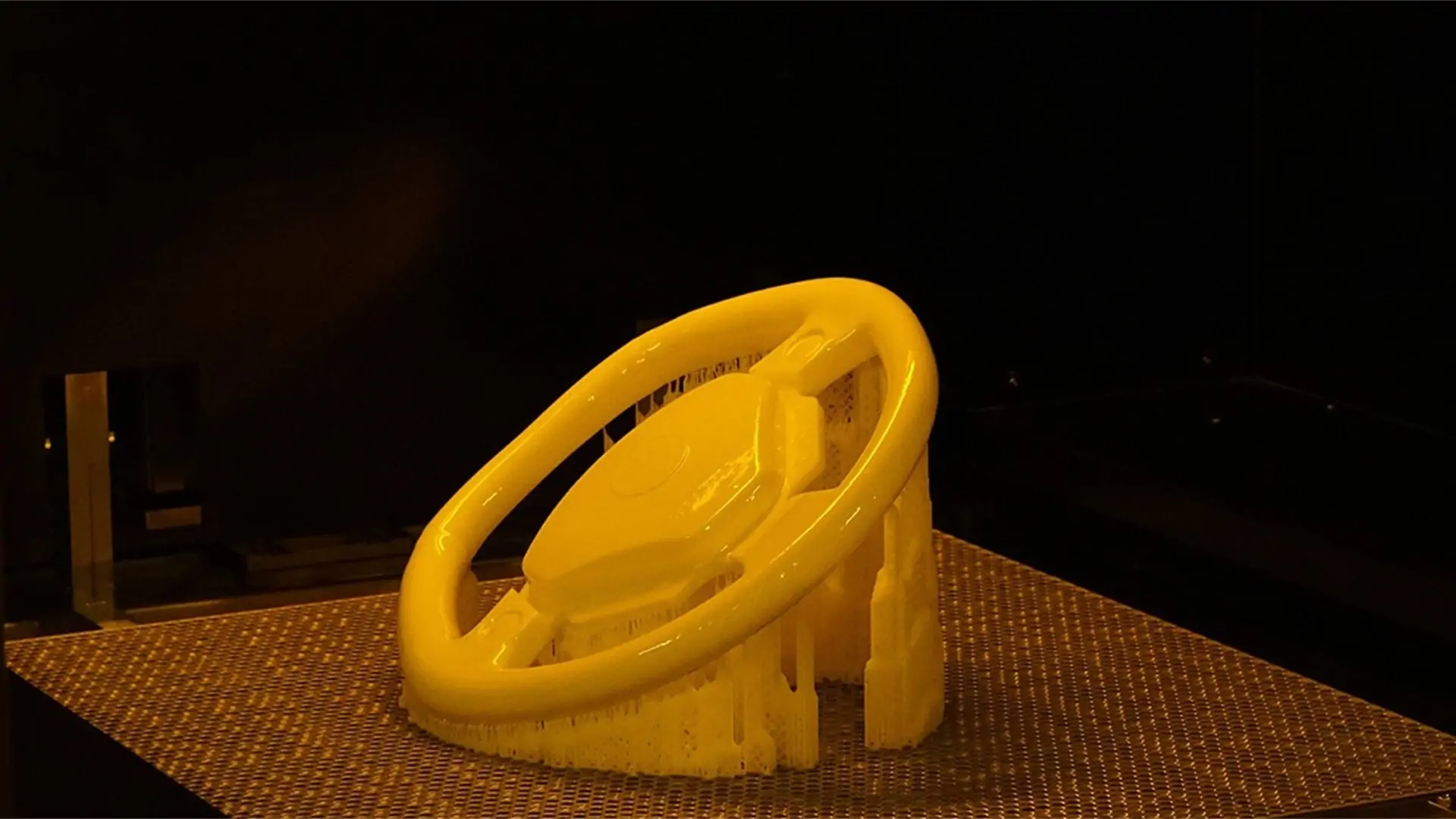
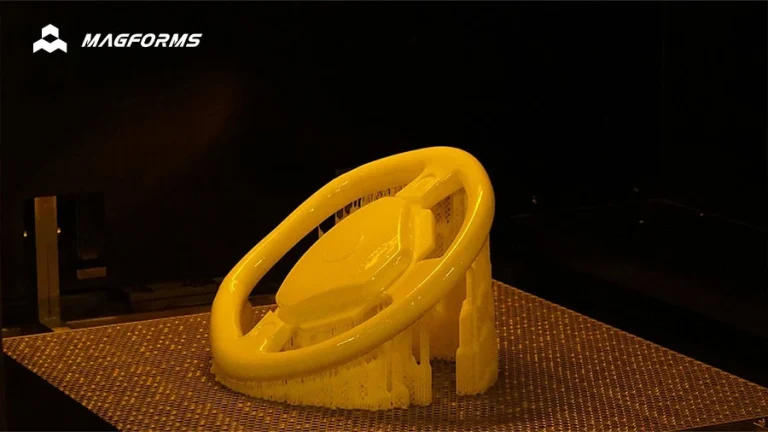
In automotive product development, engineers often use large-format industrial SLA 3d printer systems to validate full-scale interior components in a single build. This eliminates the need to divide models into multiple sections, which not only reduces assembly time but also improves dimensional consistency across the entire structure. As a result, prototype validation can shift from a multi-week process to a much faster iteration cycle measured in days.


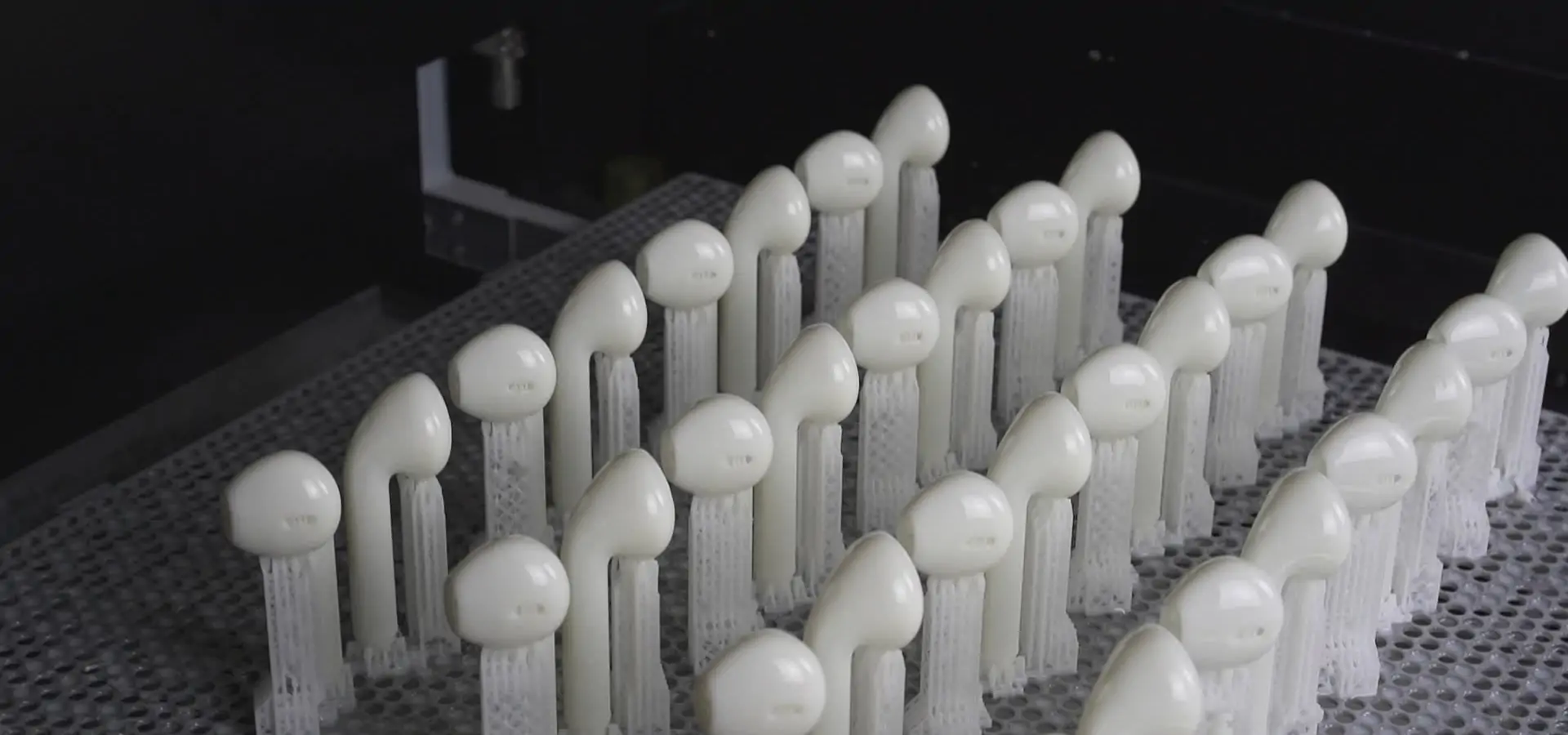
In consumer electronics development, SLA is frequently used for appearance models and design verification before mass production. High-resolution surface quality allows design teams to evaluate lighting, texture, and form factor more accurately, reducing the need for extensive manual finishing and rework. This improves communication efficiency between design, engineering, and marketing teams, accelerating final design approvals.
Workflow: How to Use an Industrial SLA 3D Printer
Industrial SLA transforms CAD data into physical components through a structured and repeatable workflow:
- CAD model design and optimization
- File slicing and layer generation
- Support structure design
- Print setup and resin selection
- Laser-based layer curing
- Part removal and cleaning
- UV post-curing
- Surface finishing and inspection
This standardized workflow ensures consistent output quality across multiple production cycles, making SLA suitable for both prototyping and low-volume manufacturing.
Get Started With Industrial SLA 3D Printing
Industrial SLA 3D Printing continues to evolve as a core manufacturing technology bridging digital design and physical production.
With its combination of laser precision, scalable build volumes, and engineering-grade materials, Industrial SLA systems provide manufacturers with a powerful tool for accelerating innovation.
Large-format systems such as the Magforms SL800 further extend these capabilities into industrial-scale production, enabling faster development cycles and higher manufacturing efficiency.