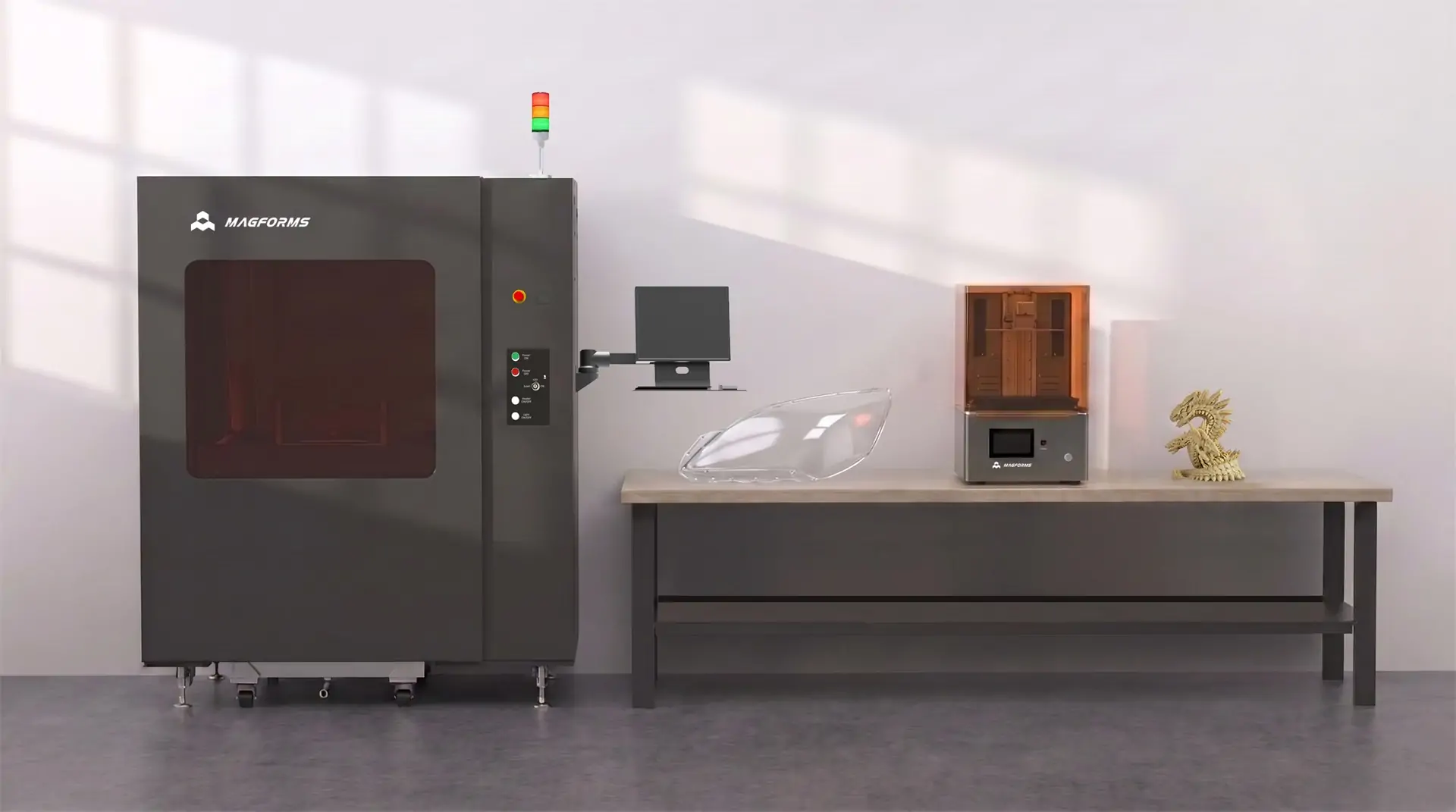
When manufacturers need accurate prototypes, functional components, and customized parts, choosing the right resin 3D printing technology becomes an important decision. Both an Industrial SLA 3D Printer and an LCD Resin Printer use photopolymer resin to create detailed parts, but they differ significantly in printing methods, production capabilities, and industrial applications.
LCD Resin Printers are widely used for rapid prototyping and small-scale production because of their efficient layer exposure process and accessible operation. In comparison, Industrial SLA 3D Printers are designed for applications requiring higher dimensional consistency, larger build volumes, smoother surface finishes, and reliable long-term performance.
Understanding the differences between these two resin printing technologies helps manufacturers select the right solution for product development, engineering validation, and industrial manufacturing.
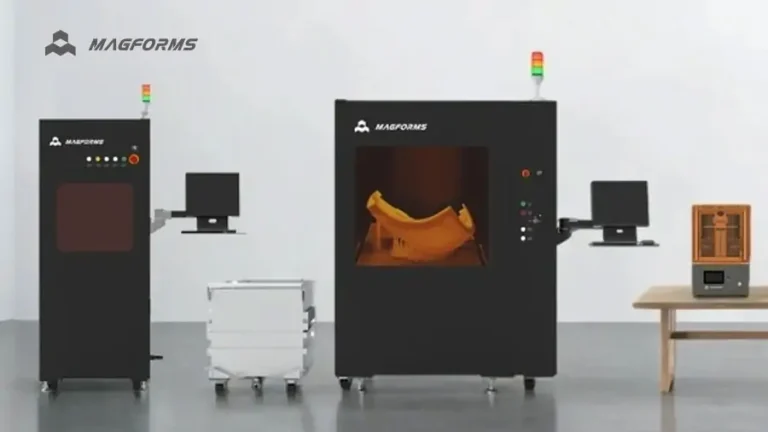
Designing and Manufacturing High-Precision Resin 3D Printed Parts
Resin 3D printing has become an important manufacturing technology for companies that need faster product development and flexible production workflows. Understanding SLA 3D printing technology helps manufacturers choose the right resin printing solution for different applications.
Both SLA and LCD Resin Printing technologies can produce highly detailed parts, but they are designed for different manufacturing requirements. LCD Resin Printers are commonly used for compact prototypes, concept models, and small components, while an Industrial SLA 3D Printer is better suited for larger parts, engineering validation, and applications requiring consistent accuracy.
The difference between these technologies becomes more noticeable as manufacturers move from simple visual models to functional prototypes and production-oriented applications.
For industries such as automotive, medical devices, aerospace, consumer products, and industrial design, technology selection depends on factors including:
· Part size
· Accuracy requirements
· Material performance
· Production volume
· Final application requirements
Choosing the appropriate resin printing technology helps manufacturers balance efficiency, quality, and production goals.
Applications of SLA and LCD Resin Printing

SLA and LCD Resin Printing technologies are used across many industries, but their typical applications are different.
LCD Resin Printers are commonly used for:
· Appearance prototypes
· Small functional models
· Product design verification
· Dental and educational models
Their compact design and efficient printing process make them suitable for users who need fast and accessible resin printing solutions.
Industrial SLA 3D Printers are commonly selected for more demanding applications, including:
· Large automotive prototypes
· Industrial equipment models
· Transparent engineering parts
· Investment casting patterns
· Film and entertainment props
· Large-scale artistic models
The main difference is not simply print detail. Both technologies can achieve high-resolution results, but Industrial SLA systems are designed to maintain accuracy and stability when part size, production requirements, and application complexity increase.
For example, a small product prototype may be efficiently produced with an LCD Resin Printer, while a large automotive component or industrial model may require the build capability and accuracy of an Industrial SLA 3D Printer.
Industrial SLA 3D Printing in Professional Manufacturing
Industrial manufacturing requires more than producing a single successful prototype. Companies need repeatable results, stable workflows, and parts that meet engineering requirements.
An Industrial SLA 3D Printer enables manufacturers to move directly from digital designs to accurate physical models for testing and validation. Compared with traditional prototype workflows, SLA printing helps reduce preparation time and allows engineers to iterate designs more efficiently.

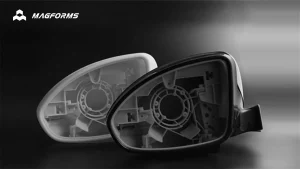
In industries such as automotive and product development, manufacturers often need large prototypes to evaluate appearance, assembly relationships, and functional performance. Industrial SLA technology provides the accuracy and surface quality required for these applications.
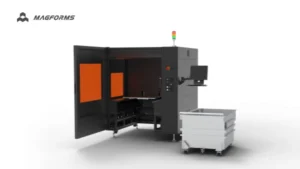
The SL800 Industrial SLA 3D Printer is designed for this type of industrial workflow. With an 800 × 800 × 550 mm build volume and laser-based stereolithography technology, SL800 supports large-format prototypes, engineering models, investment casting patterns, and customized production applications.
For manufacturers exploring industrial resin printing solutions, SLA technology provides a balance between precision, flexibility, and production capability. Explore industrial SLA printing applications and see how manufacturers use SLA technology for prototype development and engineering validation.
Traditional Manufacturing Methods for High-Precision Prototypes
Traditional manufacturing methods such as CNC machining and injection molding remain important for mass production. However, producing prototypes with these methods often requires additional preparation, tooling, and longer lead times.
CNC machining provides excellent mechanical performance but may require programming and material preparation, especially for complex geometries.
Injection molding is highly efficient for large-volume production, but mold creation requires additional investment and development time.
Resin 3D printing provides a more flexible approach during product development by allowing manufacturers to create prototypes directly from digital models.
However, selecting the right resin printing technology is essential. LCD Resin Printers can support many rapid prototyping applications, while an Industrial SLA 3D Printer provides advantages for larger, more precise, and production-oriented parts.
Key Differences Between Industrial SLA 3D Printer and LCD Resin Printer
When choosing between an Industrial SLA 3D Printer and an LCD Resin Printer, manufacturers should first consider their production goals.
LCD Resin Printers are commonly selected for designers and engineers who need fast prototypes, compact equipment, and cost-efficient resin printing.
Industrial SLA 3D Printers are designed for companies that require larger build capacity, engineering validation, and more stable production workflows.
The decision usually depends on:
– Prototype size
– Production volume
– Required workflow
– Application requirements
For concept models and small prototypes, LCD technology can provide an efficient solution.
For large industrial prototypes and functional parts, SLA technology offers a more suitable manufacturing approach.

LCD Resin Printer: Advantages and Limitations Compared with SLA
LCD Resin Printers are widely used for resin 3D printing because they provide an efficient and accessible solution for detailed prototypes and small components.
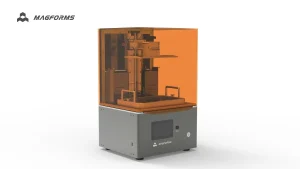
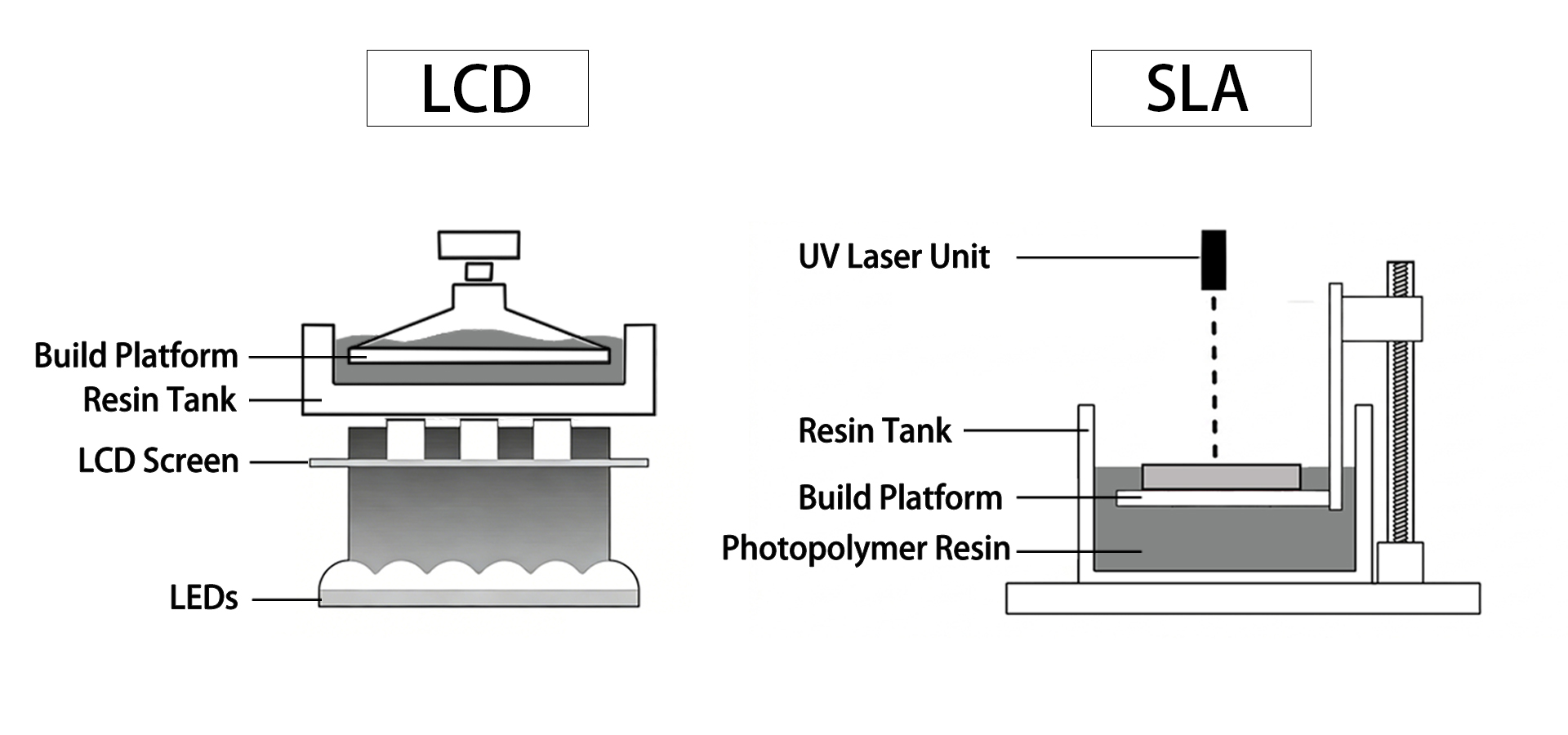
Using an LCD masking system with UV exposure, LCD printers can cure each layer quickly across the printing area. Compared with an Industrial SLA 3D Printer, LCD Resin Printers usually offer lower equipment costs, compact size, and simple operation, making them suitable for rapid prototyping and design verification.
However, LCD technology has limitations when applied to larger industrial parts. Maintaining consistent accuracy across a larger printing area can become more challenging, and some large components may require multiple sections and additional assembly.
For applications requiring:
· Large prototype production
· Consistent dimensional accuracy
· Engineering validation
· Long-term production workflows
an Industrial SLA 3D Printer can provide a more suitable solution.
Industrial SLA 3D Printer: Advantages for Industrial Applications
An Industrial SLA 3D Printer uses laser-based stereolithography technology to produce accurate resin parts for professional manufacturing.
Unlike LCD Resin Printers that cure layers through a fixed screen mask, industrial SLA systems use laser scanning to control resin curing according to part geometry. This provides advantages in:
· Dimensional consistency
· Smooth surface quality
· Large-format printing
· Complex part production
Industrial SLA technology is commonly used for automotive prototypes, transparent parts, investment casting patterns, and industrial models.
The SL800 Industrial SLA 3D Printer combines laser-based printing technology with an 800 × 800 × 550 mm build volume, allowing manufacturers to produce large prototypes and complex resin parts without splitting models into multiple sections.
For companies requiring high-precision industrial resin printing, SL800 provides a solution for prototype development, engineering validation, and customized manufacturing needs.
SLA vs LCD Resin Printer: Accuracy and Production Performance
The accuracy difference between SLA and LCD Resin Printing mainly comes from their curing methods.
Industrial SLA 3D Printers use laser scanning technology to achieve precise resin curing and stable dimensional accuracy, especially for larger parts.
LCD Resin Printers can provide excellent detail reproduction for small models, but maintaining uniform accuracy across larger areas depends on screen resolution and exposure consistency.
For manufacturers focusing on large prototypes, repeatable results, and industrial workflows, SLA provides stronger advantages in production capability and surface quality.
Design Considerations for SLA and LCD Resin Printing
The design approach for resin 3D printing depends on part size, application requirements, and selected technology.
LCD Resin Printers are commonly used for smaller components that require fast iteration and efficient prototype production.
For an Industrial SLA 3D Printer, engineers usually focus on:
· Part orientation
· Support structure
· Wall thickness
· Surface requirements
Because industrial SLA systems can produce larger and more accurate parts, they are suitable for applications where dividing a model into multiple sections may affect assembly accuracy or surface quality.
Large Format SLA Printing for Industrial
Build volume is one of the key differences between an Industrial SLA 3D Printer and an LCD Resin Printer.
LCD Resin Printers are effective for compact models and small components, while large industrial parts may require multiple prints and assembly processes.
Large-format SLA printing allows manufacturers to create larger components with fewer sections, improving workflow efficiency and reducing assembly variation.
Typical applications include:
· Automotive prototypes
· Industrial equipment housings
· Film production props
· Large sculptures
· Investment casting patterns
The SL800 Industrial SLA 3D Printer provides an 800 × 800 × 550 mm build volume, enabling manufacturers to produce large and complex resin models more efficiently.
For industries requiring a Large Format SLA Printer, larger build capability provides greater flexibility for prototype development and customized manufacturing.
Resin Material Selection for SLA and LCD Printing
Material selection is another important factor when comparing an Industrial SLA 3D Printer with an LCD Resin Printer.
Both technologies use photopolymer resin, but their typical material applications can be different.
LCD Resin Printers are commonly used with materials for:
· Visual prototypes
· Detailed models
· Concept validation
These materials are suitable when appearance and detail reproduction are the main priorities.
Industrial SLA platforms often support engineering-focused resin workflows for applications such as:
· Transparent functional prototypes
· Tough engineering parts
· High-temperature applications
· Investment casting patterns
For example, manufacturers producing functional prototypes may require materials with better mechanical stability, while casting applications may prioritize accurate surface reproduction and clean processing.
The best material choice depends on the final application, required performance, and production environment rather than the printing technology alone.

Resin material selection guide
How To Choose Between SLA and LCD Resin Printing
Choosing between an Industrial SLA 3D Printer and an LCD Resin Printer depends on the requirements of the project.
LCD Resin Printers are a practical choice when the main goals are:
· Affordable prototyping
· Small part production
· Fast design iterations
· Compact equipment size
They are suitable for users who need efficient resin printing for product development and concept validation.
An Industrial SLA 3D Printer is better suited for manufacturers requiring:
· Larger build volume
· Higher dimensional consistency
· Engineering-grade prototypes
· Complex industrial applications
The decision should be based on:
Part size:
Small models can be efficiently produced with LCD technology, while larger components may benefit from industrial SLA build capability.
Accuracy requirements:
Applications involving assembly testing, functional validation, or precision components often require the consistent curing control provided by SLA technology.
Production goals:
LCD printing is effective for rapid prototyping, while Industrial SLA supports more demanding manufacturing workflows.
Selecting the right resin printing technology depends on balancing cost, performance, application requirements, and future production needs.
Choose the right resin 3D printing solution
Industrial SLA 3D Printer vs LCD Resin Printer Testing Results

Comparing an Industrial SLA 3D Printer with an LCD Resin Printer requires evaluating practical manufacturing factors, including accuracy, surface quality, build capability, and production stability.
LCD Resin Printers are effective for rapid prototyping and small-scale models, while Industrial SLA 3D Printers provide stronger advantages for larger parts, engineering prototypes, and industrial workflows.
Laser-based stereolithography allows Industrial SLA systems to maintain consistent curing control and produce high-quality resin parts for demanding applications.
The SL800 Industrial SLA 3D Printer combines large build volume and industrial SLA technology to support applications such as automotive prototypes, casting patterns, industrial models, and customized parts.
Choosing the right resin 3D printing technology depends on your production requirements. For manufacturers seeking higher precision, larger printing capability, and reliable workflows, an Industrial SLA 3D Printer provides a professional solution.