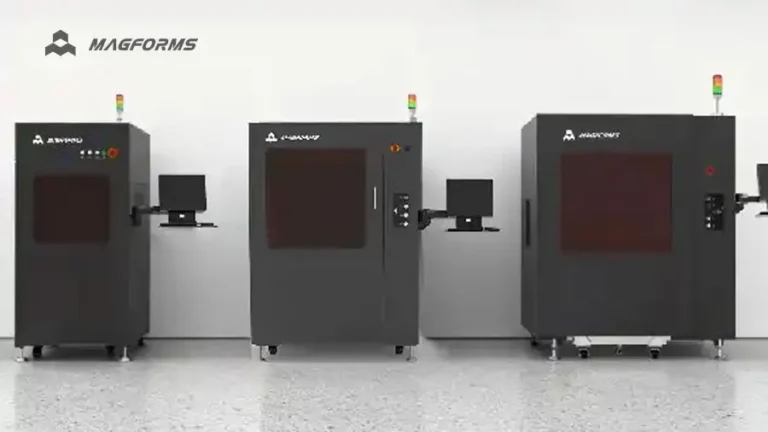
Magforms is a specialized provider of industrial-grade additive manufacturing solutions, built on advanced photopolymer material science. Recently, a European industrial service bureau specializing in dental aligner models and automotive design verification reached out with a familiar pain point: their existing SLA printer fleet was holding them hostage.
Despite owning the hardware outright, they were locked into a cycle of dynamic access keys and overpriced proprietary resins. What they needed wasn’t just a new 3D printer—they needed control over their production economics.
We spoke with the lead additive engineer to understand how switching to a Magforms industrial SLA 3D printer reshaped their workflow. The result was not just improved output, but something more valuable: predictability and cost control at scale.
The Hidden Cost of Closed Systems
For the service bureau, the main issue wasn’t print quality—it was operational friction.
Every month, their team had to request access credentials just to keep their Stereolithography 3D Printer systems running. Delays meant downtime. Downtime meant missed deadlines.
Then came the bigger problem: material cost.
The OEM resin carried a premium of several hundred euros per 10kg compared to third-party 355nm alternatives. With monthly consumption at around 50kg, this created a massive hidden expense over time.
“We weren’t just buying a printer; we were renting a material ecosystem.”
Even worse, the locked system prevented experimentation. The team couldn’t test new materials—whether transparent resins for fluid analysis or durable blends for mechanical parts.
Innovation was effectively gated behind supplier permission.
Precision and Stability in Industrial Environments
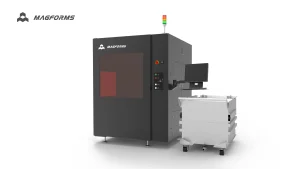
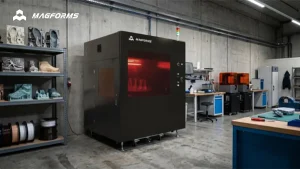
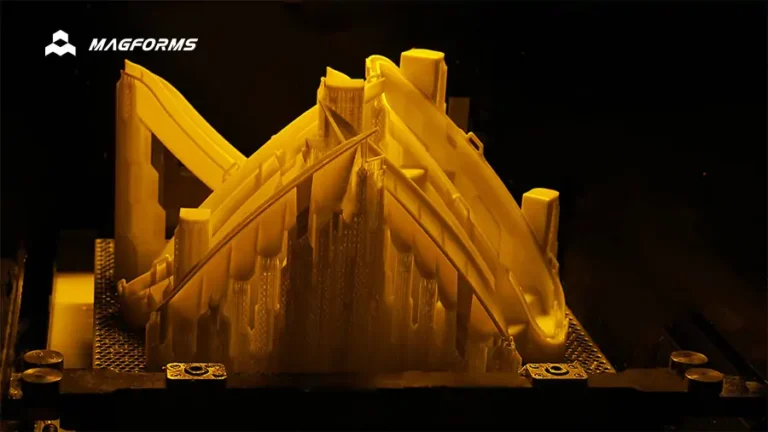
The evaluation of the Magforms platform centered on three factors:accuracy, repeatability, and uptime—the holy trinity of any serious industrial SLA 3D printer.
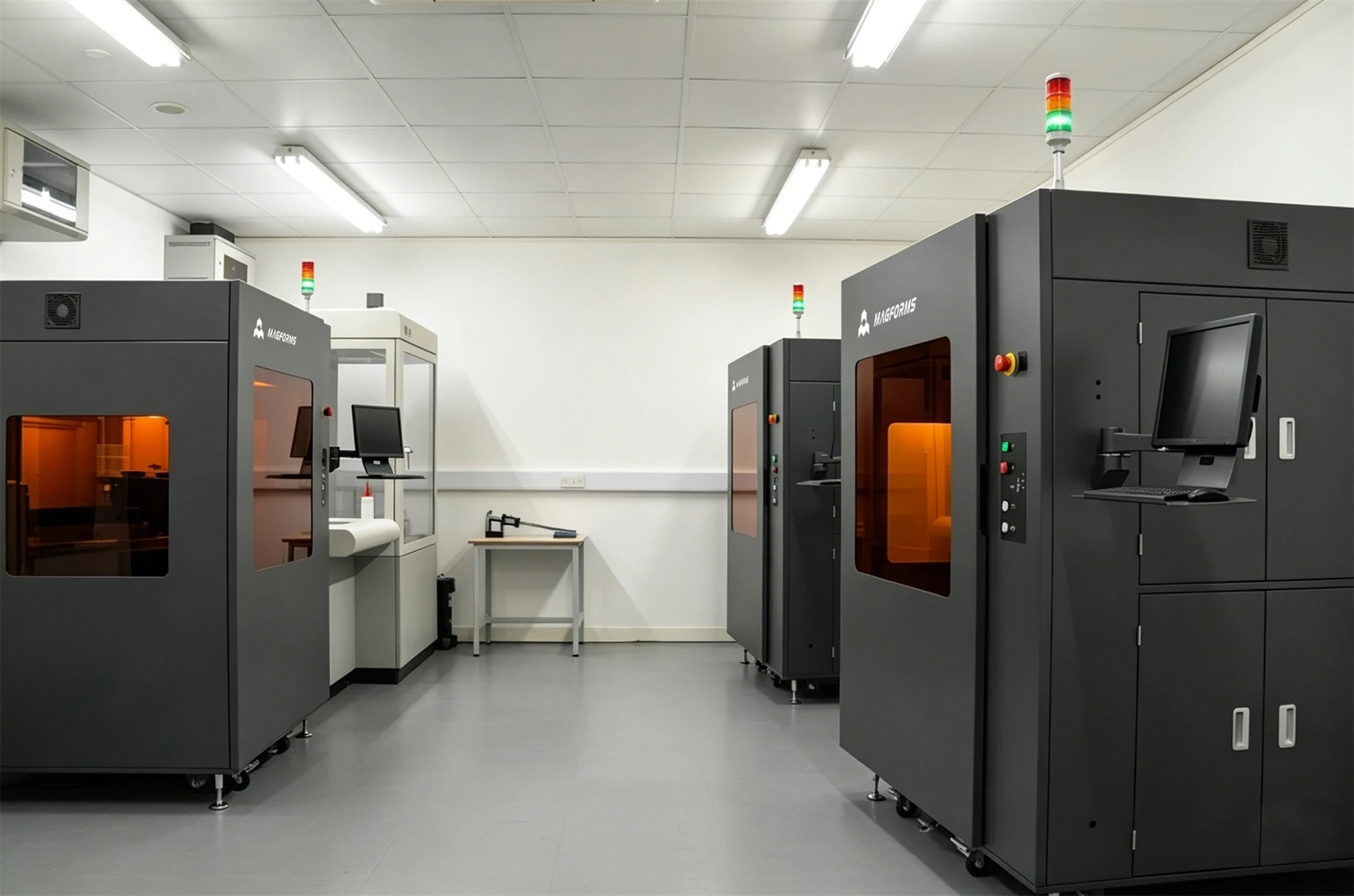
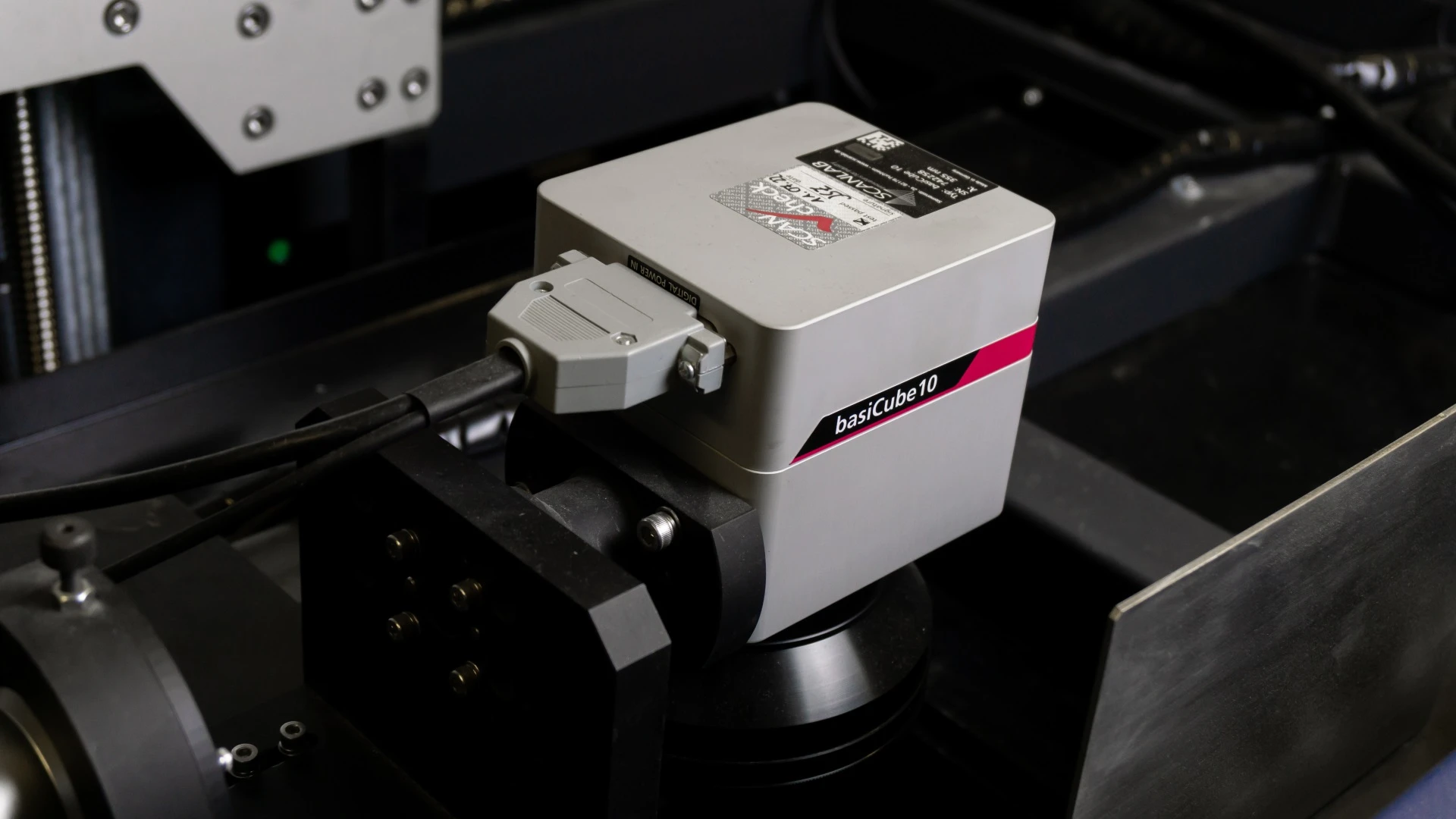
Operating 24/7, the facility needed consistency. The integration of Scanlab galvanometer technology with AOC laser optics ensured a uniform laser spot across the build area.
For dental applications, this translated into reliable tolerances of:
· ±0.1 mm (L ≤ 100mm)
· Stable output across full build volume
The Z-axis system, built on a granite composite base with precision HIWIN rails, minimized thermal distortion—something many standard 3D printer systems struggle with.
The result? Fewer failed prints, less material waste, and predictable output.
Material Compatibility & Precision Data for Magforms SLA
| Material Type | Compatible Wavelength | Dimensional Tolerance (L≤100mm) | Dimensional Tolerance (L>100mm) | Key Feature |
| Standard Grey Resin | 355nm | ± 0.1 mm | ± 0.1% x L | High-speed draft mode is capable |
| ABS-Like Tough | 355nm | ± 0.1 mm | ± 0.1% x L | Excellent for snap-fit assemblies |
| Transparent Clear | 355nm | ± 0.08 mm | ± 0.1% x L | Best-in-class clarity for flow visualization |
| Castable Wax | 355nm | ± 0.1 mm | ± 0.1% x L | Clean burnout, low ash content |
Data represents typical performance with optimized parameters.
Workflow Integration and Material Fluidity
Efficiency gains weren’t limited to printing—they extended into post-processing.
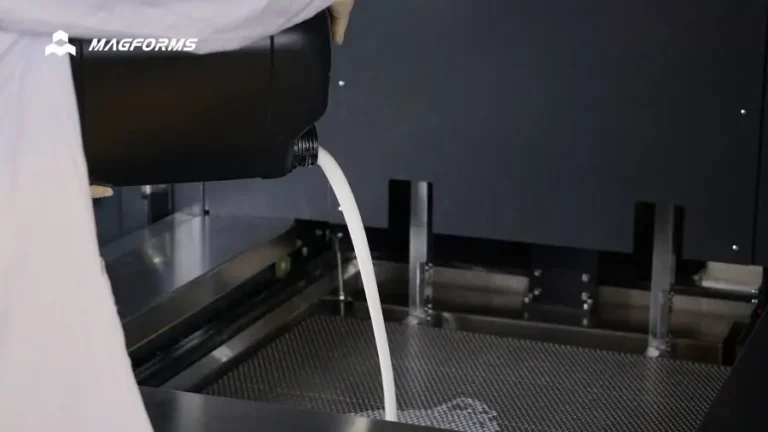
Previously, parts from their SLA printer required extensive manual cleaning. With Magforms, a tilting build plate design allowed excess resin to drain naturally.
“That one feature alone saves us nearly an hour every day.”
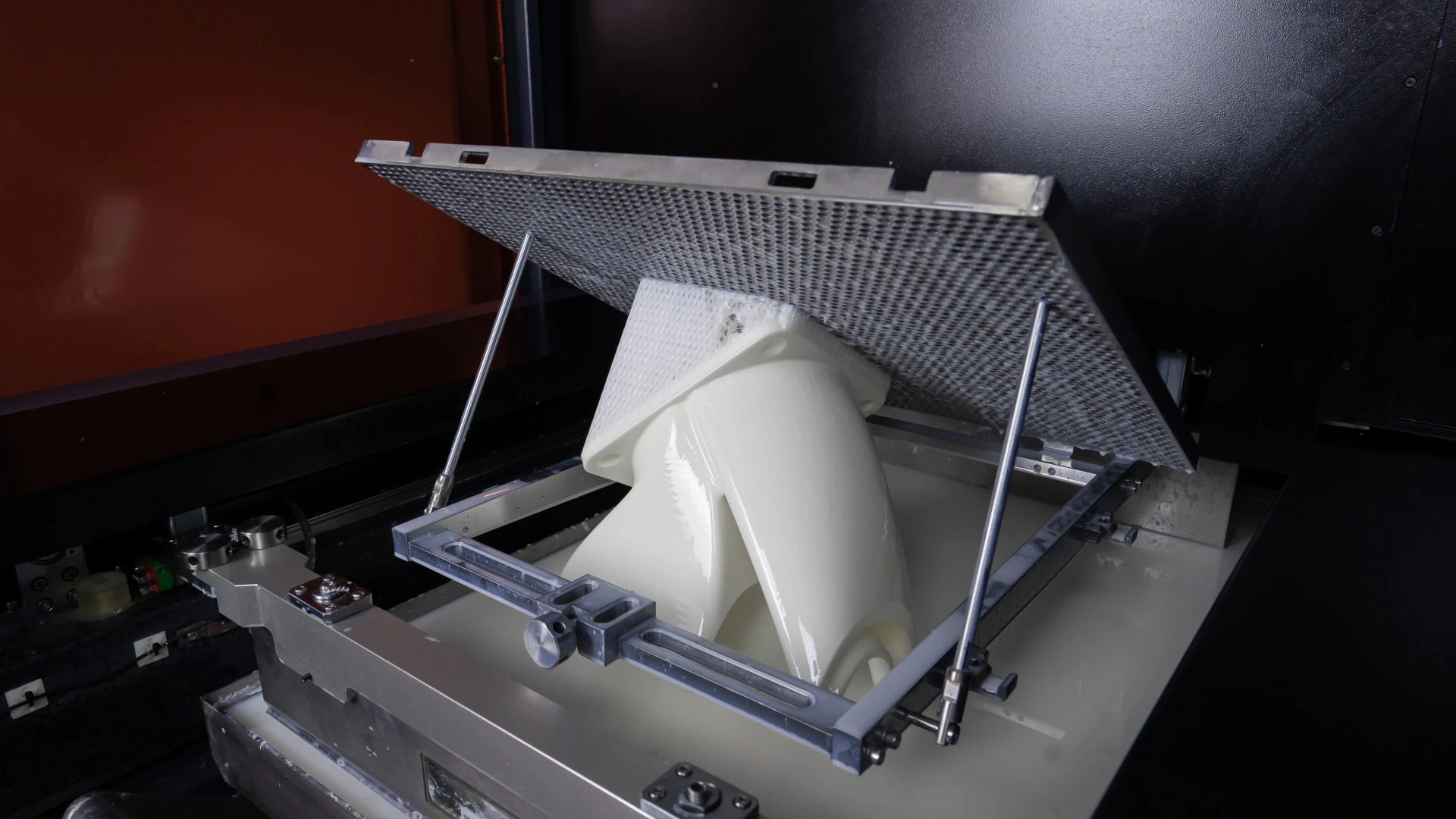
Temperature control added another layer of consistency. In colder environments, resin viscosity often disrupts printing. The heated chamber ensured stable material behavior year-round.
This kind of control is essential not only for dental models but also for emerging applications such as customized footwear produced on a shoe 3D printer, where repeatability and surface quality are equally critical.
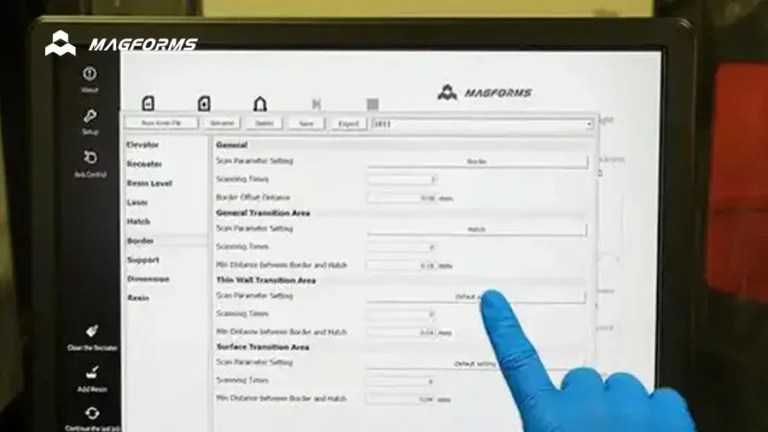
Meanwhile, the open architecture of Magforms iBuild2.0 software gave engineers full control over parameters—unlocking the true flexibility of a stereolithography 3D printer.
Engineering Confidence: The Granite Foundation and Optics
Durability isn’t glamorous, but it’s what keeps production alive at 3 a.m.
The Magforms system uses industrial-grade components, including:
· Schneider relays
· Panasonic servo motors
· Heavy-duty steel frame
Combined with advanced optics and grayscale anti-aliasing algorithms, the system produces parts with minimal visible layer lines—reducing post-processing time.
“The clarity of the machine is unmatched.”
Optical shielding further protects internal components, ensuring long-term accuracy and reducing maintenance.
This is where the difference between a standard SLA printer and a true industrial platform becomes obvious.
Explore Magforms SL800 Get a Quote
文章20251218
文章20251203
Providing Operational Peace of Mind
By switching to an open system, the service bureau transformed its business model.
They are no longer tied to a single supplier. Instead, they can select materials based on performance—not restrictions. That flexibility is a defining trait of a modern industrial SLA 3D printer.
With variable spot scanning (0.15 mm to 0.6 mm), they also achieved a 30% reduction in build time.
The impact is clear:
· Faster production
· Lower material costs
· Greater application flexibility
From dental manufacturing to experimental applications like shoe 3D printer workflows, the technology now supports growth instead of limiting it.
And when deadlines tighten, the combination of reliable hardware and global technical support ensures one thing above all:
The workflow keeps moving.