A footwear manufacturer has been developing new shoe designs and working with mold suppliers for different product projects. As footwear brands continue to launch more customized designs and shorten product development cycles, the company started facing increasing pressure during the prototype verification stage.
Recently, the customer received a new footwear development project that required rapid validation of a complex outsole design. The prototype needed to accurately present detailed textures, curved surfaces, and small structural features before moving into the next stage of mold production.
The customer asked whether there was a more efficient way to produce high-detail shoe mold prototypes without waiting for a complete machining process for every design adjustment.
After communication, we learned that their existing workflow mainly relied on CNC machining for mold development. CNC remains an important manufacturing method for final shoe mold production, especially for metal tooling. However, during the early design validation stage, every prototype modification requires additional programming, machine setup, machining, and finishing processes.
For projects requiring multiple design iterations, the customer needed a faster solution to evaluate designs before investing in final mold production.
The company was looking for an Industrial SLA 3D Printer that could provide high-detail prototypes, stable performance, and efficient design verification.
Why Footwear Prototype Development Needed a More Flexible Process
In footwear development, designers often need to evaluate different outsole patterns, surface textures, and structural changes before final production.
Traditional machining methods can achieve excellent results for finished molds. However, using the same process for every early-stage design iteration may increase development time and cost.
The customer faced several challenges:
· New designs required faster physical verification.
· Complex textures needed accurate reproduction for evaluation.
· Multiple design modifications increased prototype preparation time.
· Manual finishing was required after some prototype processes.
The challenge was not replacing final mold manufacturing methods, but finding a more efficient approach for the prototype development stage.
By introducing additive manufacturing into the workflow, footwear manufacturers can evaluate more design possibilities before committing to final tooling.
SL800 Industrial SLA 3D Printer Provided a Faster Prototype Validation Solution
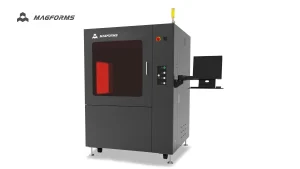
After understanding the customer’s requirements, we recommended the SL800 Industrial SLA 3D Printer.
The customer mainly wanted to confirm two points:
1. Can SLA technology reproduce the detailed textures required for footwear prototypes?
2. Can the equipment maintain stable quality during repeated prototype production?
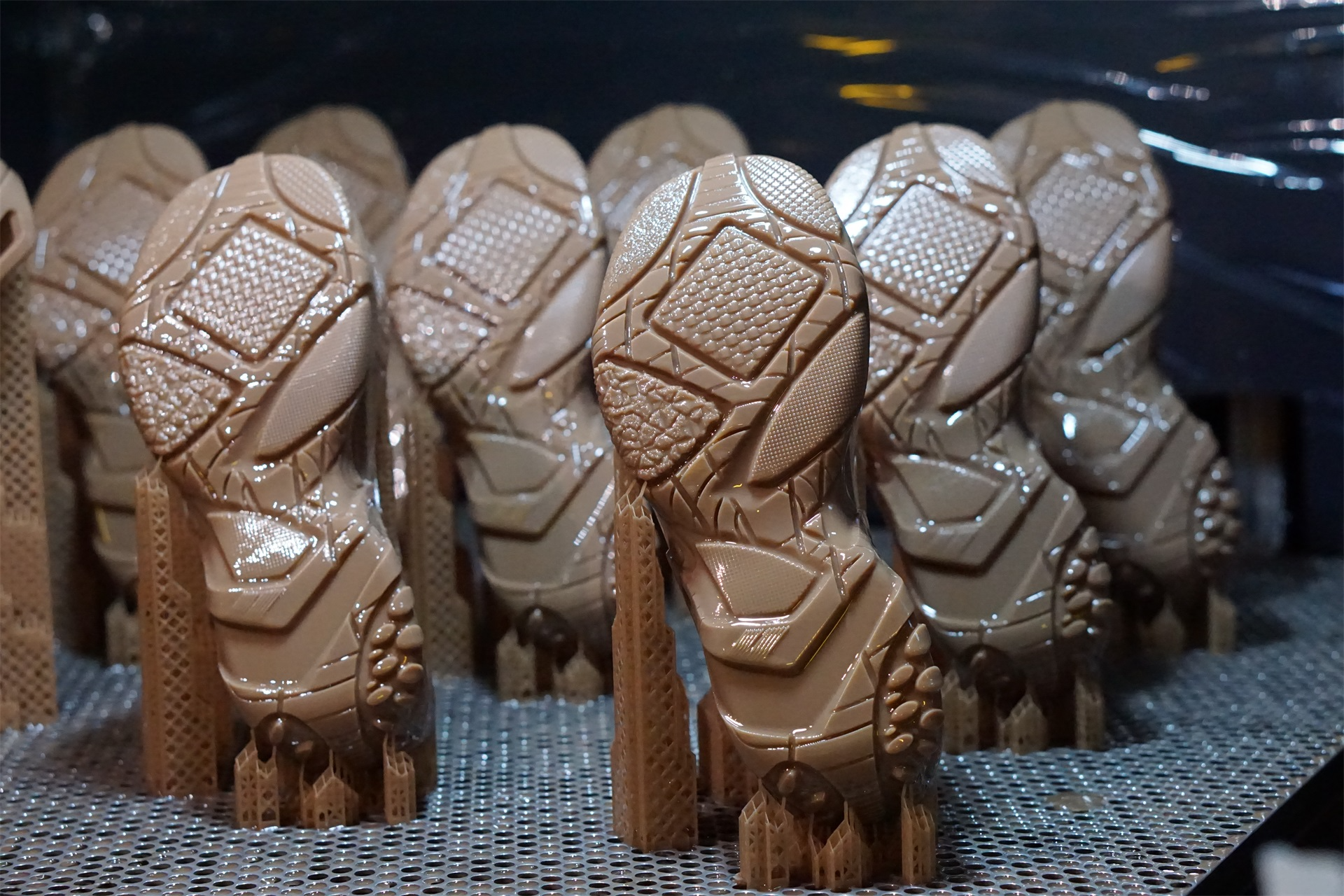
To verify the capability of the system, we produced shoe mold prototype samples using SL800 and shared the results with the customer.
The printed samples showed clear outsole patterns, smooth curved surfaces, and accurate structural details. The customer was able to evaluate the design appearance and texture performance before proceeding with further mold manufacturing.
For manufacturers interested in understanding how stereolithography works, our guide on SLA 3D printing technology explains how laser-based resin printing creates high-precision prototypes.
High-Detail Texture Reproduction Improves Shoe Design Verification
For footwear prototype development, surface detail is one of the most important evaluation factors.
Shoe designs often include:
· Fine outsole patterns
· Decorative textures
· Small grooves
· Complex curved structures
The SL800 achieves detailed prototype reproduction through its advanced optical system and precision control technology.
The equipment integrates an AOC laser system and German Scanlab galvanometer, providing stable laser output and accurate scanning movement.
The variable spot size technology allows SL800 to balance efficiency and detail:
· A larger 0.5-0.6mm laser spot is used for filling areas, improving scanning efficiency.
· A smaller 0.15-0.2mm laser spot is used for outlines and detailed structures, improving texture reproduction.
In addition, the built-in grayscale processing algorithm reduces visible layer effects and improves surface quality.
For footwear designers and engineers, this helps create prototypes that more closely represent the final design concept and reduces unnecessary design adjustments.

Stable Industrial Configuration Supports Continuous Prototype Production
After confirming the printing quality, the customer also wanted to understand how SL800 could maintain stable performance during long-term operation.
The stability comes from the industrial-grade components integrated into the system.
SL800 uses:
1. AOC laser source
Provides stable laser output for consistent printing performance.
2. German Scanlab galvanometer
Ensures precise laser scanning and accurate positioning.
3. Panasonic servo motors
Provides reliable movement control for key mechanical systems.
4. Schneider electrical components and Philips UV lamps
Improves equipment reliability and long-term operation stability.
The machine also adopts a rigid structural design with a 2mm metal enclosure, marble platform, and Taiwan HIWIN precision guide rails.
These configurations help maintain mechanical stability and reduce the risk of failed prototypes during continuous development work.
For more information about industrial resin printing solutions, visit our Industrial SLA 3D Printer category.
Faster Design Iteration with Large-Format SLA Printing
Besides detail quality, development speed was another important factor for the customer.
The SL800 provides a large build volume:
800 × 800 × 550mm
This allows footwear manufacturers to produce larger prototypes or multiple components in one printing cycle.
With Scanlab scanning technology and variable spot optimization, the equipment improves printing efficiency while maintaining prototype accuracy.
Compared with producing every design iteration through machining, SL800 allows manufacturers to:
· Validate designs earlier
· Reduce unnecessary tooling iterations
· Shorten communication cycles between designers and manufacturers
· Accelerate product development
Three Advantages SL800 Brings to Footwear Prototype Development

After introducing SL800 into the development workflow, the customer summarized three major improvements:
1. More accurate texture verification
Complex outsole patterns and surface structures could be evaluated more clearly before final mold production.
2. Faster design iteration
Engineers could quickly produce prototypes and test different design concepts without waiting for every machining step.
3. More stable prototype production
Industrial components and optimized mechanical structures improved printing consistency and reduced failed parts.
More footwear-related applications can be explored through our SLA 3D printing applications in footwear case studies.
Industrial SLA 3D Printer Creates a More Efficient Footwear Development Workflow
For footwear manufacturers, CNC machining remains an essential method for final mold production. However, during the early stages of product development, faster prototype validation can help companies test more ideas and reduce development risks.
The SL800 Industrial SLA 3D Printer provides footwear manufacturers with a practical solution for high-detail prototype development through accurate texture reproduction, stable industrial operation, and large-format printing capability.
By integrating industrial SLA printing into the development workflow, companies can accelerate design verification and move new footwear concepts toward production more efficiently.