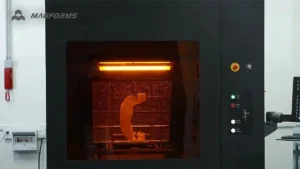
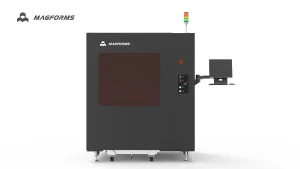
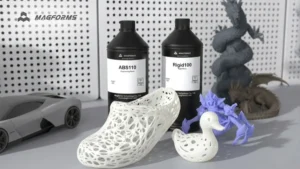
In the industrial 3D printing market, where a single industrial 3D printer can cost hundreds of thousands or even millions, equipment stability often determines long-term value. A highly reliable system means longer service life, lower failure rates, and reduced operational costs.
The Magforms SLA 3D printer delivers print stability and success rates that outperform more than 90% of its peers. The key lies in its deep optimization of system integration and precision control, ensuring consistent performance from the source and minimizing the risk of print failure in resin 3D printing applications.
Across the industry, to reduce costs, over 70% of manufacturers fail to strictly control core component selection and system calibration. Some machines may use laser and scanning systems, but lack proper integration and tuning. Others fall short in motion control accuracy and resin level management. As a result, many Stereolithography 3D Printers begin to show performance instability after a period of operation, leading to dimensional deviations, inconsistent layers, and even batch failures.
Last year, a global manufacturing service provider sourcing equipment in Asia encountered exactly this issue. Their end customers reported that after several months of continuous use, the 3D printer showed declining accuracy, deteriorating surface quality, and increasing defect rates, which seriously disrupted delivery schedules.
“The biggest headache is when the machine fails overnight—once it stops, an entire batch is wasted, and the loss of resin and time quickly gets out of control,” said a production manager from the company.
After analyzing the situation, we identified that the root cause was not a single parameter issue, but insufficient system stability. In many industrial SLA 3D printers, even if individual specifications appear competitive, the lack of coordinated integration between the laser, galvanometer, and motion system leads to cumulative errors over time. Laser energy decay, scanning deviation, and resin level inconsistencies gradually amplify, eventually resulting in print failures.

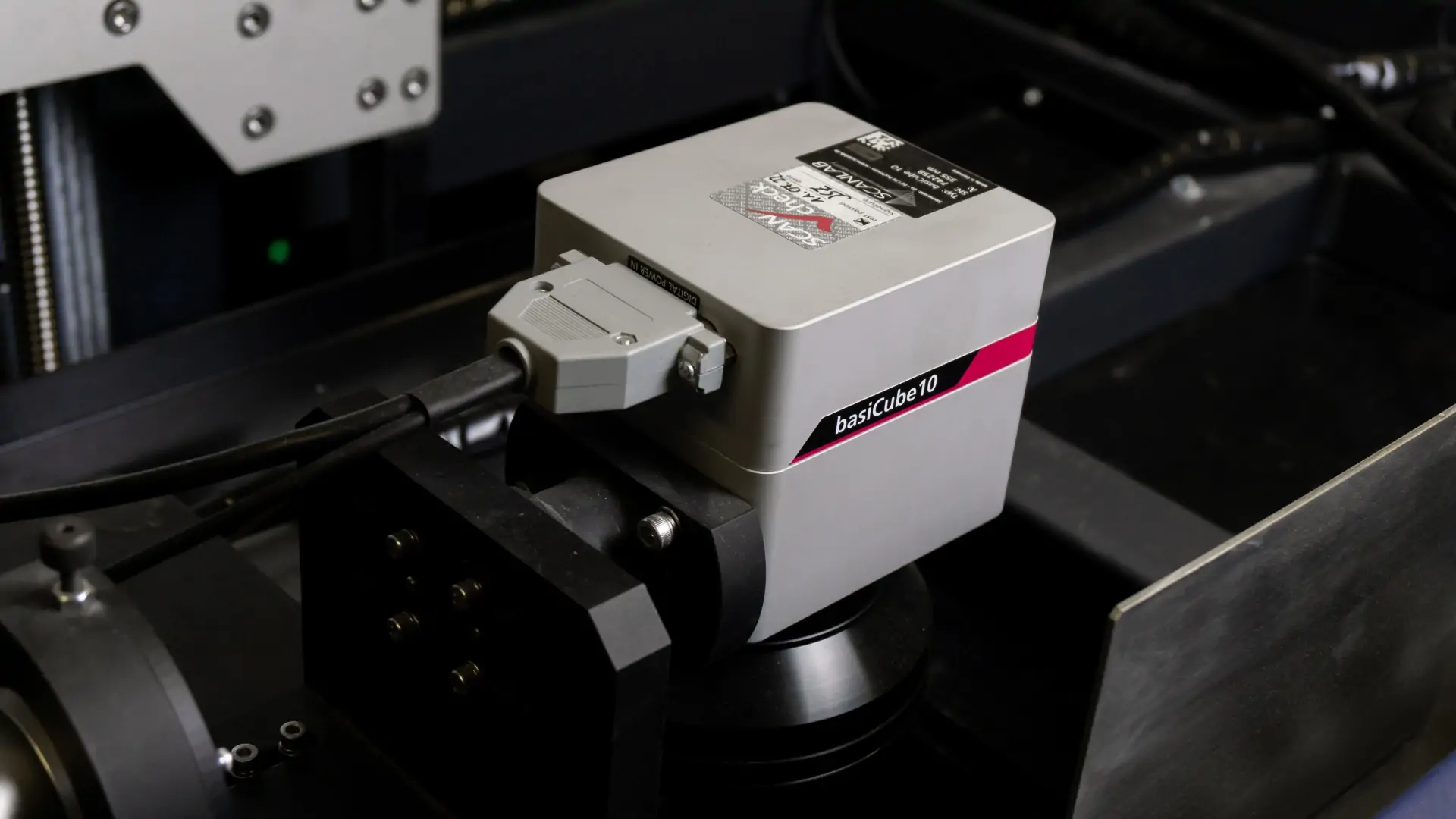
Magforms addresses this challenge through system-level optimization rather than isolated upgrades. By precisely matching the AOC laser with Scanlab galvanometer scanners, the laser spot approaches an ideal circular shape, ensuring dimensional accuracy at the foundation. Combined with Panasonic servo motors for mesh positioning (±8μm) and resin level control (±0.03mm), along with a stable electrical system, the machine maintains consistency during long-term operation.
In addition, the integration of variable spot technology and grayscale processing algorithms allows this Resin 3D Printer to increase printing efficiency by 30%–50% while maintaining high precision. At the same time, it significantly reduces post-processing difficulty, improving overall production efficiency for industrial 3D printing workflows.
To ensure consistent performance, Magforms has accumulated extensive experience in system calibration and operational logic. Instead of relying on isolated hardware advantages, the system dynamically optimizes parameter matching based on different application scenarios, enabling stable and repeatable results in real production environments.
After completing validation tests, the customer gained a clear understanding of the machine’s stability and print quality. Following comparisons with multiple suppliers, they ultimately decided to proceed with a trial order from Magforms.