Pharmaceutical research is often a slow and meticulous process, spanning several years. To bring a new active pharmaceutical ingredient to market, researchers must accurately measure and quantify its behavior within the human body during the early stages of drug development.
Using models created with a 3D printer helps accelerate this process—from simulating physiological conditions for drug delivery to demonstrating drug release mechanisms to stakeholders. Compared with traditional fabrication methods, a 3D printer for rapid prototyping enables faster iteration, reduced costs, and improved experimental accuracy.
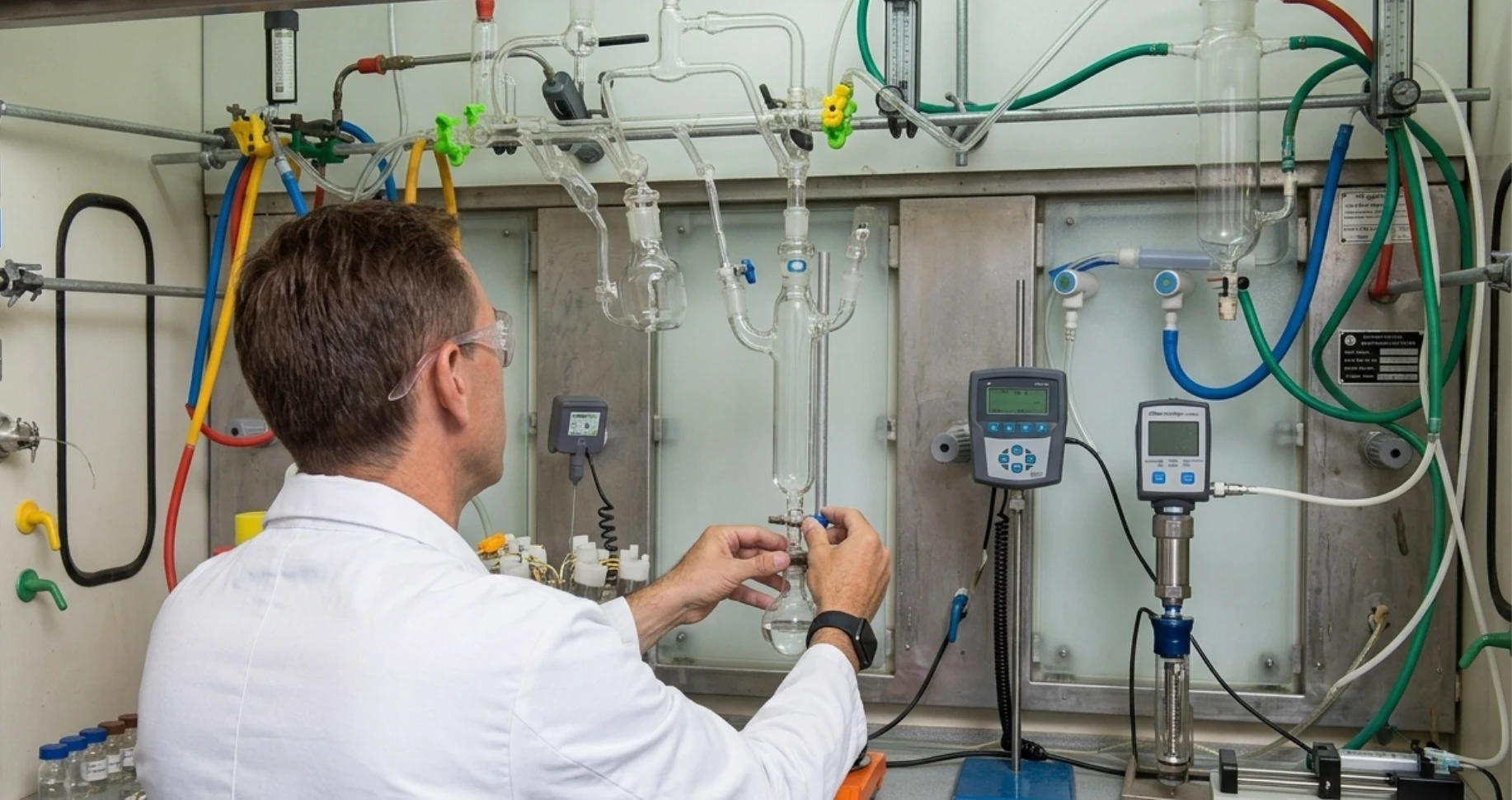
A research team at a European pharmaceutical institute leverages 3D modeling and an SLA printer to streamline both research and teaching workflows. Their work focuses on improving how drug behavior is visualized and validated using physical models.
Peek Inside the Body With 3D Printed Organ Models
The research team utilizes highly detailed anatomical models produced with an SLA 3D printer to simulate drug delivery inside the human body.
“For example, we 3D print transparent models of the stomach to observe how a formulation behaves in real conditions,” explained a lead researcher. “This allows us to better control how and when the active ingredient is released.”
These transparent models reveal how medication expands and releases over time, supporting the development of sustained-release drug systems. In many cases, this approach can reduce dosing frequency from multiple daily doses to a single weekly administration.
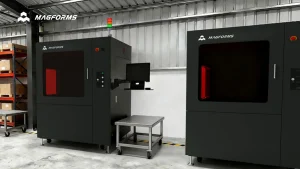
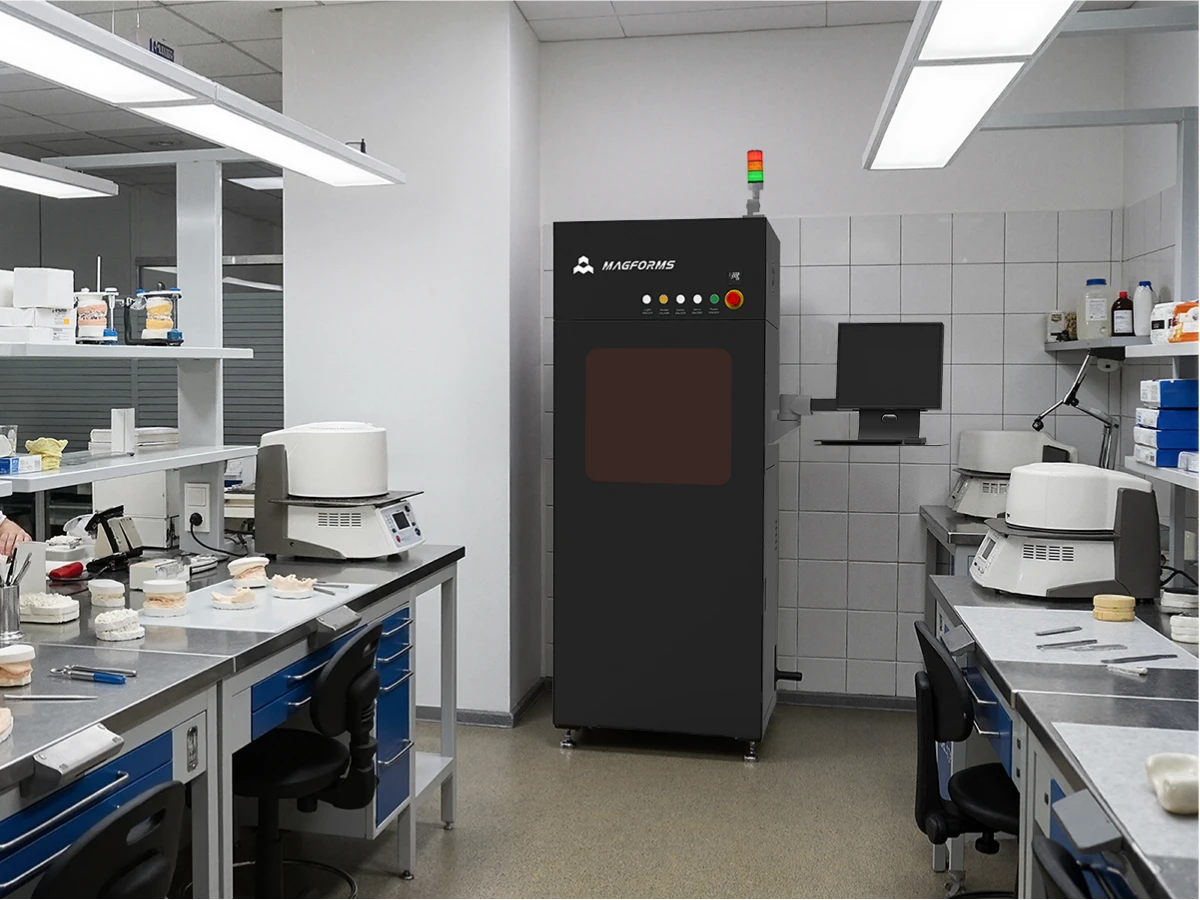
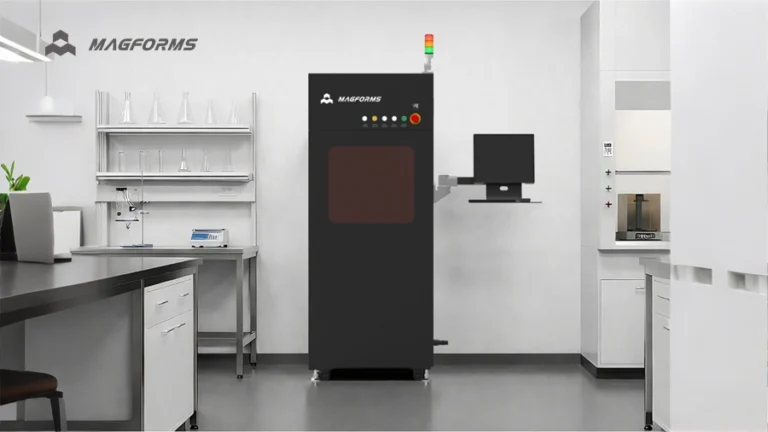
The lab relies on the Lab300, an industrial SLA 3D printer, for daily production. Its ability to produce complex geometries with high accuracy makes it ideal for pharmaceutical modeling.
“The Lab300 offers an excellent balance between build volume and precision. Its compact design fits perfectly into our lab, and the removable resin tank allows us to switch materials quickly,” the researcher noted.
Helping Students Visualize Chemistry and Body Functions
In addition to research, the team uses their SLA printer extensively in education. Understanding chemistry and molecular behavior is essential in pharmacology, but many concepts are difficult to grasp through 2D representations alone.
“We use the 3D printer to create molecular and stereochemical models,” the researcher said. “Students can physically interact with structures, which makes complex topics like chirality and molecular geometry much easier to understand.”
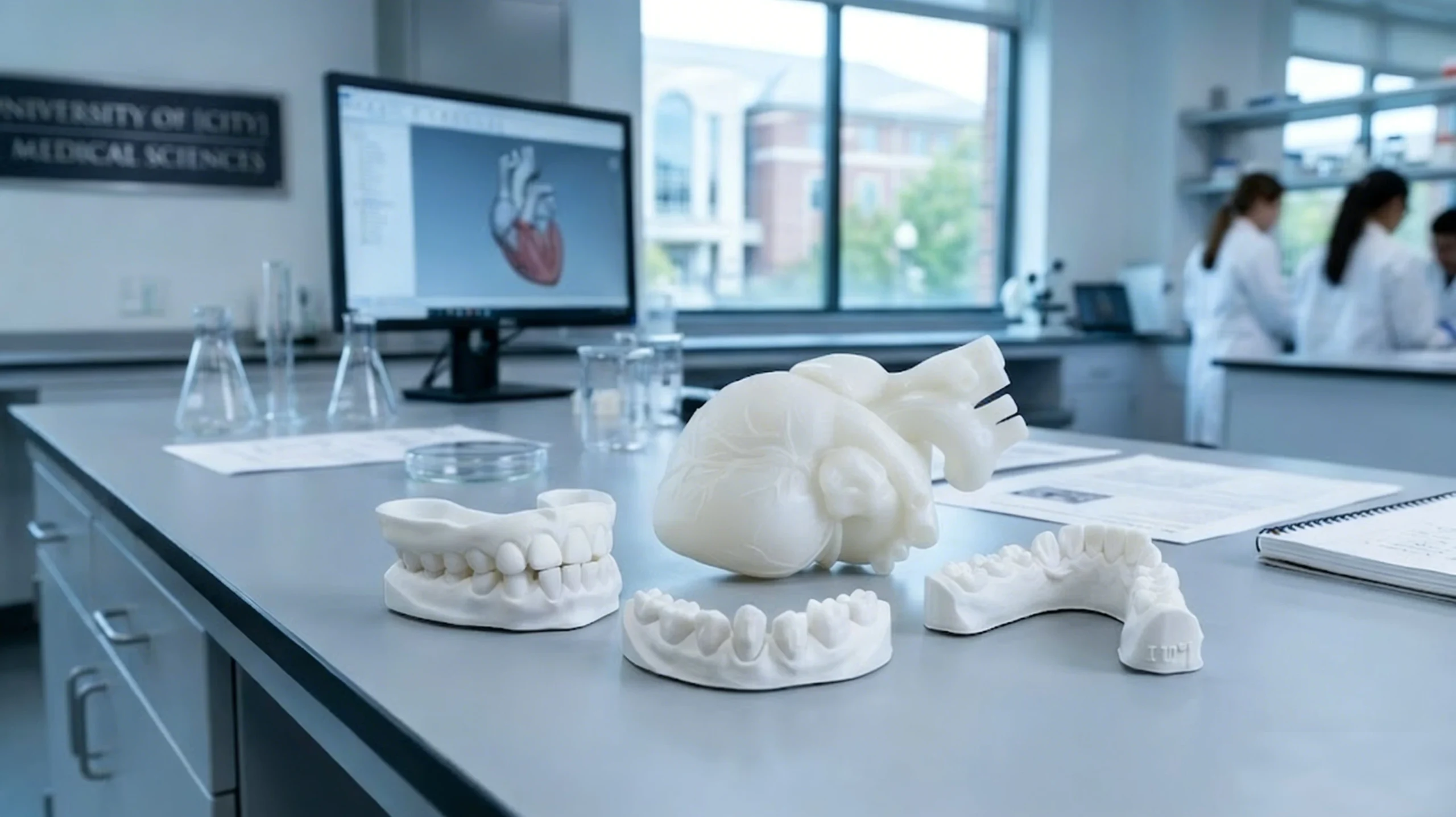
Beyond molecular models, the team produces a variety of anatomical structures, including stomachs, dental models, and brain structures.
With outputs from a high-resolution SLA 3D printer, educators can demonstrate how organs interact with different compounds. The ability to print transparent parts allows students to observe internal processes, such as dissolution and diffusion, in real time.
The team has now integrated 3D printing into advanced courses, ensuring students gain hands-on experience with a 3D printer for rapid prototyping and preparing them for modern pharmaceutical workflows.
A senior researcher added, “We also use the Lab300 for rapid prototyping of medical device components. It’s extremely reliable, and the print quality is consistently high. Compared to other systems, it saves us a significant amount of time.”
Accelerate Research and Education With 3D Printing
3D printing is rapidly becoming a core tool in laboratories worldwide. The adoption of industrial SLA 3D printers is enabling new levels of precision and efficiency in both research and education.
The Lab300 is specifically designed for laboratory environments. Its compact size allows easy installation in standard lab spaces, while features like the removable resin tank reduce downtime between material changes.
In addition, its stable laser system and fast liquid level response ensure consistent printing performance—critical for any workflow relying on an SLA 3D printer.
As laboratories continue to adopt digital manufacturing technologies, the role of the 3D printer is expanding from a supporting tool to an essential part of the research process—bridging the gap between theoretical models and real-world experimentation.