How an Engineering Manufacturer Improved Long-Term Printing Reliability with Industrial SLA Technology
When Daniel, an engineering project manager, contacted Magforms, his team faced a production problem: transitioning from prototype development to functional part manufacturing.
They were already using an SLA 3D printer for engineering prototypes and validation components. For small models and short printing jobs, the workflow was acceptable. However, as projects became more demanding—especially when producing larger parts with longer printing times—the limitations of their existing equipment became increasingly obvious.
The problem was not whether the printer could produce a high-quality part once.
The problem was whether the printer could maintain the same performance during continuous production.
“Sometimes the first few hours were fine, but long printing jobs created uncertainty,” Daniel explained. “When a part failed after many hours, the impact went beyond material waste—it directly affected our testing schedule and delivery commitments.”
The Challenge: Maintaining Stability During Long SLA 3D Printing Jobs
Before searching for a new solution, Daniel’s team had already tried adjusting their existing printing process. They modified support structures, optimized orientation, and tested different parameters to improve success rates.
These adjustments helped with individual projects, but they did not solve the underlying issue.
Understanding how laser exposure, resin behavior, and layer bonding influence final part quality became an important part of the evaluation process. These insights helped the team clarify why SLA 3D printing stability is critical for industrial applications.
These factors helped the team better understand how SLA 3D printing works in industrial applications.
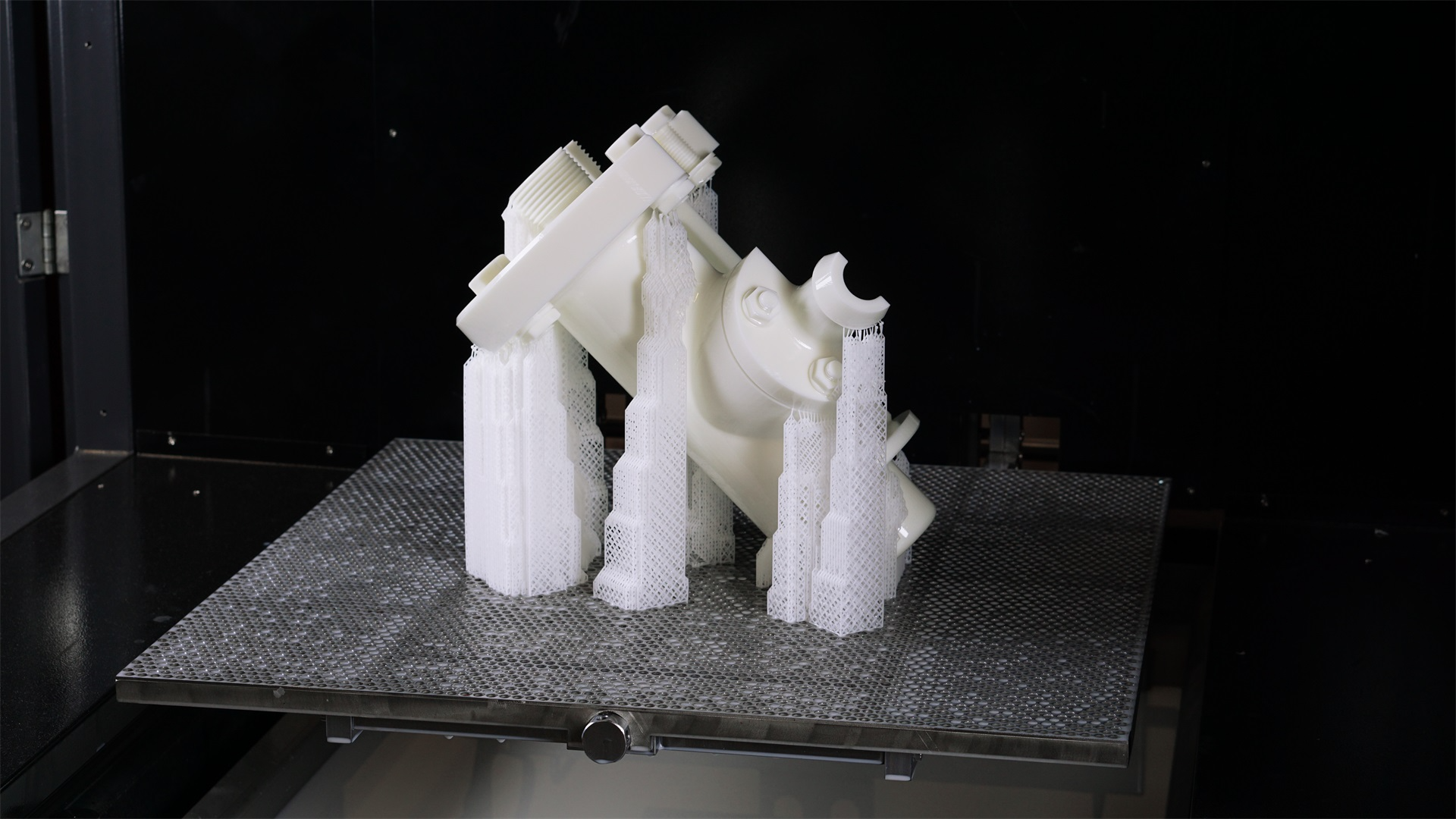
A large engineering component may require thousands of layers to complete. During this process, consistent laser exposure, accurate movement control, and stable printing conditions all influence the final result.
For short prototype jobs, small variations may not be obvious. However, during continuous manufacturing, these variations can accumulate and affect dimensional accuracy, surface quality, and production efficiency. The team realized they did not simply need a printer with high resolution—they needed an Industrial SLA 3D Printer designed for stable and repeatable production. This led them to explore large-format stereolithography solutions.
The team realized that they did not simply need a printer with high resolution. They needed an Industrial SLA 3D Printer designed for stable and repeatable production, which led them to explore industrial SLA 3D printer solutions.
Finding the Right Industrial SLA 3D Printer for Engineering Production

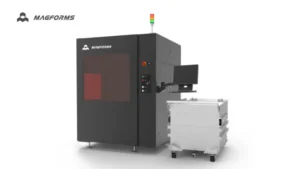
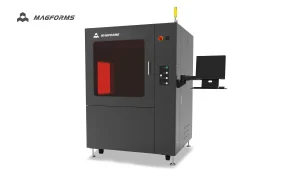
After understanding Daniel’s application requirements, Magforms recommended the SL800 Industrial SLA 3D Printer, a large-format stereolithography system designed for engineering prototypes, functional parts, and low-volume production.
The evaluation focused on one key question:
Could the equipment provide consistent results during long-duration engineering production?
The answer depended on three key factors: laser stability, motion precision, and large-format production capability.
The SL800 combines a 355nm laser-based stereolithography system, precision motion control, and a large-format build platform to support demanding engineering applications.
The goal was not only to produce accurate prototypes, but also to help engineers create functional parts with a more predictable workflow.
How SL800 Improved Continuous Manufacturing Reliability
One of the main improvements came from the Stable Laser Exposure system.
In industrial SLA printing, every layer depends on controlled curing energy. For large engineering parts that require many hours of printing, stable laser performance helps maintain consistent layer formation throughout the entire build process.

This is especially important for functional prototypes and engineering components where dimensional consistency directly affects assembly testing and product validation.
The second improvement came from the Large-Format Printing Capability.
The SL800 provides an 800 × 800 × 550 mm build volume, making it a suitable large format SLA 3D printer for producing larger engineering components in a single build.
This reduced additional assembly work and helped engineers evaluate complete parts earlier in the development process.
The third improvement was Precision Motion Control.
For industrial applications, printing consistency across repeated production cycles is often more important than the result of a single successful build.
With a precision motion system and industrial-grade components, the SL800 helped the team establish a more reliable workflow for engineering prototypes and low-volume production applications.
The Result: From Uncertain Printing to More Predictable Production

After integrating the Industrial SLA 3D Printer into their workflow, Daniel’s team changed the way they planned additive manufacturing projects.
Previously, long printing jobs required additional attention because unexpected failures could interrupt production schedules.
With the SL800, the team gained more confidence when arranging longer printing tasks. Engineering prototypes, functional validation parts, and customized components could be produced with a more predictable process.
“The biggest change wasn’t just the part quality,” Daniel said. “It was knowing that the printing process could reliably support our schedule.”
For this engineering manufacturer, SLA 3D printing became a more reliable part of their product development and low-volume manufacturing workflow.
Why Stability Matters in Industrial SLA 3D Printing for Engineering Applications
As engineering companies increasingly use additive manufacturing for functional prototypes and low-volume production, equipment stability has become a key factor in supplier selection.
An Industrial SLA 3D Printer is not evaluated only by the appearance of a single sample part. Its real value lies in repeatedly producing qualified components under demanding production conditions. For Daniel’s team, the SL800 was more than a hardware upgrade—it was the foundation of a more reliable production process for long-duration SLA printing of functional prototypes and low-volume parts.
For Daniel’s team, the upgrade was not simply replacing one machine with another. It was building a more reliable production process that could support continuous engineering manufacturing.
The SL800 Industrial SLA 3D Printer helped the engineering manufacturer achieve more stable long-duration SLA printing for functional prototypes and low-volume production.
Explore more Industrial SLA 3D printing applications.