A manufacturing service provider in Europe contacted Magforms several months ago after experiencing a problem that many users of large format SLA 3D printer systems quietly struggle with. Their existing Resin 3D Printer equipment produced excellent sample parts during demonstrations, but once the machines entered real production schedules, reliability problems started appearing one after another.
Large overnight jobs failed unexpectedly. Some parts showed dimensional deviations after long print cycles. Operators had to repeatedly stop production for recalibration and troubleshooting. For a company handling urgent automotive and consumer electronics prototype orders, unstable industrial 3D printing capacity was beginning to affect delivery schedules and customer confidence.
The engineering manager explained that their factory often runs multiple Stereolithography 3D Printer systems continuously for several days. Certain projects require large-format prototype parts to be printed back-to-back without interruption. Under this kind of workload, even a small laser fluctuation, vibration issue, or motion positioning error can destroy an entire print after dozens of hours.
The real cost goes far beyond wasted resin materials.
Failed prints also mean production downtime, delayed shipments, additional labor costs, and missed project deadlines. In large-scale industrial 3D printing environments, unstable equipment quickly becomes a hidden operational risk.
Before contacting Magforms, the customer had tested several industrial 3d printer solutions from different suppliers. Most systems focused heavily on print speed, resolution, and sample appearance during demonstrations. However, very few machines could maintain stable operation during long-duration industrial manufacturing workflows.
Some large format resin 3D printer systems gradually became unreliable after extended use, especially during high-volume production involving large components. Continuous printing exposed weaknesses in laser stability, machine structure, and motion coordination accuracy.
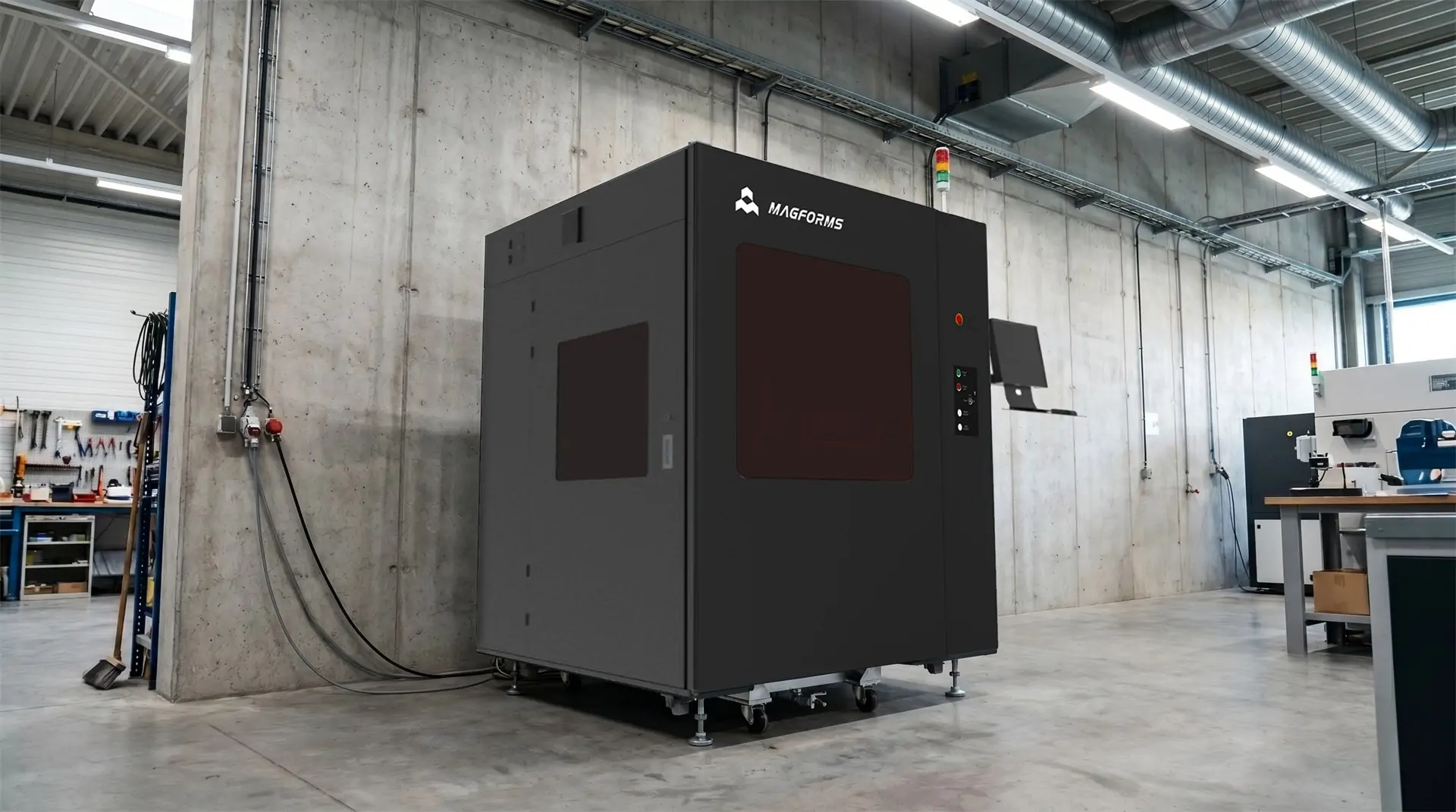
After reviewing the customer’s production requirements, Magforms recommended the Helios-P800 large format SLA 3D printer.
Unlike lightweight prototype-oriented machines, the Helios-P800 was designed specifically for continuous industrial manufacturing environments where production stability matters just as much as print quality. The system is built to support long operating hours, stable output, and higher print success rates during demanding industrial 3D Printing applications.
One of the biggest concerns in large-format stereolithography 3D printer production is laser consistency during extended print cycles. Small fluctuations in laser output can gradually affect curing precision across layers, especially when printing large enclosure parts or functional prototypes that require many hours of uninterrupted operation.
To improve long-term reliability, the Helios-P800 uses an AOC industrial laser system with highly stable beam output suitable for 24/7 production conditions. Stable laser performance helps improve dimensional consistency while reducing unexpected print failures during overnight manufacturing.
The machine also integrates German Scanlab galvanometers that work closely with the laser system to maintain accurate high-speed scanning performance. This combination improves contour precision, surface consistency, and scanning stability throughout long production cycles.
For manufacturers using large-format SLA 3D printer equipment to produce precision housings, functional prototypes, tooling models, or appearance verification parts, stable scanning performance is critical for maintaining repeatable production quality.
Motion control reliability was another major issue for the customer.
Several previously used 3d printer systems experienced positioning inaccuracies after repeated operation, leading to layer shifting and failed prints during long-duration jobs. To improve movement precision, the Helios-P800 adopts Panasonic servo motors across critical systems, including the recoating mechanism, liquid level control components, and motion assemblies.
Fast and accurate movement coordination helps reduce operational errors while improving overall print consistency during continuous industrial 3D printing production.
Another important advantage is the machine’s structural stability.
Many manufacturers underestimate how much machine rigidity affects print quality on large-format resin 3D printer equipment. During long production cycles, weak machine frames may generate vibration, thermal deformation, or slight movement inconsistencies that gradually affect layer accuracy.
The Helios-P800 uses a reinforced 2mm-thick sheet metal enclosure together with a low-shrinkage marble platform structure to maintain stable operation during large-volume printing.
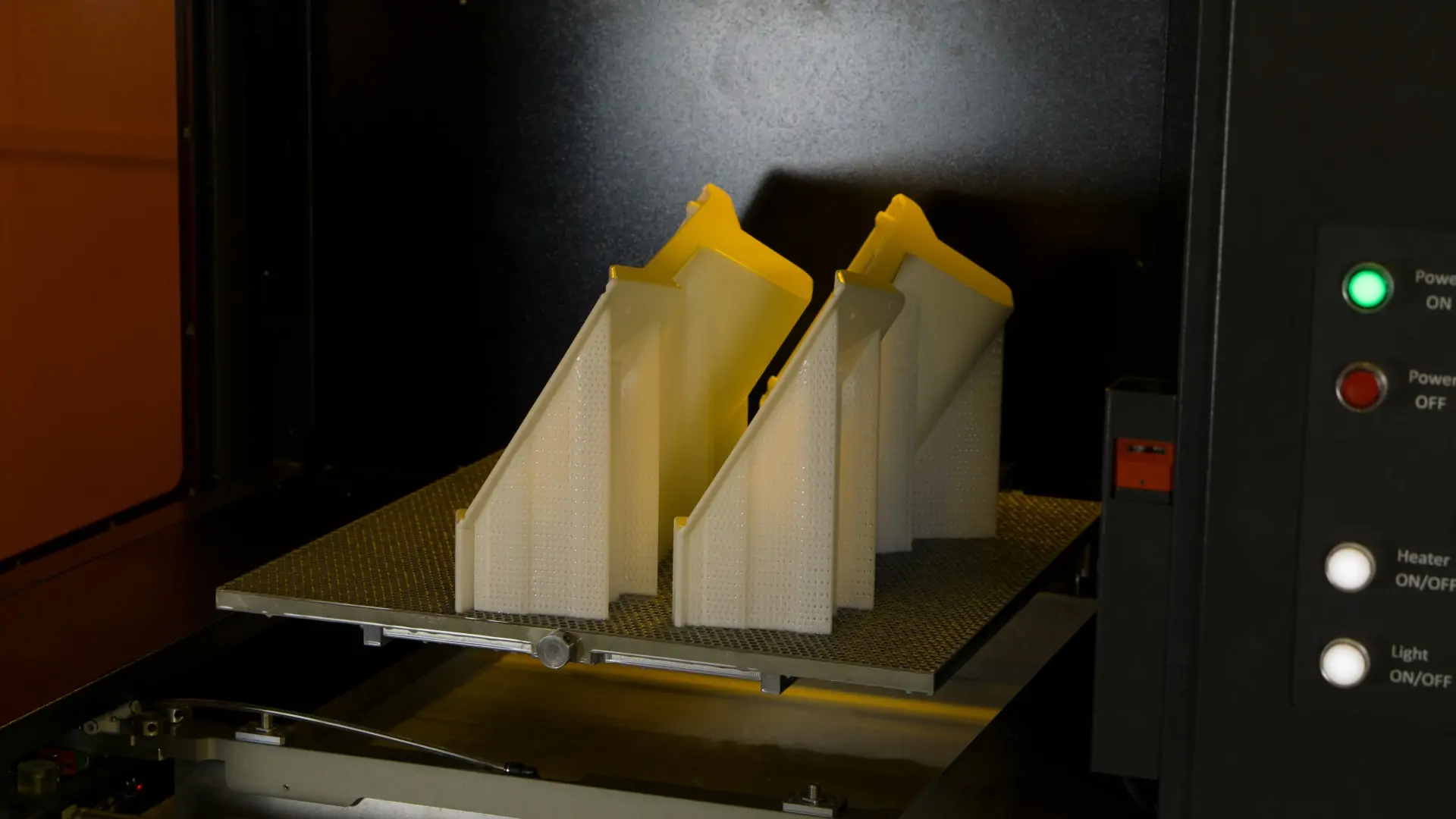
With a build volume of 800 × 800 × 550 mm, the machine supports large-scale prototype manufacturing while maintaining printing accuracy of ±0.15 mm within 100 mm dimensions. This makes the system suitable for demanding industries requiring stable, high-precision industrial 3D printing performance.
Yesterday, the customer shared feedback after several months of continuous production using the Helios-P800 large format SLA 3D printer.
According to their technical team, overnight print interruptions have been significantly reduced. Operators no longer need to frequently pause production for recalibration or unexpected maintenance checks. More importantly, large-format jobs that previously carried high failure risks are now running much more predictably.
The customer also mentioned that production scheduling has become easier because the machine maintains stable performance even during long-duration printing cycles.
For companies relying on continuous industrial 3D printing capacity, predictable output is often far more valuable than simply having faster theoretical print speed.
In reality, many industrial 3d printer systems can produce attractive sample parts during demonstrations. The real difference appears when machines are pushed into continuous production for weeks or months.
Stable operation, reliable core components, accurate motion systems, and reduced downtime ultimately determine whether a large-format stereolithography 3D printer can truly support industrial manufacturing environments.
Magforms continues focusing on industrial SLA 3D printer solutions designed for long-term production reliability. With stable laser performance, internationally recognized components, reinforced machine structures, and responsive technical support, the Helios-P800 helps manufacturers reduce failed prints, improve production efficiency, and maintain stable delivery capability under demanding production conditions.
If your factory is still struggling with unstable large-format resin 3D printer equipment, failed overnight jobs, or repeated production downtime, the Helios-P800 may be the industrial 3d printer upgrade your manufacturing workflow has been waiting for.