A dental production team relying on an Industrial SLA 3D Printer recently faced a serious instability issue during high-volume manufacturing.
Their workflow was under pressure from increasing demand in orthodontic model production, requiring consistent output from an SLA 3D printing system operating continuously.
However, as production scaled up, problems began to appear:
· batch inconsistency in dental models
· unstable curing behavior during long runs
· increased failure rate in resin printing cycles
· dimensional deviation across repeated builds
At first, the issue was thought to be material-related.
But after multiple adjustments, it became clear that the real limitation was the SLA printing stability of their existing system.
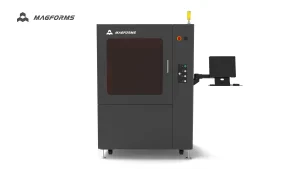
This led them to evaluate a new industrial Resin 3D Printer solution — the SL800 Industrial SLA 3D Printer.
SLA 3D Printing System Instability in Dental Batch Production
Most dental labs rely on an SLA 3D printing system optimized for prototype accuracy, not continuous production stability.
When shifting from single-model printing to batch manufacturing, structural limitations become visible:
· laser energy drift in long exposure cycles
· galvanometer deviation during extended scanning
· resin shrinkage variation under thermal accumulation
· platform micro-deformation affecting alignment accuracy
These issues accumulate and directly impact the reliability of dental SLA printer workflows.
This is a common failure point in many high precision SLA system setups used in dental manufacturing.

Why Traditional Industrial SLA 3D Printer Systems Fail in Scale Production
Before switching systems, multiple machines were tested under identical production conditions.
The results followed a consistent pattern:
· early-stage prints were accurate
· mid-batch deviation began to appear
· late-stage models required rework
· overall failure rate increased unpredictably
The production team realized they did not just need a printer — they needed a stable dental SLA batch production system.
This led them to explore industrial alternatives focused on long-term stability rather than isolated precision.
Similar challenges have been reported in other manufacturing scenarios, where companies needed a more stable Industrial SLA 3D Printer solution to improve production consistency.
Learn more about our real-world application example: Industrial SLA 3D Printer Application Case Study
SL800 Industrial SLA 3D Printer Stability Architecture
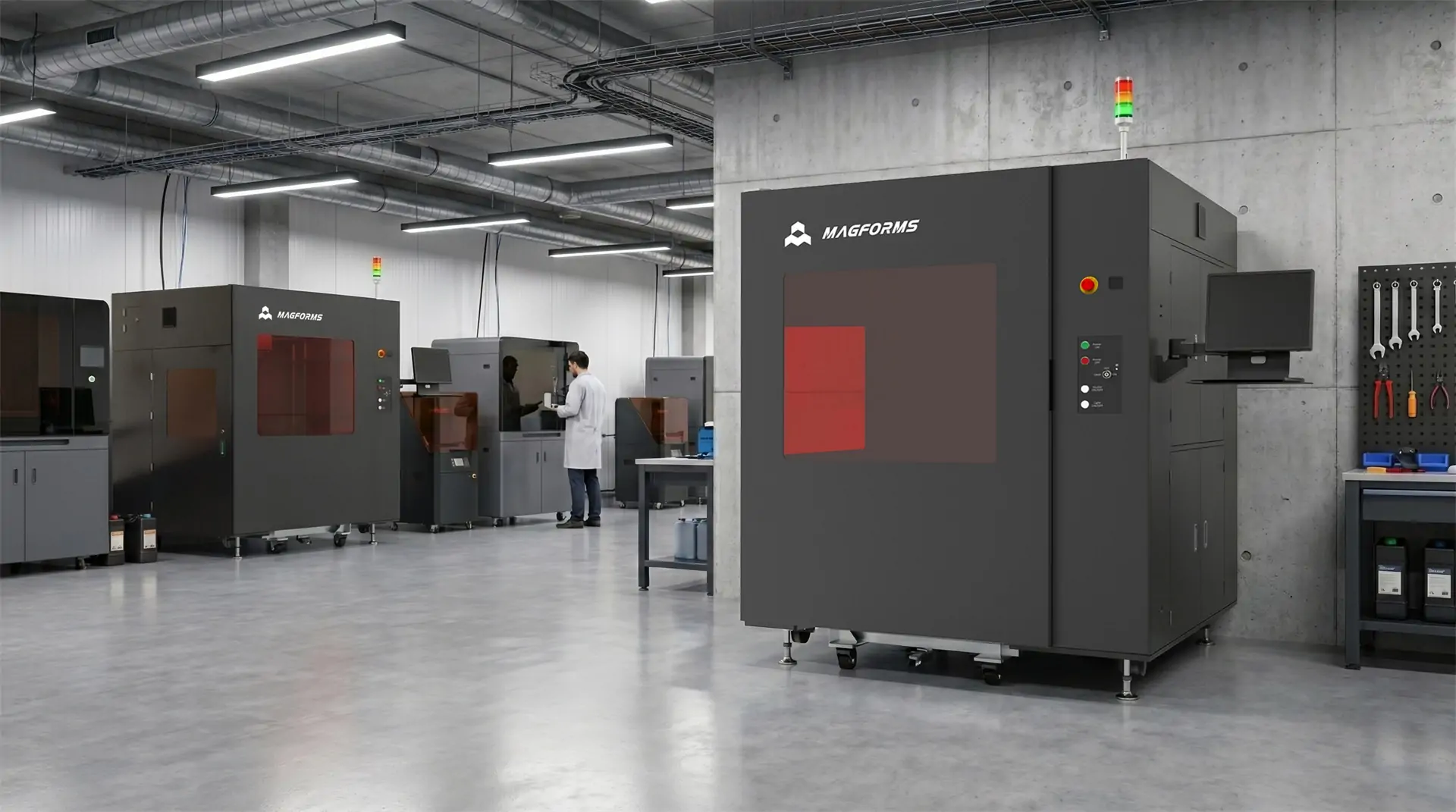
The SL800 is engineered specifically as a next-generation Industrial SLA 3D Printer designed for continuous dental production environments.
Its stability system includes:
· AOC laser system ensuring long-term output consistency
· German Scanlab galvanometer enabling high-speed precision scanning
· Panasonic servo motors for repeatable positioning control
· Reinforced industrial frame improving vibration resistance
These components form a unified laser scanning system that minimizes cumulative error during extended dental production cycles.
This directly enhances SL800 industrial SLA printer dental workflow optimization, especially in batch manufacturing environments.

For a deeper understanding of scanning behavior in SLA systems, see:laser scanning precision in SLA printing
Precision Control in High Precision SLA System for Dental Models
Dental applications require both accuracy and repeatability across large batches.
The SL800 delivers:
· ±0.15 mm dimensional accuracy for large dental structures
· ultra-flat build platform ensuring stable geometry
· stress-compensated slicing to reduce resin deformation
· stable optical spot control during long scanning paths
This ensures consistent output in orthodontic model SLA production systems, even under full-platform load.
Failure Rate Reduction in Dental SLA Printer Production Workflow
After implementing the SL800 Industrial SLA 3D Printer, the production behavior changed significantly.
Measured improvements included:
· batch failure rate reduced to below 1%
· no recalibration required during continuous 72-hour printing cycles
· improved dimensional stability across the full build platform
· reduced dependency on reprinting cycles
This transformation is critical for any high precision SLA printer for orthodontic model production, where timing and consistency directly affect clinical workflow efficiency.
Explore full system category here: Industrial SLA 3D Printer solutions

Speed Optimization in SLA Printing Stability Without Accuracy Loss
The SL800 improves production efficiency through advanced scanning control:
· scan speeds up to 12 m/s
· variable spot control (0.15–0.6 mm adaptive beam system)
· intelligent scanning path optimization over time
This allows faster production cycles while maintaining SLA printing stability in continuous dental manufacturing environments.
Material Flexibility in Industrial Resin 3D Printer Systems
Unlike closed systems, SL800 supports most 355nm dental resins.
This enables:
· unrestricted use of validated dental materials
· compatibility with experimental resin formulations
· elimination of vendor material lock-in
· flexible adaptation for different dental applications
This flexibility is essential for modern SLA 3D printing system workflows combining orthodontic, implant, and model production.
View full specification here: SL800 Industrial SLA 3D Printer
Final Outcome in Dental Manufacturing Stability
After deployment of the SL800 Industrial SLA 3D Printer, the workflow transitioned from unstable correction cycles to predictable production output:
· unstable batches eliminated
· production backlog cleared
· consistency maintained across full build volume
· operational confidence significantly improved
The key transformation was not just accuracy — but long-term SLA printing stability at industrial scale.
Conclusion
In modern dental manufacturing, precision alone is no longer enough.
What determines success is the ability of an Industrial SLA 3D Printer to maintain stable, repeatable output under continuous production conditions.
The SL800 demonstrates how a properly engineered SLA 3D printing system can transform dental manufacturing from reactive correction into predictable industrial production.