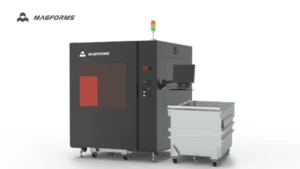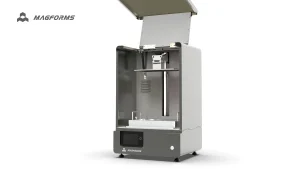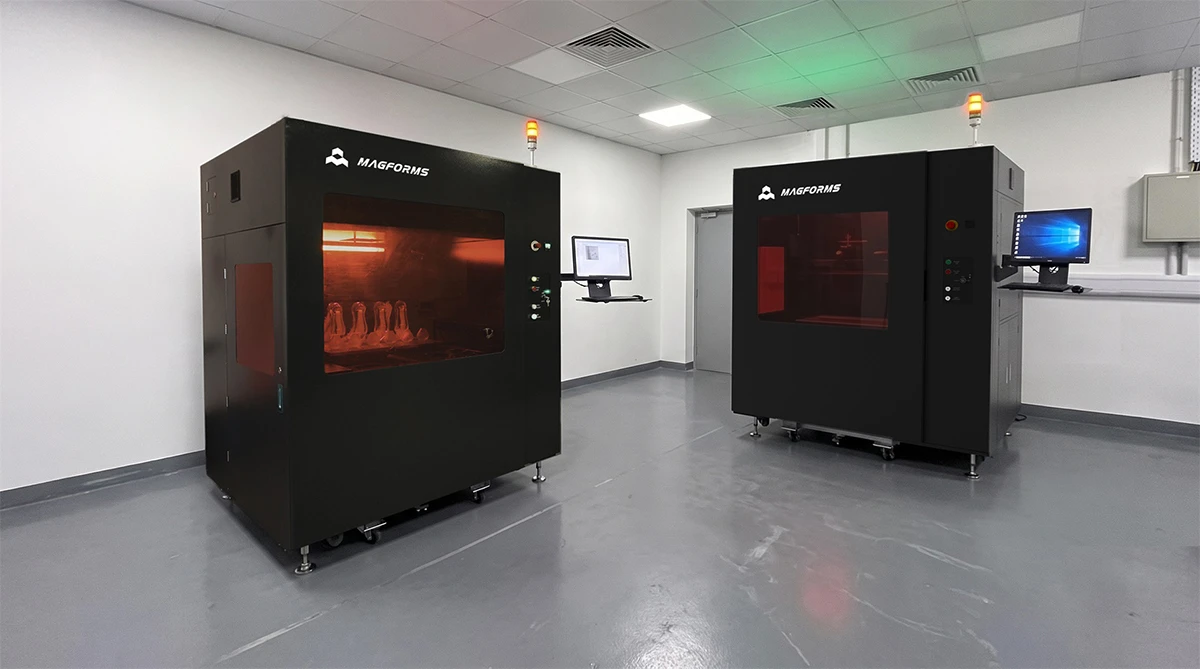
Magforms’ industrial SLA 3D printer Helios-P800 is built to deliver consistent accuracy from the first print to the 1,000th. This commitment is backed not only by core components from internationally recognized manufacturers, but also by carefully engineered details in laser optics, motion control, recoating, and temperature management. Combined with 24-hour response support, professional process guidance, and a factory-direct service model, Magforms provides comprehensive support throughout the entire equipment lifecycle, from installation and commissioning to production applications.
In industrial manufacturing, recurring problems such as accuracy drift, uneven layer thickness, print interruptions, and component wear can seriously affect production efficiency and product consistency. This raises an important question: How can a large-format photopolymer 3D printer maintain long-term stability, minimize operational concerns, and support reliable mass production?
Today, rather than focusing on the specifications you can easily see, we take a closer look inside Magforms’ large-format SLA equipment to explore the engineering details that are not immediately visible after installation but play a decisive role in continuous printing performance and dimensional consistency across every build.
These details are the foundation behind the Magforms Helios-P800’s commitment to consistent accuracy from Print 1 to Print 1,000.
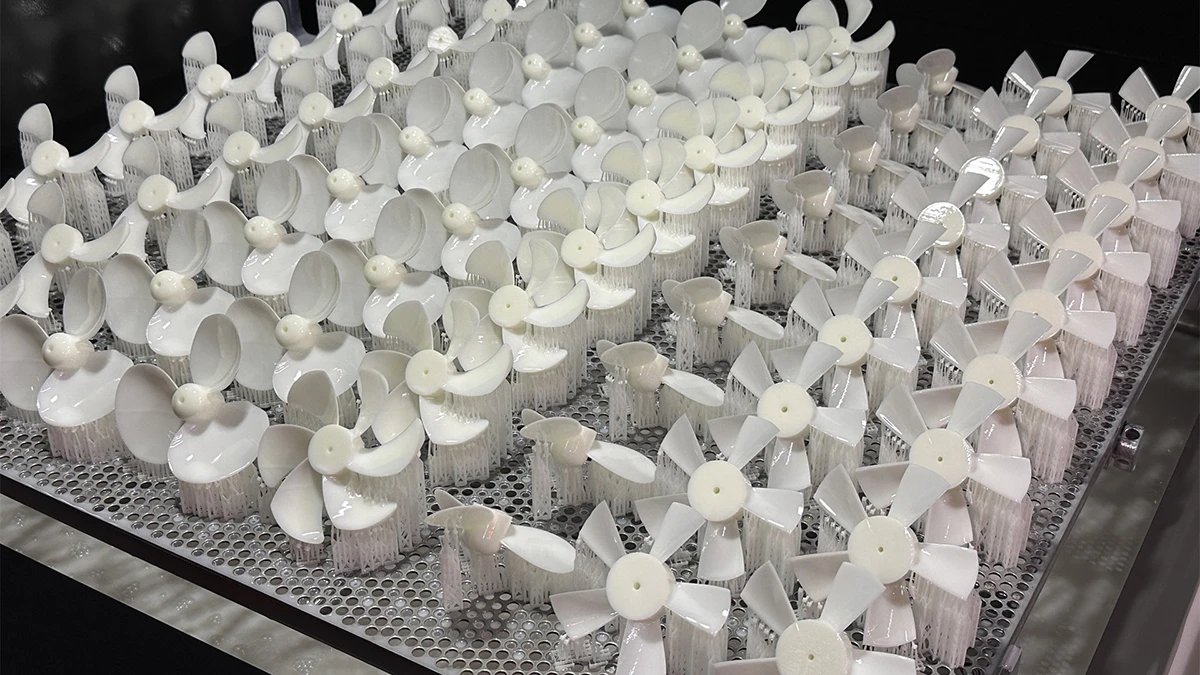
Built on Solid Foundations: Quality You Can See
Before exploring the engineering details hidden inside the machine, let’s take a quick look at the visible strengths of the Magforms industrial SLA 3D printer. These features provide the first layer of assurance for dependable industrial operation.
Heavy-Duty Sheet Metal Enclosure
The machine features a reinforced enclosure made from cold-rolled steel plates at least 2 mm thick. After full-frame welding, the structure undergoes grinding, precision leveling, and stress relief, with additional reinforcement ribs in critical areas. It also passes rigorous impact and deformation tests. Compared with conventional thin-sheet metal enclosures, this reinforced structure offers greater resistance to dents and deformation in demanding workshop environments, providing reliable protection and support for the internal components.
Dimensionally Stable Granite Reference Platform
A natural granite platform, subjected to stress relief and multiple high- and low-temperature deformation tests, replaces conventional metal platforms. Its excellent vibration-damping properties help suppress resonance, while its extremely low thermal expansion minimizes dimensional changes caused by temperature fluctuations. This helps maintain a stable reference surface over extended periods of operation and supports long-term printing accuracy.
Convenient Pull-Out Resin Vat Design
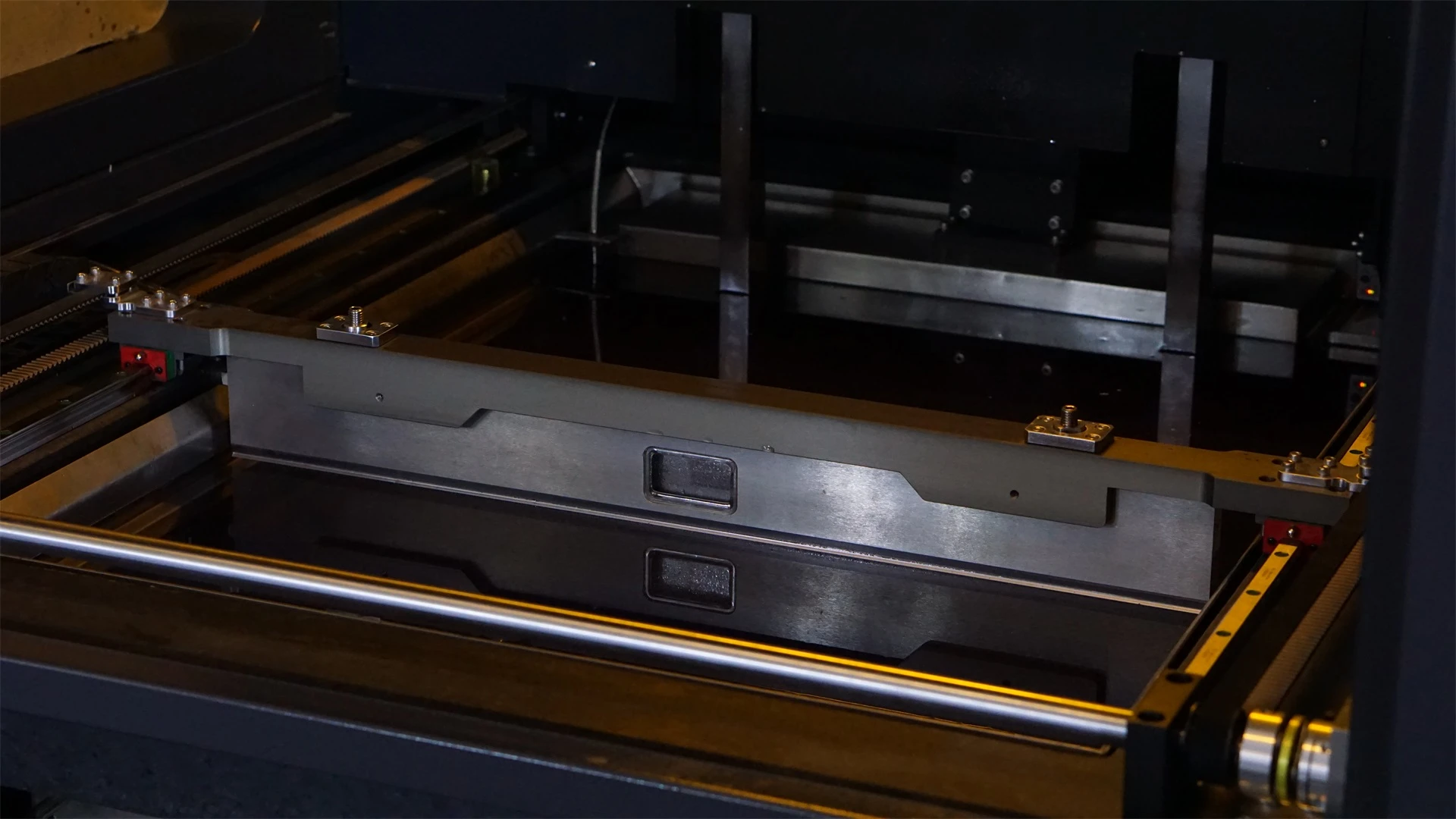
The metal resin vat features a slide-rail positioning structure and undergoes hundreds of pull-out and reinsertion durability tests before delivery. Operators can slide the vat out directly for cleaning and resin replacement, reducing maintenance time and production downtime. Dual positioning locks and mechanical stops ensure repeatable positioning whenever the vat is reinstalled, helping maintain consistent alignment and improving daily workflow efficiency.
Large-Format Precision Build Platform
Custom-engineered for an 800 × 800 × 550 mm build volume, the stainless steel build platform is precision-machined and individually inspected on every machine. Its flatness is consistently controlled within 0.5 mm, supporting uniform resin recoating and accurate liquid-level detection. This helps maintain consistent build quality from the first production run to subsequent batches.
If these visible features represent the machine’s structural foundation, the following engineering details are what truly define its long-term performance.
What is SLA 3D printing technology
Seven Engineering Details That Keep Industrial Printing Reliable
For the Magforms Helios-P800 industrial SLA 3D printer, specifications only tell part of the story. The real factors behind continuous printing stability and consistent dimensional accuracy often lie in the engineering details hidden beneath the machine’s exterior.
1. Open Material System: No Proprietary Material Lock-In
Some industrial SLA 3D printers restrict users to proprietary materials, limiting their material selection and testing options while potentially increasing long-term consumable costs.
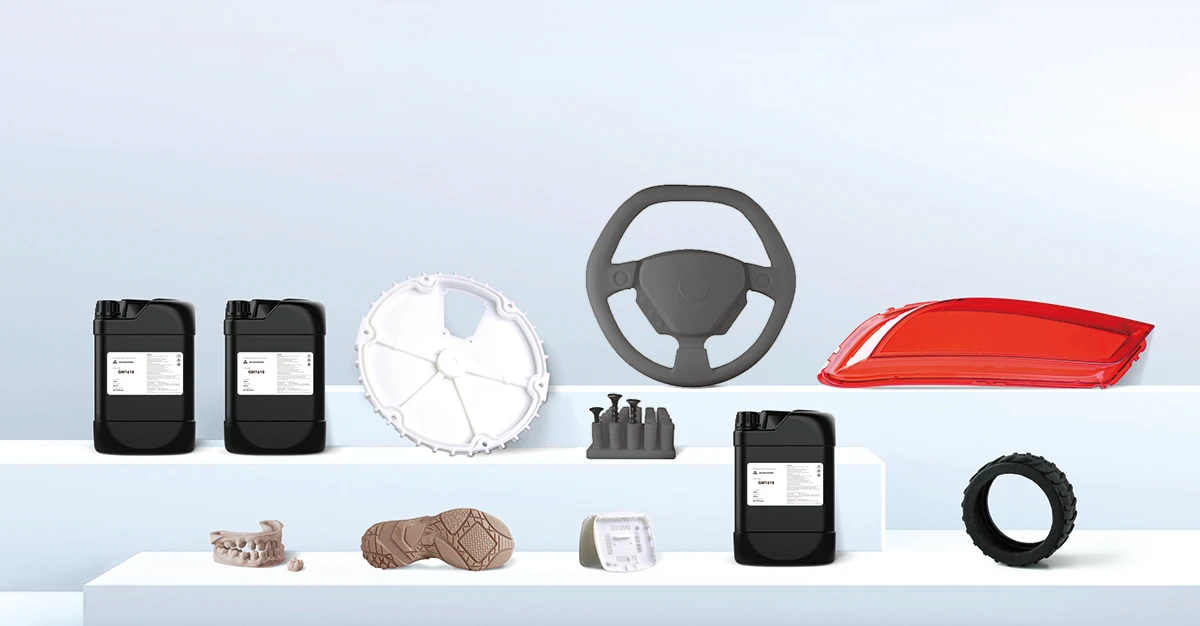
Magforms adopts an open material system without proprietary material locking. As long as the resin meets the required process specifications, users can work with third-party photopolymer resins and select materials according to their application requirements, performance expectations, and procurement budgets.
This flexibility gives manufacturers greater control over material selection, reduces dependence on a single supplier, and helps optimize long-term production costs.
2. AOC Laser Source: Stable Energy Output Across the Entire Build Area
Some laser systems are installed directly after leaving the factory, without sufficient optical calibration, continuous aging tests, or beam circularity inspections. Over time, unstable laser power can lead to inconsistent curing results, particularly across large build areas.
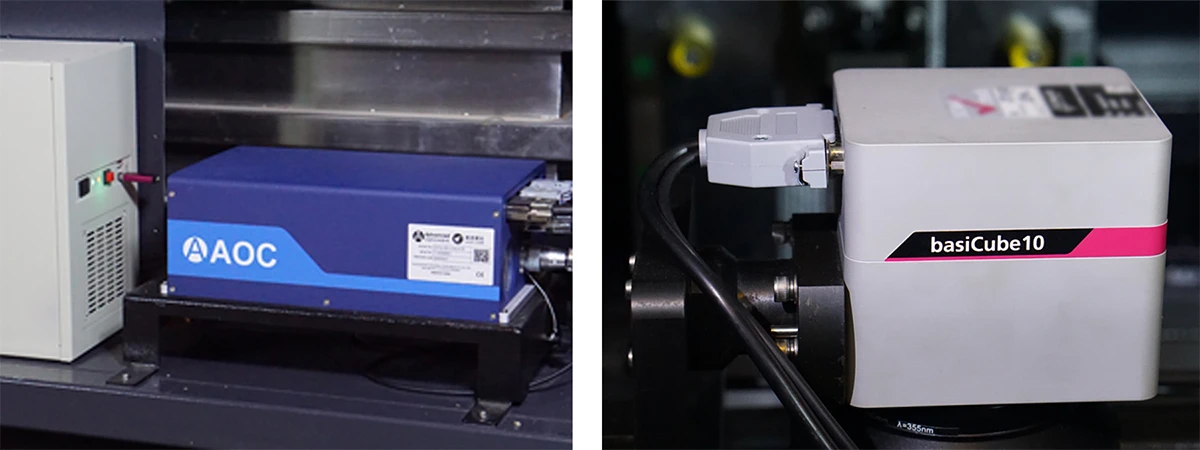
Magforms equips the Helios-P800 with an internationally recognized AOC laser source. Each system undergoes precision beam shaping, comprehensive power calibration, and thousands of hours of continuous aging and screening.
The result is a highly circular laser spot with controlled and stable energy output. Consistent laser performance helps ensure uniform curing across successive layers and different production batches, reducing variations in dimensional accuracy and surface finish.
For manufacturers handling large-format SLA 3D printing and batch production, this is a critical foundation for repeatable part quality.
3. German Scanlab Galvanometer: High-Speed Scanning Without Position Drift
Some conventional galvanometer systems may experience positioning deviations after prolonged high-speed operation. As XY dimensional errors accumulate, the edges and fine details of large models can become less accurate.
To address this challenge, Magforms integrates a German Scanlab galvanometer system with high-precision XY scanning mirrors, closed-loop servo drives, and comprehensive scanning-field distortion correction before delivery.
With a maximum scanning speed of 12 m/s and typical operating speeds of 6–10 m/s, the system maintains precise laser positioning during high-speed scanning. This helps reduce scanning errors, improve production efficiency, and shorten product development and batch manufacturing cycles.
For manufacturers evaluating high-speed industrial SLA 3D printers, stable scanning accuracy is just as important as maximum scanning speed.
4. Panasonic Servo Motors: Consistent Positioning Through Thousands of Motion Cycles
Under prolonged, high-load operation, ordinary motors may develop delayed responses or unstable acceleration and deceleration. These issues can contribute to more visible layer lines, positioning errors, and even failed prints.
The Magforms Helios-P800 uses Panasonic servo motors to drive the build platform, scraper, and liquid-level adjustment mechanism. These systems undergo extended continuous-operation aging tests to verify smooth acceleration, deceleration, and reliable performance under sustained loads.
The measured positioning specifications include:
- Build platform positioning accuracy: ±8 μm
- Liquid-level positioning accuracy: ±0.03 mm
- Scraper granite platform accuracy: less than 0.02 mm/s
These precision motion-control capabilities help maintain stable operation throughout extended production cycles and support the Helios-P800’s long-term accuracy requirements.
5. HIWIN Linear Guides: Smooth Motion Without Excessive Play
Conventional linear guides without sufficient heat-treatment reinforcement or reciprocating fatigue-life validation may develop clearance and wear over time. This can cause the build platform and scraper to move unevenly, resulting in inconsistent resin layer thickness.
Magforms equips the build platform and scraper motion mechanisms with HIWIN linear guides. These guides undergo tens of thousands of reciprocating fatigue cycles to verify their durability and motion performance.
Their high rigidity and smooth movement help keep the scraper stable throughout its travel, allowing resin to be distributed evenly across the build area while minimizing surface ripples and air bubbles.
Even under frequent, long-term reciprocating operation, the guides help maintain stable motion and reduce the risk of increased clearance or mechanical sticking.
This is an essential foundation for consistent layer thickness in industrial SLA 3D printing.
6. Intelligent Temperature Control: Maintaining Stable Resin Temperatures
Some equipment uses basic on/off heating controls without precise temperature feedback. In such systems, heating may continue after the target temperature is reached, leaving operators to monitor and switch it off manually. If overlooked, prolonged overheating can cause irreversible changes to resin properties.
The Magforms Helios-P800 features a fully closed-loop intelligent temperature control system. Equipped with OMRON temperature sensors, the system continuously monitors temperature conditions and automatically cuts off heating once the preset temperature is reached.
This helps maintain resin temperatures within the intended operating range, allowing different photopolymer materials to perform under suitable thermal conditions while reducing the risk of overheating caused by manual operation errors.
For manufacturers seeking reliable industrial SLA 3D printing performance, precise temperature management is an important part of maintaining consistent material behavior and print quality.
7. Learning-Based Variable Spot Size Algorithm: Higher Speed Without Sacrificing Accuracy
Traditional SLA systems often rely on a fixed laser spot size. A smaller spot improves detail reproduction but can significantly reduce printing speed, while a larger spot increases throughput at the expense of edge definition and fine features. Balancing precision and productivity can therefore be challenging.
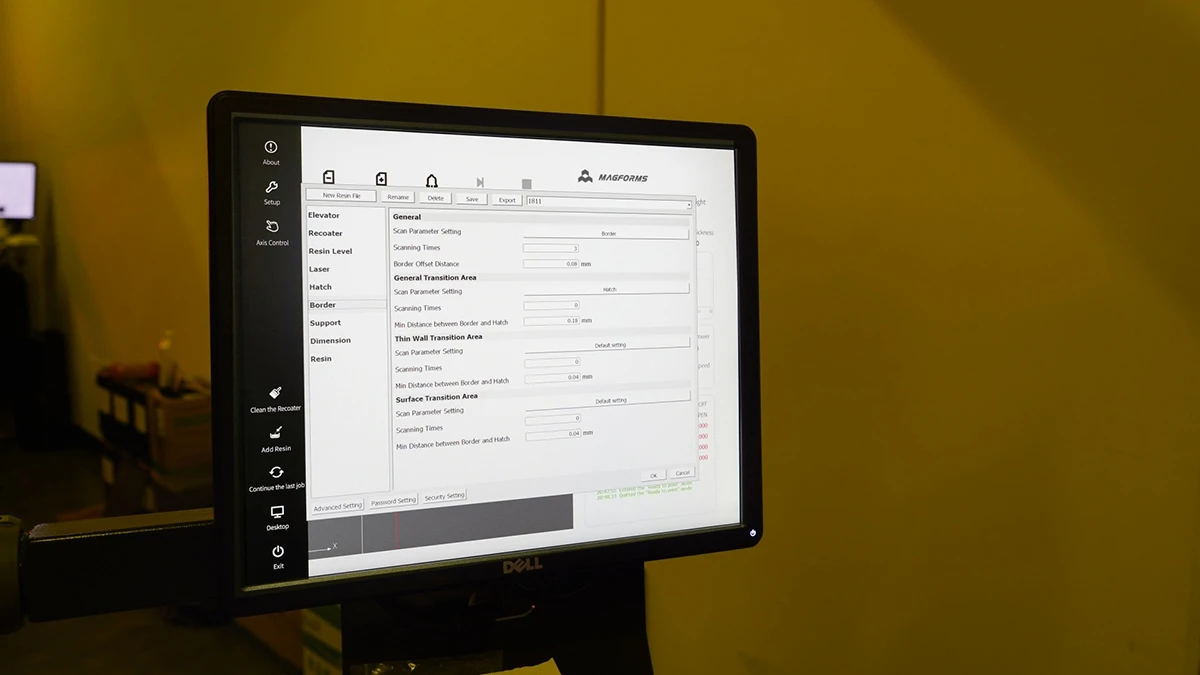
Magforms addresses this challenge with a learning-based variable spot size algorithm. During printing, the system records toolpath execution data and builds an accumulated optimization strategy based on different models and printing scenarios.
The algorithm automatically adjusts the laser spot size according to the printing area and its requirements:
- Large-area infill:Automatically switches to a larger 0.5–0.6 mm laser spot to increase scanning efficiency.
- Contours, thin walls, and support structures:Switches to a smaller 0.15–0.2 mm laser spot to preserve fine details and dimensional accuracy.
As more printing data is accumulated, the system continuously optimizes its path execution strategies. Compared with traditional fixed-spot SLA approaches, overall printing efficiency can improve by 30%–50%, without compromising the required dimensional accuracy.
This intelligent approach allows the Helios-P800 to achieve a better balance between industrial SLA printing speed and precision, helping manufacturers increase throughput while maintaining consistent part quality.
More Than a Machine: Comprehensive Installation and After-Sales Support
Stable equipment performance is only the first step. For manufacturers, timely technical assistance and reliable service after delivery are equally important.
Professional Installation and Commissioning
Delivery is not the end of the process; it is the beginning of production support. Magforms provides professional installation and commissioning services, covering equipment positioning, leveling, parameter configuration, and initial setup. This helps customers get their machines running smoothly and transition into regular production as quickly as possible.
Application and Process Support
Different products, resins, and printing requirements call for different process parameters. Technical support should go beyond basic equipment operation.
Magforms provides application-oriented process guidance and support for printing parameters based on each customer’s actual production requirements, helping manufacturers move more efficiently from equipment operation to practical production applications.
24-Hour Response Through Direct Factory Support
When production equipment encounters a problem, waiting for assistance can translate directly into lost production time.
With a factory-direct business model, Magforms connects customer inquiries directly to its in-house technical support team, eliminating unnecessary communication through multiple distributor layers.
Magforms commits to responding to customer inquiries within 24 hours. Depending on the issue, the team provides process guidance, remote technical assistance, or further troubleshooting solutions, helping customers move toward a resolution as quickly as possible.
Industrial SLA 3D Printer types and solutions
FAQ: Three Common Questions About Magforms Industrial SLA 3D Printers
Q1: What warranty coverage does Magforms offer for its industrial SLA 3D printers?
Magforms provides an 18-month warranty for the printer and a 15-month warranty for the laser source, both starting from the date the equipment arrives at the customer’s facility.
During the warranty period, if a component fails due to a product quality issue, Magforms will provide replacement parts free of charge and cover the shipping costs. If on-site repair is required, the repair service is also free, with the engineer’s round-trip airfare covered by Magforms.
This means customers receive more than just a piece of equipment. They also benefit from clearly defined warranty coverage and technical support.
Q2: Why can Magforms offer higher configurations at more competitive prices than leading international brands?
Magforms operates under a factory-direct business model and has its own R&D and manufacturing capabilities. By reducing the multiple distribution layers commonly found in traditional sales channels, the company can allocate more resources to equipment development, core components, and customer support.
Customers also receive more than the machine itself. Material compatibility, process guidance, and after-sales service are all part of the overall solution.
This approach enables Magforms to provide more cost-competitive solutions in the large-format industrial SLA 3D printer market without compromising its focus on equipment configuration and practical customer support.
Q3: How does Magforms ensure its 24-hour after-sales response commitment?
As the manufacturer responsible for both equipment development and production, Magforms connects customer inquiries directly to its in-house technical support team rather than relying on multiple distributors to relay information.
Once a customer submits an inquiry, Magforms commits to providing a response within 24 hours. Relevant technical personnel then assess the issue and provide process guidance, remote technical assistance, or further troubleshooting solutions based on the specific situation.
This direct communication model helps shorten response times and ensures that customer issues enter the appropriate technical support process as quickly as possible.
Information Sources
- SCANLAB Official Website:Industrial galvanometer scanning systems and high-precision positioning technology. https://www.scanlab.de/
- Panasonic Industry Official Website:Servo systems and high-precision positioning technology. https://industry.panasonic.com/
- AOC Official Website:Industrial UV laser technology, including 355 nm laser solutions. https://aoc-japan.com/
- HIWIN Official Website:Linear guideways and high-precision motion technology. https://hiwin.com/